

With the arrival of spring, Chaitra Navratri begins, marking not just a sacred nine-day festival dedicated to Goddess Durga, but also a time of inner cleansing, discipline, and renewal. Observed in the month of Chaitra (March–April), this period aligns with seasonal change, making fasting during Navratri both spiritually meaningful and scientifically relevant.
Why Do People Fast During Navratri?
Fasting during Navratri is rooted in devotion and self-discipline. Devotees abstain from regular foods to purify the body and mind, focusing on prayer, meditation, and spiritual growth.
From a traditional perspective, fasting is a way to detach from worldly indulgence and channel energy towards the divine. Many also dedicate this time to worship their Kuldevi or the nine forms of Goddess Durga, seeking blessings for health, prosperity, and protection.
Fasting Beyond Food: The Deeper Spiritual Meaning
Fasting in Navratri is not limited to food restrictions—it is also about gaining control over the senses, thoughts, and actions. It encourages individuals to practice restraint not just in eating, but also in speaking, thinking, and behaviour.
Devotees often try to:
•Avoid negative thoughts and emotions
•Practice calmness and patience
•Stay away from distractions and unhealthy habits
•Focus on mindfulness, prayers, and self-reflection
In essence, fasting becomes a form of holistic discipline, where the body, mind, and soul are aligned. It teaches that true purification comes not only from what we eat, but also from what we think, say, and do.
The Scientific Logic Behind Navratri Fasting
Interestingly, Navratri fasting also aligns closely with seasonal and biological rhythms. Chaitra Navratri falls during the transition from winter to summer, a time when the body’s immunity can be vulnerable.
Fasting during this phase helps:
●Detoxify the body by giving the digestive system a break
●Boost metabolism through lighter, easily digestible foods
●Improve gut health by eliminating processed and heavy foods
●Enhance mental clarity due to reduced toxin load
The emphasis on simple, natural, and plant-based foods supports the body’s adaptation to the changing climate.
Foods Associated with Navratri Fasting
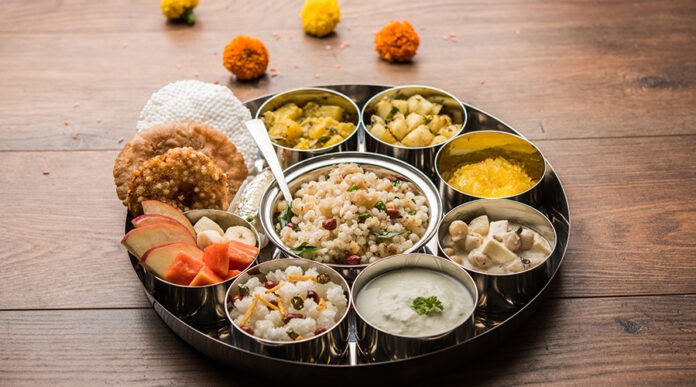
Navratri fasting does not mean complete abstinence, it involves consuming specific sattvic (pure) foods that are light, nourishing, and easy to digest.
Common fasting foods include:
●Kuttu and Singhara flour – Used for rotis and pakoras; gluten-free and nutrient-rich
●Sabudana– A quick source of energy, often prepared as khichdi or vada
●Potatoes and sweet potatoes – Provide sustained energy
●Milk, curd, and paneer – Rich in protein and calcium
●Fruits and dry fruits – Natural sources of vitamins and minerals
●Rock salt (sendha namak) – Used instead of regular salt for better mineral balance
●Nuts like almonds and cashews – Provide healthy fats and energy
Benefits of Navratri Fasting Foods
The foods consumed during Navratri are deeply rooted in nutritional wisdom:
•Light and easy-to-digest meals reduce strain on digestion
•High-energy ingredients help maintain stamina during fasting
•Fruits and dairy ensure essential nutrient intake
•Gluten-free flours support better gut health
Together, these foods help maintain a balance between energy, nutrition, and detoxification.
A Balance of Faith, Discipline and Well-being
Chaitra Navratri fasting beautifully combines spiritual discipline with scientific understanding. It goes beyond dietary practices to become a journey of self-control, mindfulness, and inner growth.
More than just a ritual, it is a reminder that true well-being comes from harmony—between body, mind, and spirit. As nature renews itself in spring, Navratri encourages individuals to do the same, embracing a fresh start with clarity, positivity, and inner strength.