


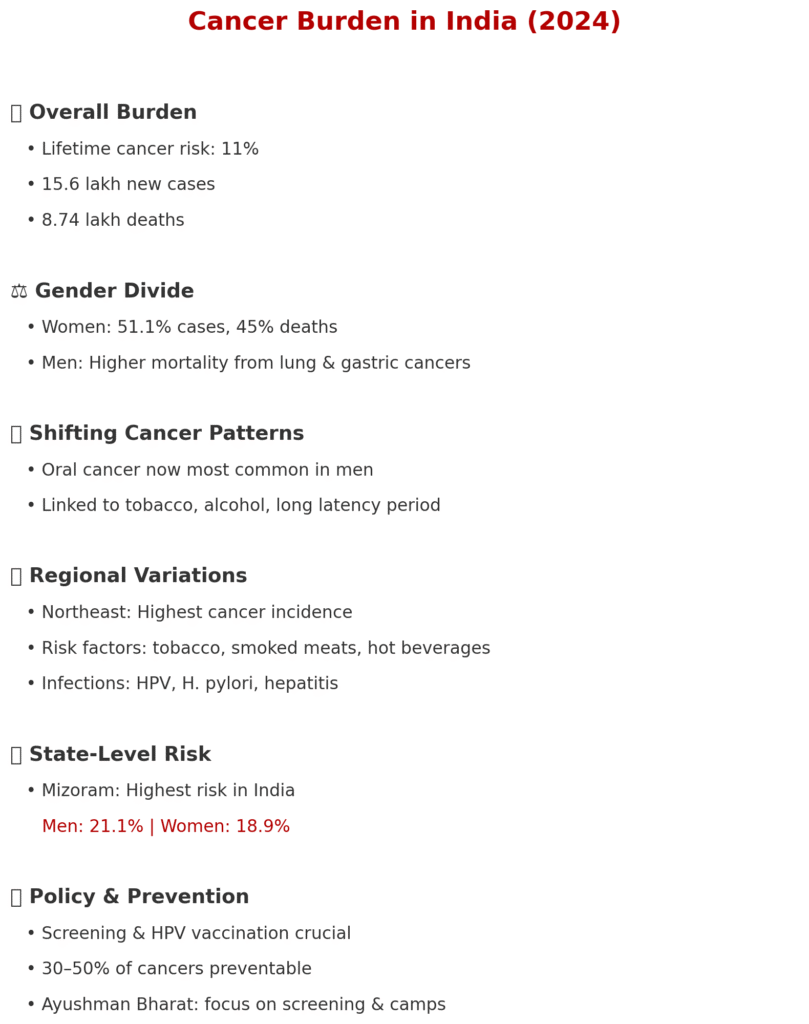
Recent data from 43 cancer registries across India reveal a lifetime cancer risk of 11%, with an estimated 15.6 lakh new cases and 8.74 lakh deaths in 2024. The registries cover 10%–18% of the population across 23 states and Union Territories, offering a detailed picture of cancer trends, risk factors, and policy priorities.
Gender Divide in Cancer Burden
Women account for 51.1% of cancer cases but only 45% of deaths, largely because breast and cervical cancers—common among women—are more amenable to early detection and treatment. In contrast, men are more affected by lung and gastric cancers, which are often diagnosed late and carry poorer survival rates.
Changing Cancer Patterns
A striking shift is visible in cancer types: oral cancer has overtaken lung cancer as the most common among men. This rise comes despite a decline in tobacco use (from 34.6% in 2009–10 to 28.6% in 2016–17), highlighting cancer’s long latency and the role of other risk factors such as alcohol consumption. Combined use of tobacco and alcohol further multiplies the risk.
Regional Variations
The Northeast records the highest incidence of cancer, including cervical and oral cancers, and lung cancer in women. High tobacco use, dietary practices like smoked meats and fermented pork fat, consumption of very spicy foods and hot beverages, and infections such as HPV, Helicobacter pylori, hepatitis, and salmonella typhi contribute to these patterns.
State-Level Risk
Mizoram has the highest lifetime cancer risk in India—21.1% for men and 18.9% for women—well above the national average. Other states show distinct trends, with breast, cervical, oral, lung, and prostate cancers dominating depending on local lifestyle and environmental factors.
Policy Implications
The findings are shaping strategies under Ayushman Bharat and national cancer control programmes, focusing on:
- Strengthening screening at primary health centres
- Enhancing tertiary cancer care
- Organising targeted screening camps
- Building awareness and lifestyle modification campaigns, especially in high-burden regions like the Northeast
The Case for Early Detection
Experts stress that 30%–50% of cancers are preventable through lifestyle changes, vaccination, and risk management. Breast cancer—now nearly 30% of female cancer cases—can be detected early through screening. High cervical cancer rates underline the urgent need for HPV vaccination and routine screening.
As India grapples with its growing cancer burden, the message is clear: prevention, early detection, and stronger healthcare systems are the way forward.