

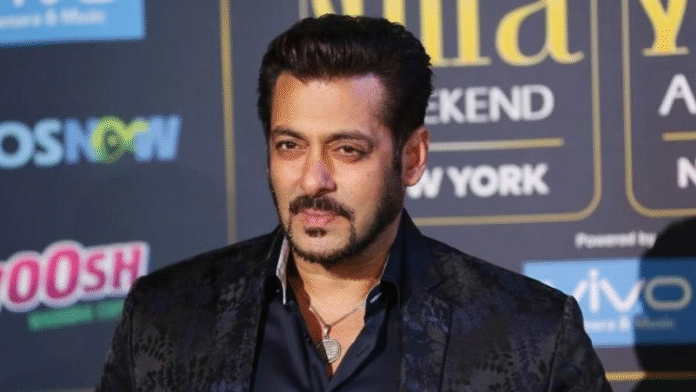
Few stars in Indian cinema have lived a life as publicly scrutinised as Salman Khan. Blockbusters, courtrooms, controversies, health battles, and philanthropy have all coexisted in his journey. Yet, through every storm, one image endures — Salman Khan smiling, meeting fans, returning to sets, and refusing to disappear.
This is the story of how the superstar chose resilience over retreat.
Salman Khan and Early Controversies: The Rise of the ‘Bad Boy’ Image
In the late 1990s and early 2000s, Salman Khan became a constant presence in Bollywood headlines — not just for films, but for confrontations with paparazzi and public altercations. The media labelled him Bollywood’s “bad boy,” a tag that followed him relentlessly.
By 2014, tensions had escalated to the point where some publications reportedly refused to photograph him. Fame, once an asset, had turned into a magnifying glass that never blinked.
The Blackbuck Poaching Case: A Legal Battle That Spanned Decades
The most defining controversy of Salman Khan’s life emerged from Rajasthan in 1998, during the shooting of Hum Saath-Saath Hain. He was accused of killing protected wildlife species, including blackbucks and a chinkara.
The case led to four separate trials under India’s Wildlife Protection Act and Arms Act. Over the years:
- Two cases were overturned in 2016
- One resulted in acquittal in 2017
- One led to a five-year jail sentence in 2018
Salman Khan spent days in Jodhpur Central Jail before being granted bail. Even today, appeals remain pending, making the case a continuing chapter in his life.
Security Threats and Life Under Protection
The year 2018 marked another turning point. Following the blackbuck verdict, Salman Khan received an open threat from gangster Lawrence Bishnoi, linked to the Bishnoi community that reveres blackbucks as sacred animals.
Since then, Salman Khan has lived under heightened security. Public appearances, film shoots, and travel are now carefully planned — a reality far removed from the freedom of his early stardom.
The Hit-and-Run Case: When the Past Returned to the Present
Another long-running legal battle resurfaced in 2015, when Salman Khan was found guilty in the 2002 Mumbai hit-and-run case, involving the death of one person and injuries to four others.
The conviction, which included charges of driving under the influence, resulted in a five-year prison sentence. Months later, the verdict was overturned due to insufficient evidence.
The emotional toll, however, lingered — a reminder that fame does not grant immunity from the weight of tragedy.
Sultan Comment Controversy: When Words Triggered Nationwide Outrage
In 2016, during promotions for Sultan, Salman Khan’s comparison of his physical exhaustion to that of a “raped woman” sparked widespread backlash.
Despite clarifications and an attempt to retract the remark, the controversy escalated. The National Commission for Women intervened, calling his explanation unsatisfactory and summoning the actor.
It was a moment that reinforced a harsh truth: for public figures, words can wound deeper than actions.
Being Human Foundation: Philanthropy Beyond Headlines
Amid legal and public turbulence, Salman Khan quietly focused on building something lasting. In 2007, he founded Being Human – The Salman Khan Foundation, dedicated to healthcare and education for underprivileged communities.
To sustain the initiative, he launched Being Human Clothing, now managed by his sister Alvira Agnihotri Khan. Unlike controversies, this work rarely screamed for attention — yet its impact has touched thousands of lives.
Salman Khan Films and Creative Control Over His Career
In 2011, Salman Khan established Salman Khan Films (SKF), taking greater control over his creative output. The production house backed successful and meaningful projects like:
- Chillar Party
- Bajrangi Bhaijaan
- Dabangg 3
He also contributed as a writer to films like Veer and Dabangg 3, proving that reinvention was as important as survival.
Health Battle: Trigeminal Neuralgia and Silent Suffering
In the same year SKF was founded, Salman Khan underwent surgery in Los Angeles for trigeminal neuralgia, a nerve disorder known for causing extreme facial pain.
For years, he worked through shooting schedules while enduring the condition in silence. The successful surgery brought relief — and revealed another layer of endurance behind his public persona.
Fitness, Discipline, and Work as Therapy
Salman Khan’s rigorous fitness routine has often made headlines, but for him, discipline became therapy. Training, films, and structure offered stability when life outside the gym felt unpredictable.
Work was not an escape — it was survival.
Why Salman Khan Still Smiles Despite Everything
Salman Khan’s smile today is not denial of the past. It is acceptance of it.
It reflects:
- A man who has faced prison cells and packed theatres
- A life shaped by mistakes, service, pain, and persistence
- A star who understands that redemption is not declared — it is lived daily
Salman Khan: Beyond Controversies, a Survivor of His Own Life
Wax statues at Madame Tussauds across the world, top rankings in Forbes India Celebrity lists, and an unmatched fan following tell one story. His battles tell another.
Somewhere between verdicts and victories, Salman Khan learned to stand, wave, and smile — not because life spared him, but because he chose to endure.
In a world quick to judge, Salman Khan remains — flawed, resilient, and unbroken.