

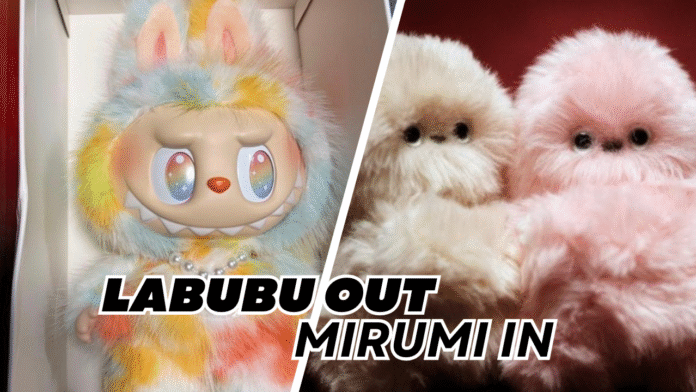
Just when the internet seemed to have settled into last year’s viral craze over collectible Labubu toys, a new contender has taken centre stage in 2026: Mirumi, a fluffy, interactive robot charm from Japan that’s capturing attention across social media and beyond. The shift from Labubu to Mirumi highlights how online culture thrives on novelty, emotion and shareable moments.
What made Labubu a global sensation
Labubu dolls dominated feeds and wishlists in 2025, turning up on backpacks, luxury bags and celebrity accessories. Created as quirky, wide-eyed collectibles, they became a pop-culture staple and were embraced by influencers and fans for their playful design and social media appeal, even sparking memes and celebrity sightings around the world.
Enter Mirumi a new kind of viral companion
Designed by Tokyo-based Yukai Engineering and first unveiled at the CES technology event, Mirumi is not just a toy, it is an emotion-focused robot charm that responds to its environment with gentle gestures and shy expressions. Rather than screens or apps, Mirumi uses simple motion and proximity sensors to tilt its head, nod, or glance around, creating moments that feel unexpectedly personal and expressive.
What makes Mirumi different
Unlike many internet fads that rely on visuals or meme-friendly aesthetics, Mirumi’s appeal lies in its personality cues. Its soft fur, big eyes and subtle movements make it seem like a tiny companion rather than a gadget. Users have begun sharing videos of Mirumi reacting in cafés, on commutes and clipped to everyday bags, creating a wave of user-generated content that fuels its viral rise.
Mirumi clips are spreading quickly, with users describing the charm as comforting, amusing and strangely engaging. Some call it a stress-relief accessory, while others enjoy the playful interaction it adds to daily life. This trend reflects a broader appetite for tech that feels emotional, interactive and shareable, rather than purely functional.
Social media and the new obsession
Across TikTok, Instagram and other platforms, Mirumi clips are spreading quickly, with users describing the charm as comforting, amusing and strangely engaging. Some call it a stress-relief accessory, while others enjoy the playful interaction it adds to daily life. This trend reflects a broader appetite for tech that feels emotional, interactive and shareable, rather than purely functional.
As Mirumi continues to eclipse Labubu in conversations and online buzz, trend watchers say this craze points to how digital communities embrace tactile experiences in an increasingly screen-driven world. Whether it’s clipped to a backpack, dangling as a quirky accessory or starring in viral videos, Mirumi is shaping up to be one of 2026’s first major online cultural hits proof that in the attention economy, charm and emotion still travel far and fast.