

A boy who once sold newspapers door to door now commands one of the largest financial empires the world has ever seen. That boy was Warren Buffett—and today, at the age of 95, the legendary investor is retiring, leaving behind a legacy that has reshaped global investing.
Sixty years ago, when Buffett took control of Berkshire Hathaway, a single share was priced at $18. Today, that same share is worth over $800,000—a staggering 45,000-fold increase. In these six decades, the US saw 11 presidents, global giants rose and fell, and markets crashed repeatedly. But Buffett’s philosophy never changed.
Born in a Crisis, Shaped by Hardship
Buffett was born in 1930 in Omaha, at the peak of the Great Depression. His father, stockbroker Howard Buffett, suffered heavy losses, forcing the family to tighten its finances. Growing up in this environment sparked young Warren’s fascination with business and money.
A turning point came when he found a book in the library—
“One Thousand Ways to Make $1,000.”
It didn’t just inspire him; it taught him how money works.
Selling Gum at 6, Paying Taxes at 13
At just six years old, Buffett began selling chewing gum bought from his grandfather’s grocery store. He later sold Coca-Cola bottles, newspapers, golf balls, popcorn, and peanuts.
At 11, he visited the New York Stock Exchange for the first time.
At 13, he filed his first income tax return.
By 14, he had bought farmland and rented it out.
At 17, he invested his savings in pinball machines and installed them in barber shops.
First Investment, First Lesson
In 1942, Buffett bought three shares for $120 with his sister. When the price fell, she wanted to sell—but Warren waited. A few months later, he made a small profit.
The lesson stayed with him for life:
Patience is the investor’s greatest weapon.
Love, Persistence, and Partnership
In 1950, Buffett met Susan Thompson and fell in love instantly. She wasn’t interested at first, but his persistence paid off. They married in 1952.
In 1956, Buffett launched Buffett Associates Ltd., pooling money from friends and family. He firmly believed in value investing, taught to him by his mentor Benjamin Graham.
Buffett often quotes Graham’s two rules of investing:
“Rule No. 1: Never lose money.
Rule No. 2: Never forget Rule No. 1.”
A Broken Promise That Built an Empire
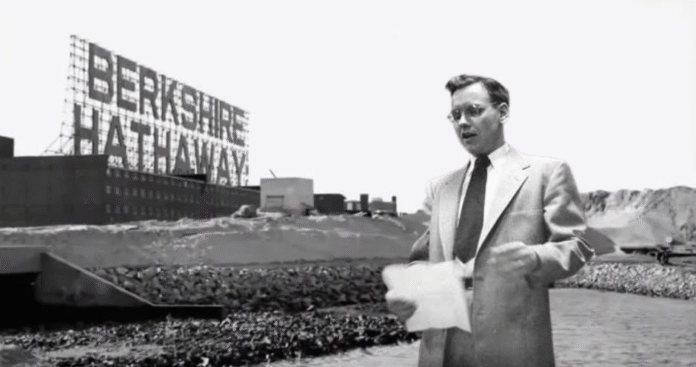
In the early 1960s, a struggling textile company called Berkshire Hathaway caught Buffett’s attention. In 1964, the company’s CEO offered to buy back Buffett’s shares at $11.50, but later reduced the price slightly.
The amount was small—but the broken trust wasn’t.
Instead of selling, Buffett bought more shares and eventually took control of the company. He later shut down the textile business and transformed Berkshire into a holding company, expanding into insurance, energy, railways, dairy, and finance.
Today, Berkshire owns 189 businesses and has major stakes in Apple, Coca-Cola, and Bank of America. In August 2024, it became the first non-tech US company to reach a $1 trillion market capitalization.
Why Does Buffett Hold ₹34 Lakh Crore in Cash?
Berkshire Hathaway currently holds about $381 billion (₹34 lakh crore) in cash or cash-equivalents—mostly in US Treasury bills.
This money isn’t parked in gold, fixed deposits, or idle bank accounts. Even though inflation erodes its value, Buffett waits patiently.
Why?
Because he believes once every decade, extraordinary opportunities appear—
like the Dot-com crash (2000), Lehman crisis (2008), or Covid crash (2020).
“When it rains gold, we want to be ready with buckets, not thimbles,” Buffett once said.
99% of His Wealth Came After 50
Perhaps the most surprising fact:
99% of Warren Buffett’s wealth was created after the age of 50, largely due to compounding.
His success rested on two principles:
- Value Investing – Buying businesses below their intrinsic value.
- Compounding – Letting profits reinvest and grow over decades.
Warren Buffett’s 4 Wealth Rules
- Be greedy when others are fearful.
- Bad news is an investor’s best friend.
- Invest only in what you understand.
- Think long term—and stay invested.
At 95, Warren Buffett is stepping away from active leadership—but his ideas will outlive markets, trends, and generations.
From a newspaper-selling boy to one of history’s greatest investors, Buffett proved that wealth isn’t built by speed or luck—but by patience, discipline, and wisdom.