

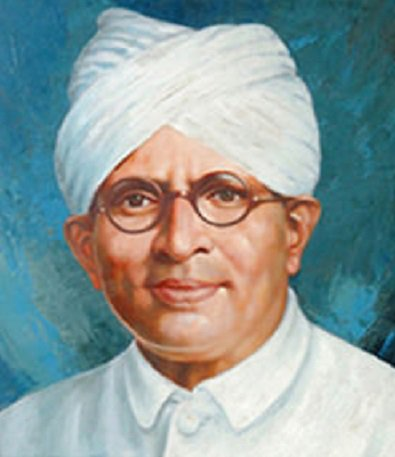
Walchand Hirachand: Long before India became an independent nation, one man dared to imagine an India that could build its own ships, fly its own planes, and drive its own cars. He was Walchand Hirachand Doshi (1882–1953) an industrialist who was a dreamer of impossible dreams, a visionary who believed that self-reliance was not just a political ideal but an industrial mission.
At a time when India was still under colonial rule and modern industries were scarce, Walchand set out to create what had never been attempted before. He founded India’s first aircraft factory, shipyard, and car manufacturing unit—each one a symbol of courage, ambition, and unshakeable belief in the country’s potential.
According to his Marathi biography, Walchand Hirachand played a pivotal role in building the foundation of India’s modern transport industry, which later became a driving force of the nation’s industrial growth. At a time when the British Indian government offered little support and largely acted in its own colonial interests, Walchand dared to “make in India” long before the slogan existed.
Earnest Beginnings
Born in 1882 into a well-off Doshi family in Sholapur, Walchand lost his mother days after birth and was raised by his aunt. His father, Hirachand, a cotton trader-turned-moneylender, moved the family to Bombay, where he ensured Walchand received higher education at St Xavier’s College. However, frequent plague outbreaks forced the family to move between Bombay and Poona, and the tragic loss of two elder brothers compelled Walchand to abandon his studies and support his father.
After an early setback in cotton trading, Walchand shifted to supplying firewood to mills—a move that proved profitable. A chance meeting with Laxman Balwant Pathak led him to railway contracting. Their first project, laying a line between Yedhi and Tadwal, launched Walchand into a rapid rise. Keen to master engineering and cost management, he soon bagged major contracts in Bombay, including challenging stretches between Reay Road and Kurla and between Vikhroli and Bhandup.
Venturing Into Shipping
During World War I, Walchand earned the Army’s confidence through profitable construction projects. After the war, shipping became his next frontier. Encouraged by an associate of the Gwalior Maharaja, he purchased his first ship, Loyalty, even though he knew nothing about the field. His biggest rival was the British India Steam Navigation Company, which dominated Indian waters for decades.
Despite initial losses, Walchand expanded his fleet by acquiring six cargo ships in Liverpool. Unable to access major ports due to British control, he operated from smaller ports like Porbandar, trading with Burma and Java, and became the first Indian to run a shipping company with an all-Indian crew.
In 1941, after two decades in shipping, he founded India’s first modern shipyard—Scindia Shipyard—in Visakhapatnam. Rajendra Prasad laid the foundation stone, and India’s first fully built ship was launched in 1948. The company later became Hindustan Shipping Limited.
Giving Wings to Indian Aviation
In 1939, a U.S. visit inspired Walchand to set up an aircraft manufacturing unit in India. With support from the Mysore State, which provided 700 acres near Bangalore, he founded Hindustan Aircraft Limited (HAL) on December 23, 1940. The runway and main buildings were completed in just three months. By March 1941, HAL had produced its first aircraft, the Harlow PC-5 Trainer. During World War II, the company became vital to Allied operations and was nationalised in 1942. After Independence, HAL evolved into Hindustan Aeronautics Limited, now the backbone of India’s defence aviation.
The Race to Build India’s First Car
Walchand had also envisioned an Indian-made car. In 1939, he approached Chrysler and visited major U.S. auto plants. But World War II halted automobile production in America, and delays in India slowed his plans. Rival industrialist G.D. Birla was also pursuing a car factory, but a proposed partnership did not materialise.
With support from Sir M. Visvesvaraya, Walchand founded Premier Automobiles in 1944. The company secured licences to produce Plymouth cars and Dodge trucks, beginning production in 1949. Later, it partnered with Fiat to manufacture the iconic Premier Padmini, a household name in the 1970s and 80s.
Walchand retired in 1950 due to ill health and passed away in 1953. While names like the Tatas and Birlas dominate India’s industrial narrative, Walchand Hirachand remains a remarkable yet under-recognised pioneer who shaped India’s shipping, aviation, and automobile industries
Walchand Hirachand reminded India of a simple truth—
that the future belongs to those who build it.