

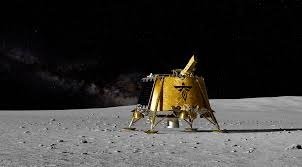
On March 2, 2025, Firefly Aerospace made history by successfully landing its Blue Ghost Mission 1 spacecraft on the Moon. This achievement marks only the second private lunar landing ever and the first to touch down upright. The success of Blue Ghost highlights the increasing role of commercial entities in space exploration and NASA’s strategic partnerships with private companies.
Touchdown at Mare Crisium
The Blue Ghost lunar lander made its descent near Mons Latreille in Mare Crisium, an expansive basin on the Moon’s surface. This mission follows in the footsteps of Intuitive Machines, which achieved the first-ever commercial lunar landing in February 2024. With this latest success, private companies are proving their capability to reach and operate on the lunar surface, further advancing the commercialization of space.
Mission Overview
Blue Ghost lifted off from Earth on January 15, 2025, aboard a SpaceX Falcon 9 rocket. The lander, approximately the size of a hippopotamus, carries ten scientific instruments, including a lunar soil analyzer and a radiation-tolerant computer. The mission is designed to last for a full lunar day—around 14 Earth days—conducting crucial experiments and capturing high-definition images of the Moon’s surface.
Scientific Objectives and Experiments
The primary goals of the Blue Ghost mission extend beyond simply landing on the Moon. The lander is equipped to capture stunning images of a total eclipse on March 14, 2025, as well as a lunar sunset on March 16, 2025. In addition, one of the mission’s key scientific endeavors involves studying the behavior of lunar dust under solar influence, helping scientists better understand the Moon’s environment and surface conditions.
Looking Ahead: Future Lunar Missions
Following Blue Ghost’s groundbreaking success, the next commercial lunar mission is just around the corner. Intuitive Machines’ IM-2 mission, scheduled for March 6, 2025, will deploy the Athena lander, which carries three rovers and an innovative hopping drone. This drone is designed to traverse the Moon’s rugged terrain, showcasing new technologies that could revolutionize lunar exploration.
Overcoming the Challenges of Lunar Landings
Landing on the Moon is no small feat. Unlike Earth, the Moon lacks an atmosphere, meaning landers must rely entirely on controlled thruster burns for descent and landing. The precision required in these maneuvers makes lunar landings extremely challenging. Blue Ghost’s success demonstrates the increasing reliability of private space missions and the potential for more frequent lunar exploration.
NASA’s Role in Private Lunar Exploration
NASA has been a key proponent of commercial lunar exploration through its $2.6 billion Commercial Lunar Payload Services (CLPS) program. By working with private companies like Firefly Aerospace and Intuitive Machines, NASA aims to reduce costs and increase the cadence of lunar missions. This partnership-driven approach signifies a new era in space exploration, where government and commercial enterprises collaborate to push the boundaries of human knowledge and technological innovation.
With Blue Ghost Mission 1’s triumphant landing, the future of private lunar exploration looks more promising than ever. As new missions continue to unfold, the dream of a sustained human presence on the Moon edges closer to reality.