

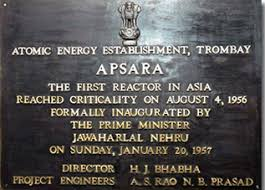
India’s entry into the field of nuclear science marked a significant milestone in its journey toward scientific progress and self-reliance. At the heart of this achievement was APSARA, India’s first nuclear research reactor. Commissioned in the early years after independence, APSARA symbolized the nation’s determination to harness advanced science and technology for peaceful and developmental purposes.
What Is APSARA?
APSARA was India’s first nuclear research reactor, established at Trombay near Mumbai, a site that later became the Bhabha Atomic Research Centre (BARC). It was designed primarily for research, training, and experimentation in nuclear science.
The reactor was a swimming pool–type research reactor, a design commonly used for academic and experimental purposes. APSARA was not built to generate electricity; instead, it focused on strengthening India’s scientific capabilities.
The Vision Behind APSARA
The development of APSARA was guided by the vision of Jawaharlal Nehru, India’s first Prime Minister, and Dr. Homi Jehangir Bhabha, the chief architect of India’s nuclear program. Nehru believed that modern science was essential for national development, while Bhabha emphasized building indigenous scientific expertise.
Together, their leadership ensured that nuclear energy in India would be used for peaceful applications, such as research, medicine, and industry.
Role of APSARA in Scientific Research
APSARA played a crucial role in the early growth of India’s nuclear program. It supported:
- Training of nuclear scientists and engineers
- Research in nuclear physics and reactor technology
- Production of radioisotopes for medical and industrial use
- Academic collaboration with universities and research institutions
For many Indian scientists, APSARA was the first hands-on experience with nuclear reactor operations.
Importance of APSARA in India’s History
1. Foundation of Nuclear Research
APSARA laid the groundwork for India’s future nuclear reactors and research facilities.
2. Boost to Self-Reliance
The reactor helped India develop confidence in handling advanced technology soon after independence.
3. Commitment to Peaceful Nuclear Use
APSARA reflected India’s ethical stance that atomic energy should be used for development, not destruction.
4. Global Recognition
With APSARA, India joined a select group of nations with operational nuclear research reactors, enhancing its global scientific standing.
Legacy of APSARA
APSARA remained operational for several decades and made lasting contributions to Indian science and education. Its success led to the development of more advanced reactors and research programs in the country.
In later years, APSARA’s legacy continued through modernized facilities and upgraded research reactors that follow international safety and non-proliferation standards.
Conclusion
APSARA, India’s first nuclear reactor, was more than a scientific installation – it was a symbol of a young nation’s ambition, confidence, and commitment to progress. By laying the foundation for nuclear research and scientific excellence, APSARA played a vital role in shaping India’s technological future.
Even today, APSARA stands as a reminder of India’s early determination to use science as a force for national development and global responsibility.