

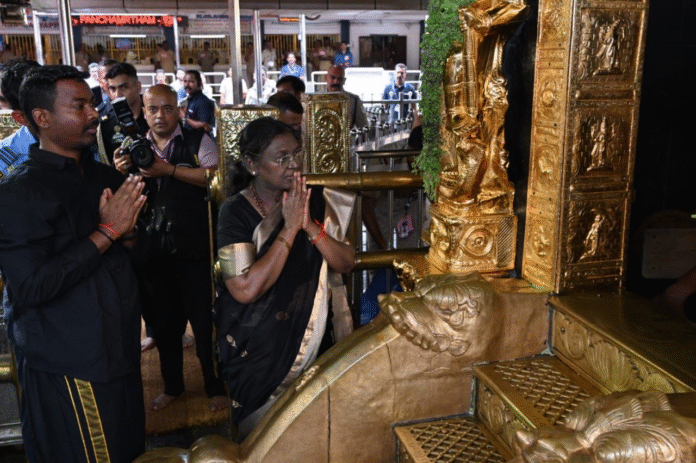
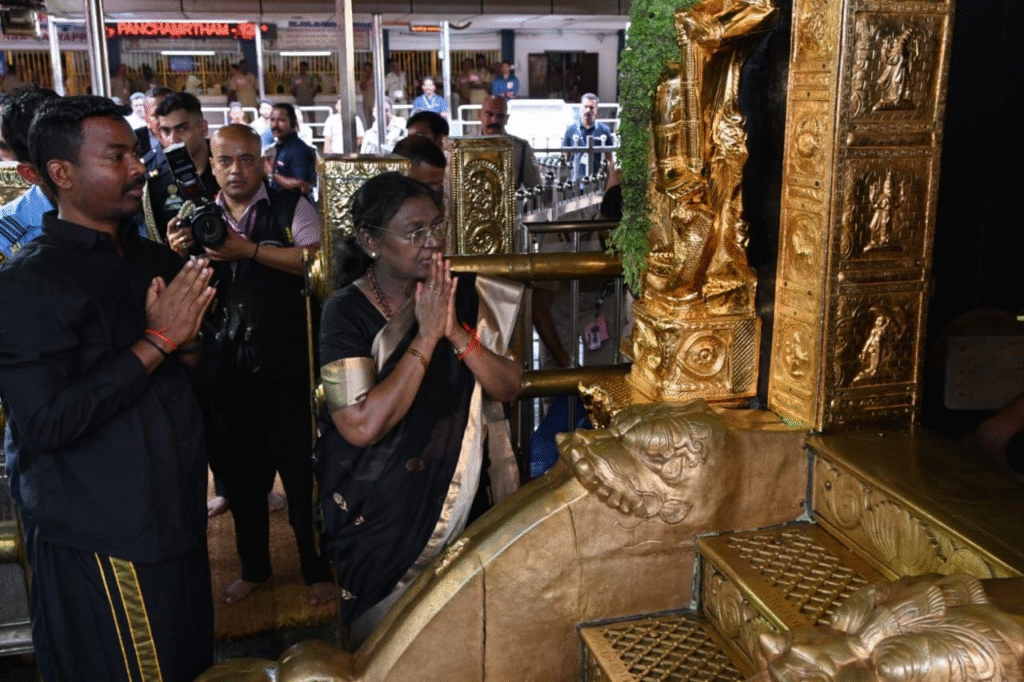
President Droupadi Murmu’s visit to the revered Lord Ayyappa Temple at Sabarimala on October 22, 2025, marks a moment of profound historical and social significance. She has become the first woman President of India to undertake this sacred pilgrimage and only the second Indian President—after V. V. Giri in the 1970s—to visit the hill shrine.
A Symbol of Faith and Inclusion
Her visit is not just a personal act of devotion but a symbolic moment for India’s evolving dialogue between tradition and constitutional equality. In the wake of the 2018 Supreme Court verdict allowing women of all ages to enter the temple, President Murmu’s pilgrimage reaffirms faith’s inclusive essence within the framework of democratic rights and religious freedom.
Historic Significance
- First Woman President at Sabarimala: President Murmu’s presence at the shrine represents a powerful statement of both devotion and equality, bridging faith with progressive constitutional ideals.
- Renewing a 50-Year Gap: She is the first Indian President in five decades to visit the temple after President V. V. Giri’s pilgrimage in the 1970s.
- Faith Meets Reform: Her traditional observance—carrying the sacred Irumudi, washing her feet in the Pampa River, and ascending the 18 holy steps—reflects respect for ritual while affirming women’s rightful place in sacred spaces.
Warm Reception at the Shrine
The President was received with full ceremonial honour by Kerala Devaswom Minister V. N. Vasavan and Travancore Devaswom Board (TDB) President P. S. Prasanth. The temple’s Tantri, Kandararu Mahesh Mohanaru, welcomed her with a poorna kumbha, symbolizing divine blessing and respect.
A Landmark Moment for Women’s Representation
President Murmu’s visit stands as a reminder that leadership and faith can coexist harmoniously. In a temple once emblematic of gender exclusion, her presence as the nation’s highest constitutional authority symbolizes a new era of inclusion, respect, and equality before both faith and law