

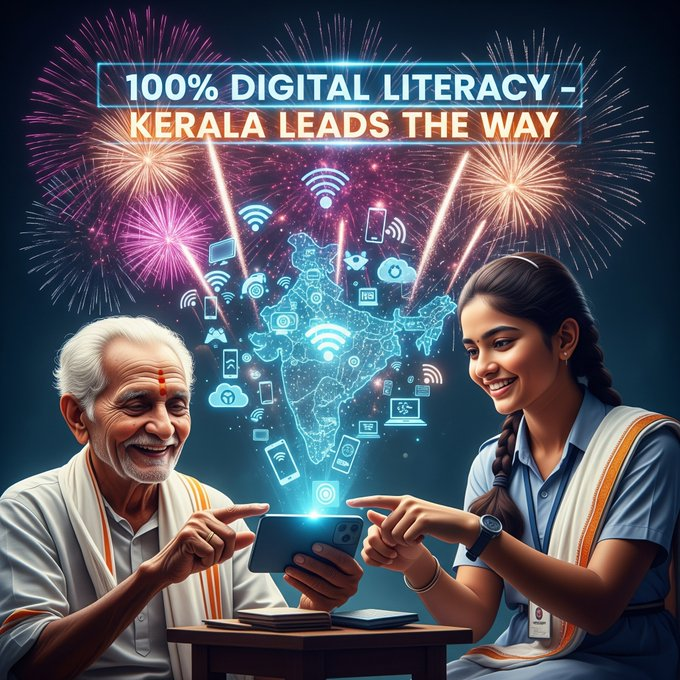
In a milestone moment for India’s digital revolution, Kerala has become the first state in the country to achieve 100% digital literacy. With the successful rollout of the Digi Kerala project, the state has empowered citizens across every age group—from schoolchildren to a 104-year-old learner—with essential digital skills. This landmark not only bridges the digital divide but also sets a replicable model for the rest of the nation, proving that inclusive governance and grassroots participation can truly power a digital future.
Survey and Training Coverage
The Digi Kerala project reached an impressive scale:
- Surveys covered 1.5 crore people from 83.46 lakh families.
- It identified 21.88 lakh digitally illiterate individuals.
- Of these, 21.87 lakh (99.98%) successfully completed training and passed evaluations.
This massive coverage ensured that no demographic group was left behind in Kerala’s digital inclusion journey.
Inclusivity and Accessibility
The programme stood out for its inclusivity. People of all age groups, including senior citizens, were part of the training. A remarkable example was 104-year-old M.A. Abdullah Moulavi Baqavi from Ernakulam district, who completed digital literacy training. The initiative was delivered through local bodies, reflecting Kerala’s robust decentralized governance model. This grassroots approach ensured accessibility and active community participation.
Bridging the Digital Divide
Digital literacy has empowered citizens to access welfare schemes such as Ayushman Bharat, PM-Kisan, and Jan Dhan directly through online platforms, reducing dependency on intermediaries and enhancing financial inclusion. Marginalised groups, women, and rural communities have particularly benefited, breaking long-standing barriers to digital access.
Strengthening Digital Democracy
Equipped with digital skills, citizens can now engage more effectively with government services. From filing grievances and submitting RTI applications to participating in online civic activities, digital literacy is fostering transparency, accountability, and participatory governance.
Alignment with Digital India Mission
Kerala’s success offers a scalable model for other States. Unlike projects focused only on digital infrastructure, Digi Kerala prioritised grassroots-level training, ensuring that digital tools are not only available but also usable by all citizens. This approach resonates with the broader objectives of the Digital India Mission.
Socio-economic Empowerment
Enhanced digital skills are creating new livelihood opportunities, empowering self-help groups, and supporting small businesses and entrepreneurs. By expanding access to markets and financial services, digital literacy is fueling inclusive economic growth and social upliftment.
Building Resilience in Governance
A digitally literate population is better prepared to face crises such as pandemics or natural disasters. Wider access to e-learning platforms, telemedicine, and online public services strengthens governance and improves service delivery.
Kerala’s achievement underscores that digital empowerment is as critical as infrastructure in building a strong, inclusive, and future-ready society.