

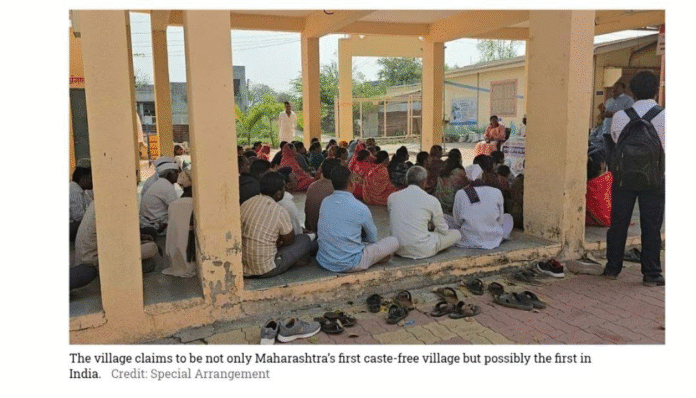
In a significant social reform initiative, Soundala village in Maharashtra has declared itself a “caste-free” village. The unanimous resolution, passed by the Gram Sabha on 5 February 2026, commits the community to rejecting caste-based distinctions and promoting equality under the motto “Aamchi jaat… manav” — meaning “my caste is humanity”. The move has drawn attention as a grassroots effort to redefine local identity around shared human values.
Unanimous Gram Sabha Resolution
Soundala, located in the Ahilyanagar district of Maharashtra, adopted the resolution through a collective decision of villagers from diverse social backgrounds. The declaration formally renounces caste discrimination and social exclusion in all forms.
Public spaces and facilities — including schools, temples, water bodies, community halls, cremation grounds and government services — are now committed to equal access for all residents, irrespective of caste, religion, creed or race. The village administration has also pledged to address caste-based grievances and monitor derogatory social media content to maintain communal harmony.
Constitutional Ideals at the Core
The resolution draws inspiration from the Preamble to the Indian Constitution, which enshrines the values of liberty, equality and fraternity. By aligning its governance principles with constitutional ideals, Soundala seeks to institutionalise equality at the grassroots level.
Although the village has historically reported limited caste-based conflict, leaders described the move as preventive rather than reactive. The emphasis is on fostering unity and ensuring that discrimination does not take root in the future.
Earlier Social Reform Initiatives
Soundala has previously adopted progressive resolutions challenging entrenched social norms. In 2024, the village supported widow remarriage and prohibited the use of degrading or abusive language within the community. These measures had already positioned the village as an example of local-level reform.
Civil society groups have suggested recognising 5 February as “International Caste-Free Day”, reflecting the symbolic value of the initiative beyond the village.
Important Facts
- The Preamble of the Indian Constitution emphasises justice, liberty, equality and fraternity.
- Gram Sabha is the general assembly of all registered voters in a village.
- Caste-based discrimination is prohibited under Article 15 of the Constitution.
- Social reform movements in India have historically targeted caste hierarchy and untouchability.
Significance for Social Equality in India
Soundala’s declaration represents a symbolic yet meaningful step in addressing caste as a continuing social reality in India. By asserting a collective identity rooted in humanity rather than birth status, the village has contributed to ongoing national conversations on equality, dignity and social justice.