

Ruma Devi: The Aak plant, commonly found in the deserts of Rajasthan, is set to pave the way for a new era in rural livelihoods and sustainable fashion. Once considered a wild shrub or unwanted weed, Aak is now being transformed into a valuable natural resource. The North India Textile Research Association (NITRA), under the Ministry of Textiles, has successfully developed methods to convert Aak fibers into winter wear, gloves, socks, and even snow-resistant tents.
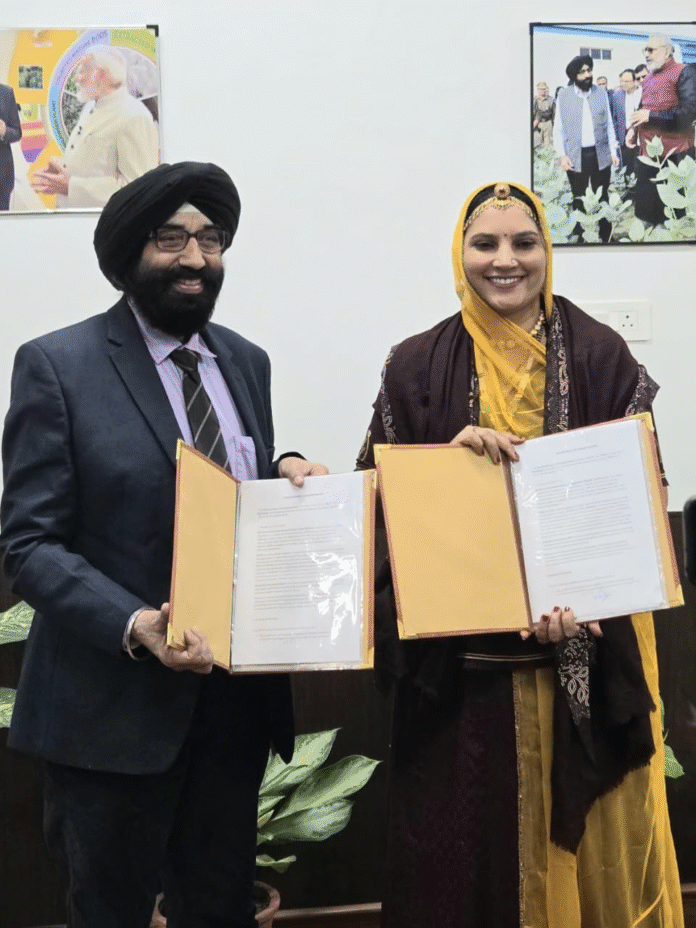
The project received a major push in November 2025 when Union Textiles Minister Giriraj Singh inspected Aak cultivation and fiber development at NITRA. Marking a significant milestone, an MoU was signed at NITRA’s Textile Research Center in Ghaziabad by Director General MS Parmar and globally acclaimed fashion designer and social activist Dr. Ruma Devi, representing the Ruma Devi Foundation.
The partnership aims to produce high-quality Aak fiber, enhance research and technology for Aak cultivation, and promote Aak-based products across India and global markets—ultimately boosting employment, income generation, and sustainable development in rural regions.
Why Aak Is Special
Fiber extracted from Aak fruit—previously seen as waste—is warmer than wool and as soft as silk. Fiber can also be extracted from its stem, while the fruit’s outer skin holds additional value. The plant is rich in medicinal properties, and its seeds produce oil used in skincare products such as facial creams.
Aak requires minimal water and thrives even in harsh, arid conditions. A single acre can yield 200–300 kg of raw material. Currently, demand for Aak fiber is significantly higher than its supply. Under the Ministry’s guidance, NITRA laboratories are working to further improve fiber strength, processing, and textile quality.
Dr. Ruma Devi expressed pride in showcasing the commercial potential of Aak, traditionally revered for its cultural and medicinal relevance. She shared that dozens of products—including jackets, gloves, blankets, and fabric—are already being produced, and the material is poised to gain global recognition. She emphasized that this initiative will support the ‘Vocal for Local’ movement while promoting cruelty-free, eco-friendly fashion worldwide.
Collection of 2,000 kg Aak Pods Completed in Pilot Phase
Earlier this year, under the guidance of Textiles Minister Giriraj Singh, the Ruma Devi Foundation led a successful effort to collect 2,000 kg of Aak pods from Barmer, Jodhpur, Jaisalmer, Bikaner, and Nagaur. The initiative created home-based income opportunities for rural families, who gathered pods from local farmlands.
With this successful start, the focus will now shift to widespread awareness and skill training. Since Aak fiber begins maturing around the Holi festival, training programs will be scheduled accordingly, informed Ruma Devi.
The MoU signing ceremony was attended by NITRA Director General Dr. MS Parmar, Dr. Ruma Devi, Foundation spokesperson Harshita Singh, Vikram Singh, and Dr. Preeti along with the NITRA research team.