

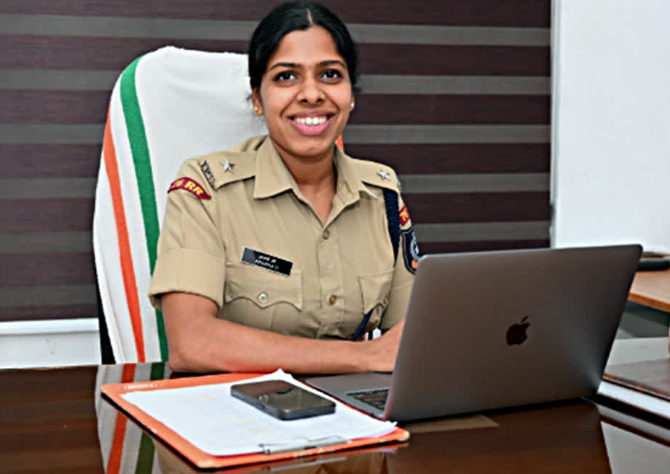
In the thick of the COVID-19 crisis, Aparna was saving lives as a government doctor at Malappuram District Hospital. But beneath the stethoscope beat the heart of a dreamer—one who had long envisioned herself in khaki. While most of her peers pursued MD degrees, Aparna chose a radically different path: the Indian Police Service.
Her decision was met with skepticism. Friends and relatives questioned her choice. But Aparna didn’t flinch. She began preparing for the UPSC exam from home, relying solely on online resources. No coaching centers. No shortcuts. Just sheer determination.
Cracking UPSC Without Coaching: A First Attempt Victory
Aparna’s dedication paid off when she secured an impressive 475th rank in her very first attempt. Her success wasn’t just personal—it was historic. She became the first woman IPS officer from Malappuram, a district known more for its conservative leanings than for producing female officers. Her training at the Sardar Vallabhbhai Patel National Police Academy in Hyderabad was rigorous, but Aparna thrived. She emerged not just as a competent officer, but as a symbol of resilience and quiet revolution.
Leading with Empathy: Station House Officer at Bekal
Today, Aparna serves as the Station House Officer (SHO) at Bekal, in Kasaragod district. Her leadership style is marked by empathy, especially toward women. She believes that female officers bring a unique sensitivity to policing, particularly in cases involving domestic abuse, harassment, and gender-based violence. Her presence has already made a difference—locals praise her for being approachable, decisive, and deeply committed to justice.
A Role Model for Young Women Across India
Aparna’s journey—from a hospital ward to the police station—is more than a career switch. It’s a clarion call to young women across India: dream boldly, defy expectations, and serve with courage. She continues to advocate for more women in the police force, emphasizing that representation matters—not just in numbers, but in impact.