


In the dusty plains of Gujarat’s Banaskantha district, nestled far from the noise of campaign slogans and ballot boxes, lies Gathaman—a village where democracy has taken a gentler, more harmonious form. Since 1955, the villagers of Gathaman have chosen a path few dare to tread: not a single Panchayat election has been held here in over seven decades.
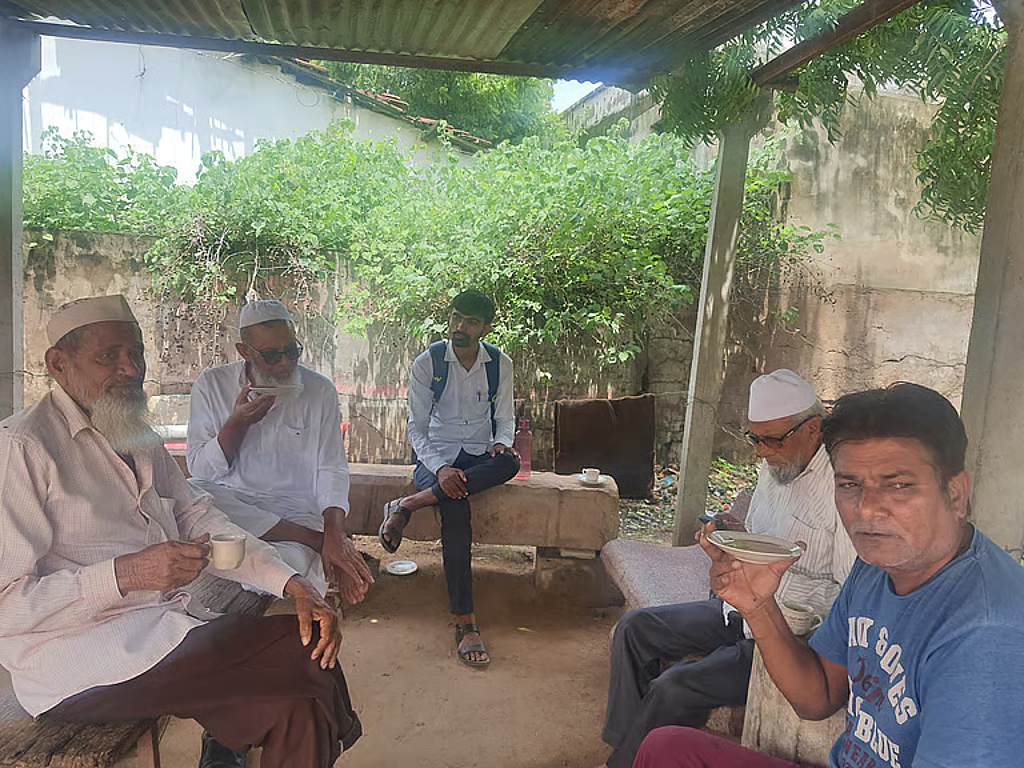
With a population of around 7,000—almost evenly split between Hindu and Muslim families—Gathaman has quietly cultivated a tradition of consensus-based leadership that many might call utopian in today’s politically charged world.
Here, the power doesn’t shift through elections; it flows through trust, understanding, and handshake agreements across community lines.
A Tradition Born of Trust
The story begins in the post-Independence era, when the village unanimously selected its first Sarpanch in 1955. Since then, this promise of peaceful, electoral-free leadership has been renewed again and again, through generations.
Today, that tradition continues with the election—by mutual agreement—of Raufaben Imran Patel as Sarpanch. The position was reserved for women in 2025, and Raufaben, from the Muslim community, was nominated and wholeheartedly supported by the Hindu community. It’s a quiet gesture, but one that speaks volumes about the deep-rooted trust that binds Gathaman’s people.
Leadership alternates between communities, a rhythm as natural to the villagers as the sowing and harvesting of their fields. If the Sarpanch is from one community, the Deputy Sarpanch typically comes from the other—an unwritten rule that ensures power is never concentrated, and representation never lopsided.
No Grant, No Problem
Ironically, even as Gathaman embodies the ideals of the Samras Gram Yojana—a state scheme that rewards villages for electing Panchayats unopposed—it remains ineligible for the financial grants that come with it.
The reason? A Scheduled Tribe (ST) ward, once reserved due to an outdated registration, still appears on official records. But there are no ST residents in the village. This bureaucratic oversight has denied the Panchayat lakhs in aid.
Yet, the villagers remain unfazed.
The Panchayat works with an annual budget of around ₹32 lakh, largely self-managed. Projects get done. Drains are cleaned. Disputes are resolved. The system works—not because it is funded, but because it is trusted.
A Village of Timekeepers and Technicians
Gathaman’s economy is modest, yet resourceful. Agriculture forms the backbone, but many residents have long migrated to Mumbai, where they first mastered the art of watch repair. As times changed, they adapted—switching gears from watches to mobile phones. These skills, passed back home through remittances and visits, support the local economy and spark a quiet pride in the village’s ability to move with the times.
More Than Governance—An Identity
In Gathaman, elders speak of their tradition not just as a governance model, but as a living part of their identity. The absence of electoral conflict means more than just political calm—it means children grow up seeing cooperation, not division; respect, not rivalry.
“In our village, leadership is a shared responsibility, not a contest,” says an elder, sitting beneath a banyan tree that has likely witnessed decades of such conversations.
As India continues to experiment with models of decentralisation and local democracy, Gathaman stands as a powerful, if quiet, example. It shows that sometimes, the best kind of leadership isn’t won in a vote—it’s earned in trust.