


When you look at the NABARD Grade A syllabus, you might think how vast and detailed it is, especially if you are new to the world of competitive exams. Someone new to the world of government exams, the syllabus of the NABARD Grade A might even make you feel overwhelmed and stressed because you will get acquainted with it all at once. And this is exactly why you will get questions like, “When should beginners start NABARD Grade A preparation?”
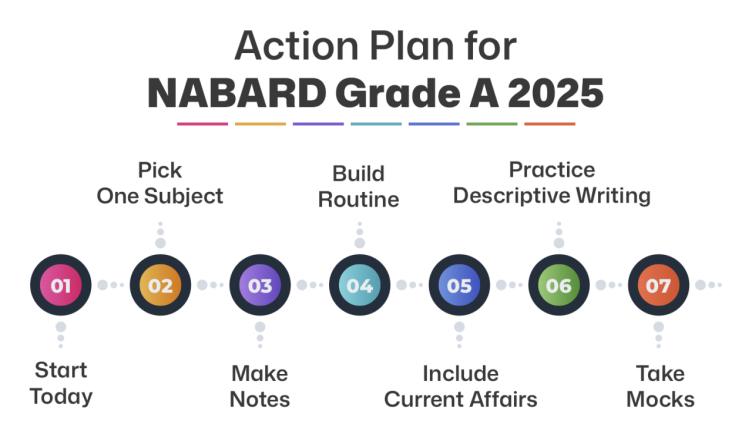
Starting your NABARD Grade A preparation at the right time can make all the difference you need. Many of the beginners start preparing without understanding the exam first, but what you genuinely need is time to settle into a rhythm of understanding the exam inside out, and then start preparation.
Now, when we talk about the NABARD Grade A 2025, as a beginner, you need to focus on the entire exam process and not just when the dates when the exams are happening. Putting your focus on the entire exam process will help you strategize for the NABARD Grade A exam better. Also, let me reassure you that starting early gives you an edge in the NABARD Grade A preparation, and you will not feel rushed once the notification is announced for the NABARD Grade A exam.
Understanding NABARD Grade A Exam Structure
Before we talk about when to start, let me help you understand what you are preparing for. NABARD Grade A has two written phases and one interview. NABARD Grade A Phase 1 has a qualifying and merit sections, then comes the Phase 2 of NABARD Grade A, which contains objective and descriptive types of questions, and then comes the interview.
| NABARD Grade A Syllabus | |
| Phase | Subjects |
| Phase-1 | Qualifying SectionsReasoning EnglishComputer Knowledge Quantitative AptitudeDecision Making Merit SectionGeneral AwarenessEconomic and Social IssuesAgriculture and Rural Development |
| Phase-2 | Paper-1General English Paper-2Economic and Social Issues & Agriculture and Rural Development |
If you are from a non-agricultural background, do not get intimidated by the NABARD Grade A syllabus; there have been so many aspirants who have cleared the exam without an agriculture degree. You will just have to create a strong base by making sure that you understand the basic concepts of these subjects.
Why Timing Matters for Beginners
As a beginner, you have to build everything from scratch. You do not just need to memorize facts, but also understand concepts deeply. NABARD looks for candidates who genuinely understand the rural economy, government policies, and developmental programs. All of this takes time.
If you start too late, you will end up chasing the syllabus without actually absorbing it. On the other hand, if you start too early without a plan, you may lose momentum midway. That is why timing it right is crucial.
Ideal Timeline for Beginners
Now the big question: When should you ideally start? The best answer is at least 9 to 12 months before the expected notification. This gives you enough time to go through every subject at a comfortable pace.
If you have 6 months, your study plan needs to be tighter. You will have to mix concept building and practice from the beginning. Prioritize the most important topics from the syllabus and be very consistent.
Breaking Down the NABARD Grade A Syllabus for a Beginner
The NABARD Grade A syllabus can be divided into three simple phases for a beginner:
- Concept Phase: Start with static subjects like agriculture basics, ESI theory, and finance fundamentals. Even if you are from a non-agricultural background, you can easily pick up the basic topics with the right sources.
- Current Affairs Phase: Once your basics are done, start building your current affairs notes regularly. Government schemes, reports, PIB releases, and budget-related updates are extremely important.
- Practice Phase: This is where you polish your preparation with mocks, answer writing, and time management. You should simulate real exam conditions regularly to improve your speed and accuracy.
Mistakes Beginners Make in the Preparation Timeline
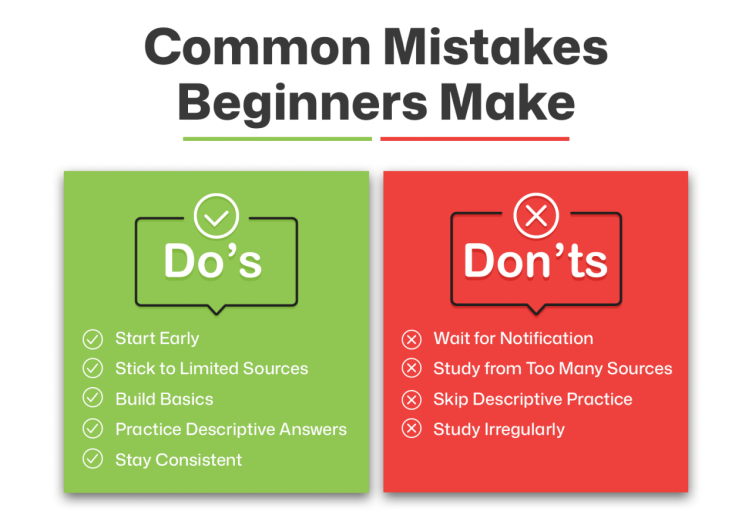
Many beginners either delay starting or start too casually. Some wait for the notification, thinking they have enough time after it comes out. That is a big mistake because you will not get enough time to cover everything once the clock starts ticking. This is a common problem when it comes to practicing and preparing for any government exams.
Another common mistake is trying to study everything from too many sources. The problem is not the lack of information; it is choosing the right material and sticking to it. Beginners often waste precious time jumping from one source to another, thinking they might be missing out.
Conclusion
So, when should beginners start NABARD Grade A preparation? As early as possible, but with a clear plan. 9 to 12 months gives you a safe and smooth preparation journey. The NABARD Grade A syllabus may look huge at first, but when broken down into simple, daily goals, it becomes completely manageable.
Start slow, stay consistent, and keep refining your preparation. By the time nabard grade a 2025 arrives, you will feel confident and ready to take on the exam calmly. Success is not about rushing; it is about smart, steady steps.