

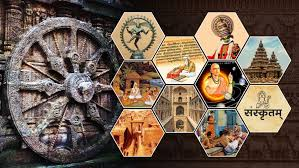
The University Grants Commission (UGC) in 2025 released a draft Learning Outcomes-based Curriculum Framework (LOCF) for multiple disciplines, aiming to integrate Indian Knowledge Systems (IKS) into fields such as anthropology, chemistry, commerce, economics, geography, home science, mathematics, physical education, and political science. While supporters see this as an effort to decolonise education, several states have raised objections, citing concerns of ideological bias.
Redefinition of Discrimination
The draft redefines caste-based discrimination in a narrower sense. According to the new framework, such discrimination applies only when directed against Scheduled Castes (SCs) and Scheduled Tribes (STs). This redefinition could significantly shape how social justice is taught in political science and allied disciplines.
Inclusion of Indian Knowledge Systems
A central feature of the LOCF is the mandatory inclusion of Indian cultural, scientific, and philosophical contributions across subjects. For instance:
- Chemistry honours courses begin with a salutation to Saraswati, the goddess of knowledge.
- Commerce incorporates principles from Kautilya’s Arthashastra.
- Mathematics introduces mandala geometry, yantras, rangoli, and India’s ancient contributions to algebra and calculus.
Subject-Specific Additions
- Commerce – Promotes Bhartiya philosophy for ethical leadership and sustainability, linking concepts like Ram Rajya to corporate social responsibility and ESG frameworks. It emphasises dharmic wealth, trade ethics, and historical guild systems.
- Economics – Draws on Indian ideas of wealth, trade, labour ethics, ecological values, and the king’s role in managing the economy.
- Chemistry – Features modules on traditional Indian fermented beverages such as kanji, mahua, and toddy, while revisiting ancient atomic theories alongside modern science.
- Anthropology – Incorporates perspectives from Charaka, Sushruta, Buddha, and Mahavira on nature-culture relationships, aligning with the NEP’s vision of decolonisation.
Credit Structure and Multidisciplinarity
Despite the National Education Policy’s emphasis on multidisciplinary learning, the draft LOCF retains a strong single-major focus. For example, a proposed BSc Chemistry honours degree requires 172 credits—96 of them in core courses—leaving little room for general electives. Commerce follows a similar model, limiting cross-disciplinary exposure.
Stakeholder Response and Controversy
The UGC has invited public feedback on the draft framework. However, opposition-ruled states have voiced strong protests, alleging that the push for Indian Knowledge Systems represents the saffronisation of education rather than academic reform.