

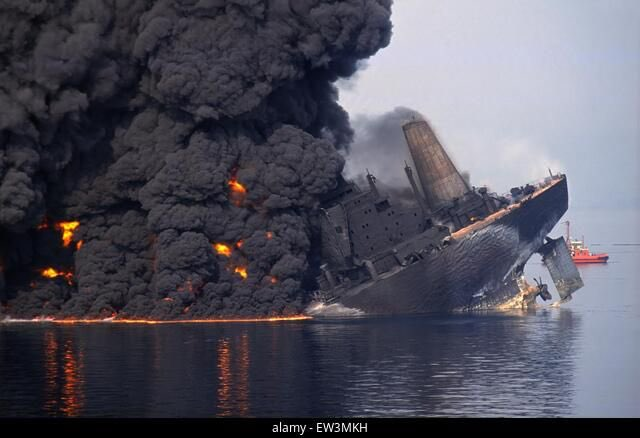
Tensions in the Middle East have raised fresh concerns over the security of the Strait of Hormuz, the world’s most critical oil shipping route. Recent incidents involving damaged vessels and military activity in the region have highlighted the vulnerability of the narrow corridor through which a significant portion of global energy supplies passes.
According to the UK Maritime Trade Operations, three ships were struck by “unknown projectiles” in the strait. One commercial vessel was damaged off the coast of the United Arab Emirates, while another vessel north of Oman was evacuated after a fire broke out. A third ship was also reported damaged at an undisclosed location on March 11.
Meanwhile, the United States military said it had eliminated 16 Iranian mine-laying vessels in the waterway.
A Vital Global Oil Route
The Strait of Hormuz is widely regarded as the world’s most important oil transit chokepoint. Bordered by Iran to the north and Oman and the UAE to the south, the passage connects the Persian Gulf with the Arabian Sea.
Although roughly 50 km wide at its entrance and exit, the strait narrows to about 33 km at its tightest point. Despite its narrow size, it is deep enough for the world’s largest oil tankers.
According to estimates from the U.S. Energy Information Administration, around 20 million barrels of oil pass through the strait daily, representing nearly 20 percent of global oil supply and about $600 billion worth of energy trade annually.
The oil originates not only from Iran but also major Gulf producers such as Saudi Arabia, Iraq, Kuwait, Qatar and the UAE.
Global Economic Impact
About 3,000 ships typically transit the strait each month. However, escalating tensions have significantly reduced maritime traffic and pushed oil prices higher.
Analysts warn that prolonged threats to shipping could sharply raise oil prices and global transportation costs. The cost of chartering a supertanker to ship oil from the Middle East to China has reportedly surged to more than $400,000, nearly double recent levels.
Oil prices recently crossed $100 per barrel amid fears of supply disruption, though prices later stabilised near $90 per barrel.
A closure of the strait would have major consequences for energy-importing economies such as India, China and Japan, which rely heavily on crude shipments from the Gulf.
How Iran Could Block the Strait
Under international law, countries control territorial waters up to 12 nautical miles from their coastlines. At its narrowest point, the shipping lanes of the Strait of Hormuz fall within the territorial waters of Iran and Oman.
Experts say Iran could disrupt traffic by deploying naval mines using fast attack boats or submarines. The country’s naval forces, including the Islamic Revolutionary Guard Corps navy, also operate anti-ship missiles, submarines and fast attack vessels capable of targeting commercial shipping.
However, such actions would risk military retaliation, particularly from the United States.
Limited Alternative Routes
Over the years, Gulf countries have developed pipelines to reduce dependence on the Strait of Hormuz. Saudi Arabia operates a 1,200-km pipeline capable of transporting about 5 million barrels of crude oil per day, while the UAE has built a pipeline linking its oilfields to the port of Fujairah on the Gulf of Oman.
Despite these alternatives, analysts estimate that a full blockade could still reduce global oil supply by 8–10 million barrels per day, potentially triggering major disruptions in energy markets and the global economy.