

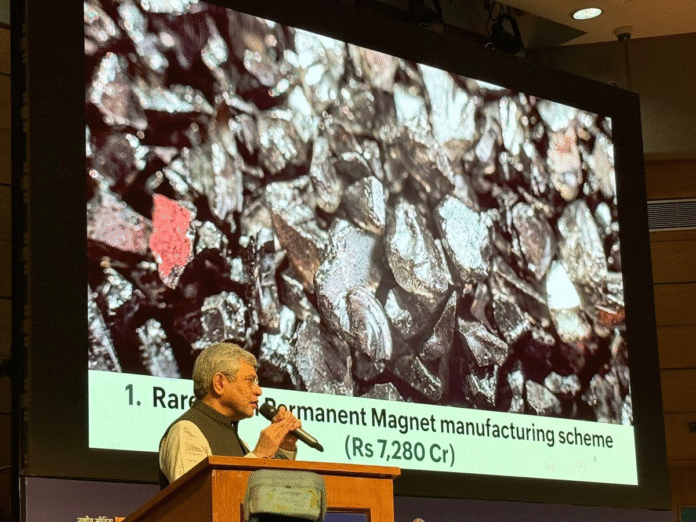
The Union Cabinet, chaired by Prime Minister Narendra Modi, has approved a ₹7,280-crore incentive scheme to promote domestic manufacturing of rare earth permanent magnets (REPMs). The initiative is a key step in India’s long-term strategy to reduce reliance on imported critical minerals and develop a resilient supply chain for high-tech industries.
Objective of the Scheme
The scheme—formally titled the “Scheme to Promote Manufacturing of Sintered Rare Earth Permanent Magnets”—aims to establish an annual production capacity of 6,000 metric tonnes (MTPA) of REPMs. These magnets are essential components in sectors such as:
- Electric vehicles
- Renewable energy systems
- Defence and aerospace
- Medical devices
- Consumer electronics
Duration and Implementation
The programme will span seven years, including:
- Two years for setting up integrated manufacturing facilities
- Five years of incentive disbursement linked to actual REPM sales
The Ministry of Heavy Industries will oversee implementation in coordination with relevant technical ministries. The incentive structure is designed to boost production efficiency and enhance global competitiveness.
Strategic Importance for India
India currently imports a significant portion of its rare earth materials—primarily from China. The new scheme is expected to:
- Build a domestic ecosystem for rare earth processing, sintering, and magnet manufacturing
- Strengthen India’s position in global supply chains
- Support national initiatives like Atmanirbhar Bharat and Make in India
- Accelerate growth in sectors heavily dependent on rare earth magnets, including clean energy and electric mobility
Facts
- Total scheme outlay: ₹7,280 crore
- Annual production target: 6,000 MTPA of REPMs
- Scheme duration: 7 years (2-year setup + 5-year incentives)
- Key beneficiary industries: EVs, defence, aerospace, renewable energy, electronics
Future Prospects and Industry Impact
The government expects the scheme to attract significant private investment and stimulate advanced R&D in magnet technologies. The development of domestic REPM manufacturing capabilities will:
- Strengthen industrial resilience
- Support India’s clean energy and sustainability goals
- Generate high-skilled employment across technology-driven sectors
Overall, the initiative is poised to play a pivotal role in enhancing India’s self-reliance in critical mineral and high-tech manufacturing domains.