

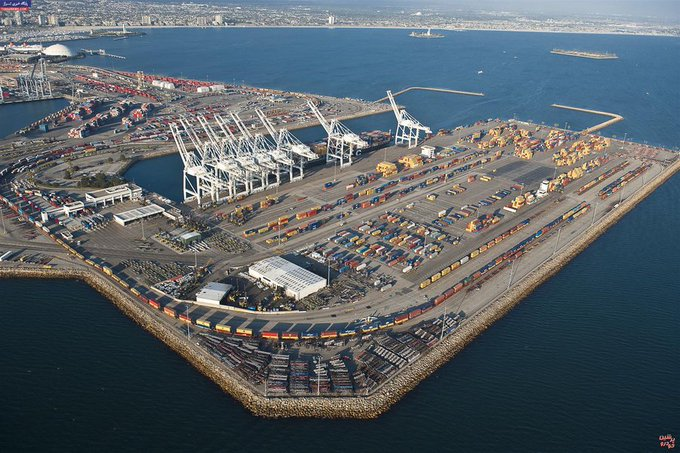
India’s role at Chabahar Port in Iran has once again come into the spotlight after the US sanctions waiver protecting India’s operations ended in September 2025. This development threatens India’s $120 million investment and raises concerns about secondary sanctions. Despite these risks, Chabahar remains central to India’s connectivity strategy, providing a gateway to Central Asia and Afghanistan while bypassing Pakistan.
Geopolitical Importance of Chabahar Port
Chabahar is Iran’s only deep-water oceanic port and plays a pivotal role in India’s regional connectivity.
- Bypassing Pakistan: Pakistan blocks India’s land access to Afghanistan, making Chabahar a critical alternative route.
- Link to Central Asia & Europe: The port is part of the International North-South Transport Corridor (INSTC), which connects Mumbai to Russia via Iran and Azerbaijan.
- Counterbalance to Gwadar: Located close to Pakistan’s Gwadar Port—a project developed by China under the Belt and Road Initiative—Chabahar serves as a strategic counterweight in the Indian Ocean region.
US Sanctions Waiver Revocation: What It Means for India
The US waiver under the Iran Freedom and Counter-Proliferation Act (IFCA), granted in 2018, allowed India to operate the Shahid Beheshti Terminal without penalties. Its revocation in 2025 has major implications:
- Risk of Secondary Sanctions: India Ports Global Limited (IPGL) could now face restrictions on global financial transactions.
- Uncertainty in Investments: India’s $120 million investment in port equipment and operations is at stake.
- Diplomatic Strain: India must balance its strategic ties with Iran against its growing partnerships with the US and other Western allies.
Current Infrastructure and Operations at Chabahar
- Port Capacity: Chabahar features a -16 metre draft, handling vessels up to 120,000 DWT (deadweight tonnage).
- Operational Facilities: India operates cranes, cargo-handling systems, and other equipment at the Shahid Beheshti Terminal.
- Challenges: Despite being functional, the surrounding region has limited urban infrastructure, making logistics and settlement less attractive.
Chabahar Free Zone and India’s Economic Vision
Adjacent to the port lies the Chabahar Free Zone, envisioned as a trade and logistics hub for South Asia.
- Current Gaps: The area lacks basic infrastructure such as housing, schools, hospitals, and hotels.
- Future Potential: Iranian authorities hope to attract Indian companies and investors to build industries and services.
- Cultural Diplomacy: Plans include a cricket stadium in collaboration with the BCCI, symbolising India’s soft power and people-to-people ties with Iran.
Strategic Challenges and Regional Dynamics
Chabahar’s future hinges on how India manages geopolitical headwinds:
- US Pressure: Secondary sanctions could discourage Indian and foreign investments.
- China-Pakistan Axis: The nearby Gwadar Port strengthens China’s foothold in the region through the China-Pakistan Economic Corridor (CPEC).
- Iran’s Position: Tehran’s balancing act between India, China, and Russia will influence long-term cooperation.
Conclusion: The Road Ahead for India at Chabahar
The Chabahar Port project reflects India’s long-term vision of strengthening connectivity, diversifying trade routes, and countering strategic challenges posed by China and Pakistan. While the end of the US sanctions waiver complicates India’s plans, sustained diplomacy, innovative partnerships, and investment in infrastructure could help India retain its critical role at Chabahar.
For India, the port is not just an economic investment but a symbol of regional influence, resilience, and strategic foresight.
india Chabahar Port, India-Iran relations, US sanctions waiver, Gwadar vs Chabahar, INSTC, Indian Ocean strategy, Central Asia trade routes