

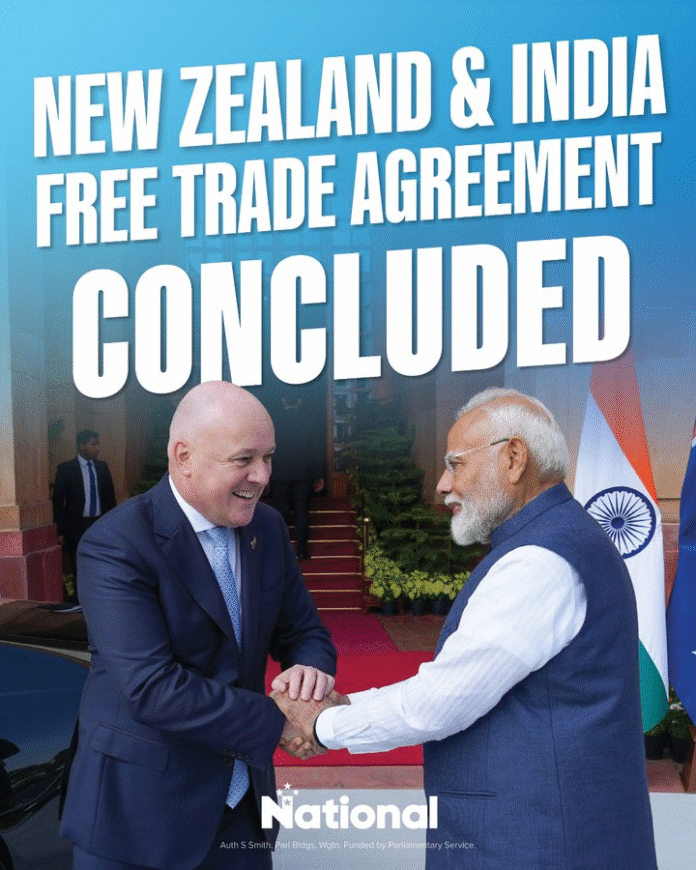
India and New Zealand have concluded negotiations on a long awaited free trade agreement, marking a major step forward in bilateral economic relations. The announcement was made after talks between Prime Minister Narendra Modi and New Zealand Prime Minister Christopher Luxon, signalling strong political intent from both sides to deepen trade, investment and people to people ties. The agreement is being seen as one of India’s fastest trade negotiations with a developed economy and aligns with India’s broader Viksit Bharat vision.
A deal finalised at unusual speed
Negotiations for the free trade agreement began in March 2025 and were concluded after five formal rounds of talks within a span of nine months. Trade experts note that this is a relatively short timeframe for an agreement of this scale, particularly between economies with different market structures and sensitivities. Both governments have described the conclusion as a result of shared ambition and sustained diplomatic engagement.
What India gains from the agreement
Under the agreement, Indian exports will receive zero duty access across all tariff lines in the New Zealand market. This is expected to benefit labour intensive and manufacturing sectors such as textiles, apparel, leather, footwear, marine products, gems and jewellery, engineering goods and automobiles. Easier market access is likely to improve competitiveness of Indian products and open new opportunities for exporters, especially small and medium enterprises.
What New Zealand brings to the Indian market
New Zealand will see tariff reductions or eliminations on about ninety five percent of its exports to India, with more than half of these becoming duty free from the first day the agreement comes into effect. Key exports expected to benefit include sheep meat, wool, forestry and wood products, seafood and select industrial goods. The Indian market is expected to provide significant growth potential for these sectors.
Investment and mobility opportunities
Beyond trade in goods, the agreement places strong emphasis on investment and services. New Zealand has committed to facilitating long term investment into India over the next fifteen years, supporting sectors such as infrastructure, manufacturing, services and innovation. The pact also includes improved mobility provisions for Indian professionals, students and youth, including new employment entry pathways, work holiday visas and enhanced post study work opportunities.
Protection for sensitive sectors
India has taken a calibrated approach to tariff liberalisation under the agreement. Sensitive sectors such as dairy, milk products, coffee, sugar, onions, spices and edible oils have been excluded from tariff concessions. The government has said these safeguards are essential to protect domestic farmers and local industries from sudden import pressures.
What it means for bilateral trade
Bilateral trade in goods and services between India and New Zealand currently stands at around two point four billion dollars annually. With the free trade agreement in place, both countries aim to double trade volumes within five years. Officials believe the deal will strengthen supply chains, create employment and enhance economic resilience on both sides.
The road ahead
The agreement is expected to be formally signed in the coming months, followed by legal vetting and parliamentary approvals. Once implemented, it will mark a significant milestone in India New Zealand relations, offering tangible benefits for exporters, investors, professionals and students while reinforcing strategic economic cooperation between the two nations.