

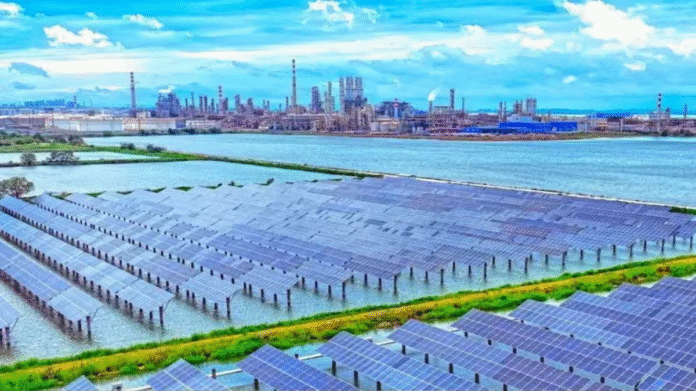
China has stunned the global energy community with a breakthrough claim that could reshape the future of clean fuel. According to recent reports, Chinese researchers have developed a technology that converts seawater directly into clean hydrogen fuel at a cost as low as Rs 24. The announcement has drawn immediate attention from major energy players including Saudi Arabia, the UAE and the United States, as it challenges existing assumptions about hydrogen production costs.
What the breakthrough is about
Hydrogen is widely regarded as a key fuel for a low-carbon future because it emits only water when burned. However, producing green hydrogen has remained expensive and resource-intensive. China’s innovation reportedly allows hydrogen to be extracted directly from seawater, eliminating the need for costly desalination a major barrier in conventional hydrogen production.
Why seawater changes the game
Freshwater is increasingly scarce, and traditional electrolysis depends heavily on purified water. Seawater, which makes up nearly 97 percent of Earth’s water, has always been difficult to use due to salt corrosion and electrode damage. Chinese scientists claim they have developed corrosion-resistant electrodes and a stable catalytic process that enables direct hydrogen extraction from seawater, a problem researchers worldwide have struggled to solve.
How significant is the Rs 24 claim
The reported Rs 24 figure refers to an estimated production cost under controlled research conditions. While commercial-scale pricing may vary, experts note that even approaching this cost would dramatically reduce current green hydrogen prices. Today, hydrogen production remains several times more expensive, limiting its widespread use in transport, steel manufacturing and power generation.
Why global powers are watching closely
Oil-rich nations like Saudi Arabia and the UAE are investing heavily in hydrogen to prepare for a post-oil future. Meanwhile, the US and Europe see hydrogen as essential to meeting climate targets. China’s potential ability to produce ultra-low-cost hydrogen from seawater could shift global energy leadership, alter fuel trade dynamics and strengthen China’s strategic position in clean energy technology.
Is the technology ready yet
Despite the excitement, experts urge caution. The technology is still in experimental or pilot stages, and large-scale deployment will require extensive testing, infrastructure and investment. Questions remain about long-term durability, efficiency in real marine environments and environmental impact.
Why this matters
If China’s seawater-to-hydrogen technology proves scalable, it could transform coastlines into clean energy hubs, reduce dependence on fossil fuels and accelerate the global transition to sustainable energy. What once seemed impossible may soon become a defining chapter in the future of clean fuel
.