

Long before the rise of digital entertainment, India nurtured a rich tradition of board games that were not merely pastimes, but reflections of life, morality and intellect. From royal courts to village courtyards, these games shaped thinking, storytelling and even global gaming culture. Many of the world’s most beloved games today quietly trace their origins back to ancient India.
The Birth of Strategy: Chaturanga
Emerging around the 6th century during the Gupta Empire, Chaturanga is widely recognised as the ancestor of modern chess. The game represented the four divisions of the Indian army—infantry, cavalry, elephants and chariots—and was used to teach warfare strategy to princes. Over centuries, it travelled across Persia and Europe, eventually evolving into chess, making it one of India’s most influential intellectual exports.
The Game of Kings: Pachisi
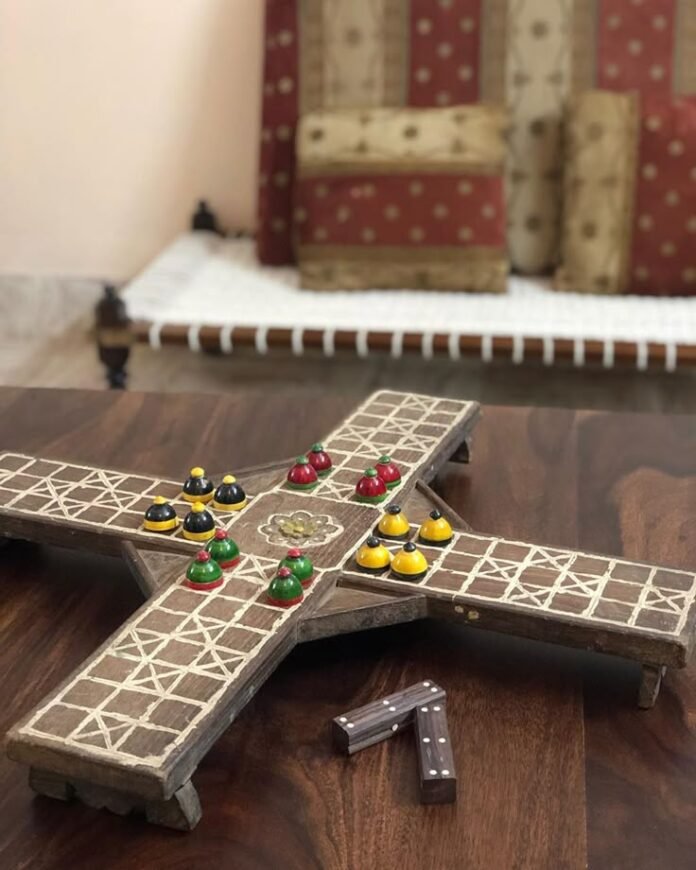
Dating back to at least 200 BCE, Pachisi was played on a cross-shaped board using cowrie shells as dice. It gained immense popularity during the Mughal era, with emperors like Akbar playing life-sized versions in palace courtyards.
Today, its simplified version lives on globally as Ludo—played in millions of homes, often without the awareness of its royal Indian origins.
The Moral Map: Moksha Patam
Before becoming the playful Snakes and Ladders, this game was a profound spiritual tool. Known as Moksha Patam, it symbolised the journey of the soul—where virtues lifted you upward and vices pulled you down. Originating in ancient India, it was designed to teach karma and ethical living, a meaning that was diluted when it spread to the West.
The Forgotten Board: Ashtapada
Predating chess, Ashtapada was played on an 8×8 grid and may have served as the foundation for later strategy games. References to it appear in ancient texts, even in discussions of games discouraged by spiritual leaders like the Buddha.
Though its exact rules are lost, its influence on the evolution of board games is undeniable.
The Social Game: Chaupar
A close relative of Pachisi, Chaupar has been played across North India, especially Rajasthan, for centuries. Found in epics and folklore, it blended luck with strategy and was often a communal activity—played during gatherings, festivals and family events. Its cultural presence remains strong in rural India even today.
Games of Skill and Nature
India also developed mathematically rich and nature-inspired games. Variants of the mancala family—such as Pallankuzhi in South India—trained players in counting and planning. Meanwhile, hunt games like Adu Puli Aattam (goats and tigers) reflected ecological relationships, where strategy depended on survival instincts and positioning.
A Global Legacy
What makes these games extraordinary is their journey beyond India. Through trade, migration and cultural exchange, they spread across Asia, the Middle East and Europe. Chess, Ludo and Snakes & Ladders—now global staples—carry within them echoes of Indian philosophy, mathematics and storytelling.
More Than Just Games
Ancient Indian board games were never just about winning or losing. They taught discipline, ethics, foresight and patience. They mirrored life—sometimes governed by skill, sometimes by chance, but always rich in meaning.
Today, as the world rediscovers traditional knowledge systems, these games are making a quiet comeback. In their simple boards and timeless rules lies a profound truth: long before modern education systems, India was already teaching life—one move at a time.