

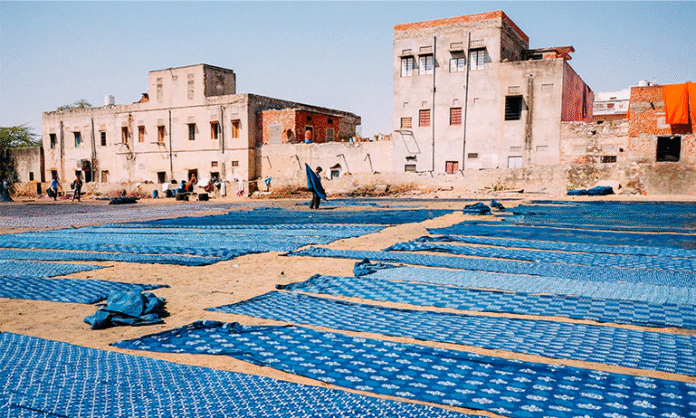
Long before digital prints and power looms transformed the textile industry, artisans in Rajasthan were creating intricate patterns on fabric using nothing more than carved wooden blocks, natural dyes and remarkable precision. Known as hand block printing, this traditional technique remains one of India’s most celebrated textile crafts and continues to flourish in several parts of the state.
A Craft Rooted in History
The origins of block printing in India date back at least to the 12th century, with archaeological and historical evidence suggesting that printed textiles from western India were traded widely across Asia and the Middle East. In Rajasthan, the craft evolved prominently in regions such as Sanganer and Bagru near Jaipur. These areas became hubs for printing communities, especially the Chhipa community, whose name itself comes from the Hindi word chhapna, meaning “to print”.
The presence of clean river water historically made these locations ideal for washing fabrics and fixing dyes — an essential part of the printing process.
The Art of Printing by Hand
The process begins not with fabric, but with wood. Skilled craftsmen carve detailed patterns onto blocks made from teak or sheesham wood. Each design is carefully chiselled by hand, and every colour in the final pattern requires a separate block.
The fabric, often cotton or silk, is first washed and treated to prepare it for dyeing. Artisans then dip the carved blocks into trays of dye and press them rhythmically onto the stretched fabric. With practiced precision, they align each block impression so that the pattern flows seamlessly across the cloth. A single piece may require hundreds of such impressions.
Traditional block printing in Rajasthan often uses natural dyes derived from plants, minerals and other organic sources, giving the textiles their earthy and vibrant colours.
Distinct Styles and Motifs
Different regions developed their own characteristic styles. The delicate floral patterns of Sanganer prints contrast with the earthy tones and bold motifs of Bagru printing. Another well-known technique is Dabu Printing, a resist-dyeing method in which a mud paste is applied to certain areas of the fabric before dyeing to create striking patterns.
Common motifs include butis (small floral motifs), paisleys, vines and geometric jaal patterns, many inspired by nature and traditional Rajasthani aesthetics.
Why the Craft Endures
Despite the rise of machine printing, Rajasthan’s block prints remain widely admired for their authenticity and craftsmanship. Each piece carries slight variations — a reminder that it was made by human hands rather than machines.
Today, these prints appear not only in traditional garments but also in contemporary fashion, home furnishings and international design collections. For many artisans in Rajasthan, block printing is more than a livelihood — it is a living tradition that continues to connect history, creativity and community through every stamped pattern.