

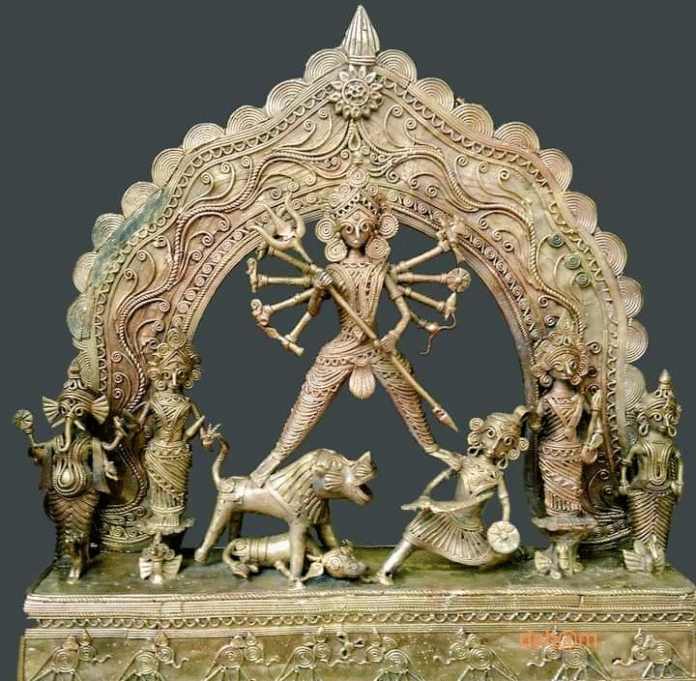
The Essence of Dhokra Shilp
Dhokra Shilp, a traditional non-ferrous metal casting craft, is a vibrant expression of Madhya Pradesh’s rich tribal heritage. Practiced widely by the local tribal communities in Betul district, this art form is deeply rooted in ancient techniques and tribal beliefs. Created using the intricate lost-wax casting method, Dhokra Shilp reflects a unique blend of artistry and cultural significance, showcasing the creativity of India’s indigenous communities.
Crafting Stories in Metal
Dhokra art is renowned for its detailed depictions of animals, birds, deities, and everyday life, each piece serving as a stunning example of folk art. These handcrafted sculptures are not just aesthetically pleasing but also carry the essence of tribal traditions and beliefs. From small figurines to elaborate sculptures, every creation tells a story of the artisans’ connection to their culture and environment.
A Legacy of Craftsmanship
The origins of Dhokra Shilp trace back to the Indus Valley Civilization, making it one of the oldest known metal casting techniques. Today, it thrives in regions like Madhya Pradesh, Odisha, West Bengal, and Chhattisgarh. Beyond its artistic value, Dhokra is a vital source of livelihood for artisans, preserving their cultural heritage while providing economic sustenance.

Global Appeal and Market Presence
Dhokra products have found a significant place in both national and international markets. At Indian handicraft fairs like Hunar Haat, Surajkund Mela, and Dilli Haat, these creations attract art enthusiasts and collectors alike. Globally, Dhokra art is in demand in countries such as Europe, the USA, Japan, Australia, and the Middle East, with prices for a single piece ranging from $30 to over $500, depending on the design and size.
Preserving a Cultural Treasure
Dhokra Shilp is more than just an art form; it is a testament to the resilience and creativity of India’s tribal communities. By supporting this craft, we not only celebrate its timeless beauty but also contribute to sustaining the livelihoods of artisans and preserving an invaluable cultural legacy for future generations.