

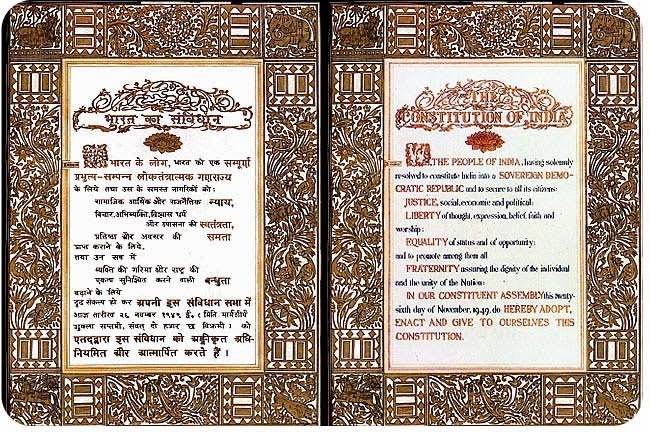
Observed every year on November 26, Constitution Day commemorates the historic adoption of the Indian Constitution in 1949, recognising the vision, debates and collective efforts of the Constituent Assembly in shaping the foundation of the world’s largest democracy.
Every year on November 26, India observes Samvidhan Divas, also known as Constitution Day, to commemorate the adoption of its Constitution by the Constituent Assembly in 1949. The day marks a defining moment in India’s journey as an independent nation, when the country formally adopted the document that would establish its democratic framework, define the functioning of its institutions and safeguard the rights and freedoms of its citizens. More than a historical observance, the day reminds citizens of the principles and responsibilities that form the foundation of the Indian Republic.
The making of the Indian Constitution was an extensive exercise involving nearly three years of discussions, debates and deliberations. The Constituent Assembly first met on December 9, 1946, under the presidency of Dr Sachchidananda Sinha, who served as its temporary chairman. Dr Rajendra Prasad was subsequently elected as the permanent President of the Assembly on December 11, 1946. Following India’s Independence and Partition in 1947, the Assembly continued its work amid significant political and social challenges, with the responsibility of creating a constitutional framework for a diverse and newly independent country.
A major milestone came on August 29, 1947, when the Constituent Assembly appointed a Drafting Committee under the chairmanship of Dr Bhimrao Ramji Ambedkar. The committee was entrusted with preparing the draft Constitution by examining the proposals, principles and recommendations discussed during the Assembly’s proceedings. Dr Ambedkar played a crucial role in shaping the document, bringing together constitutional ideas while addressing India’s distinctive social, political and administrative requirements. He is consequently remembered as the chief architect of the Indian Constitution.
The Drafting Committee studied constitutional systems from several countries while ensuring that the final document reflected India’s own historical experiences and aspirations. Parliamentary democracy, fundamental rights, federal arrangements, an independent judiciary and safeguards for disadvantaged communities were among the important features considered during the drafting process. The Assembly debated the draft article by article, allowing members to propose amendments and discuss provisions concerning citizenship, governance, equality, religious freedom and the distribution of powers.
After nearly three years of work, the Constituent Assembly adopted the Constitution on November 26, 1949. It originally contained 395 Articles, divided into 22 Parts, and eight Schedules, making it the longest written Constitution of any sovereign country at the time. Although adopted on November 26, the Constitution came into full effect on January 26, 1950. The date was chosen to honour the declaration of Purna Swaraj, or complete independence, made by the Indian National Congress in 1930. With its commencement, India became a sovereign democratic republic.
The Constitution’s Preamble expresses the fundamental ideals upon which the country is built: Justice, Liberty, Equality and Fraternity. These principles reflect the vision of the framers for a nation where every citizen enjoys equal dignity, freedom and opportunities, irrespective of caste, religion, gender or social background. The Constitution also guarantees Fundamental Rights, establishes the Directive Principles of State Policy to guide governance and outlines Fundamental Duties to encourage responsible citizenship.
Although November 26 marked the adoption of the Constitution in 1949, it was officially designated as Constitution Day by the Government of India in 2015. The decision was taken to commemorate the 125th birth anniversary of Dr B.R. Ambedkar and promote greater awareness about the Constitution and its significance among citizens. Since then, the day has been observed through Preamble readings, educational programmes, discussions, debates, seminars and awareness campaigns across government institutions, schools and colleges.
The distinction between Constitution Day and Republic Day is particularly important. November 26 commemorates the adoption of the Constitution by the Constituent Assembly in 1949, whereas January 26 marks the day it came into effect in 1950, establishing India as a republic.
Ultimately, Samvidhan Divas is not merely a celebration of a historic document but a recognition of the collective vision and determination that shaped modern India. It honours the members of the Constituent Assembly, acknowledges Dr B.R.
Ambedkar’s contribution and encourages every citizen to understand the rights, duties and democratic values enshrined in the Constitution. As the country observes November 26 each year, the occasion renews the commitment to uphold constitutional principles and strengthen the democratic spirit of the nation.