

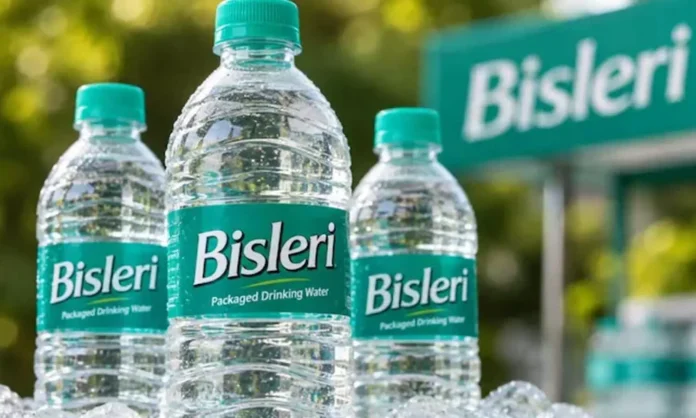
For generations of Indian consumers, Bisleri has been almost synonymous with packaged drinking water. From railway stations and airports to restaurants, hotels and households, the green-labelled bottle has built a reputation as one of the country’s most recognised and trusted water brands. However, that trust is now facing an important test after the Food Safety and Standards Authority of India (FSSAI) declared a regulatory sample of Bisleri packaged drinking water unsafe and sanctioned prosecution against the company under the Food Safety and Standards Act, 2006.
The development has raised questions about packaged drinking water quality, laboratory testing and consumer safety, particularly because the findings involve chemical substances that can pose health risks.
The matter dates back to September 2025, when FSSAI collected six samples from Bisleri’s manufacturing facility in Goa. According to the company, five samples met the prescribed standards, while one recorded bromate levels of 12 micrograms per litre against the permissible limit of 10 micrograms per litre. Bromate is a chemical compound that can form during certain water-treatment processes, particularly ozonation, when bromide present in water reacts with ozone.
Excessive exposure to bromate is a health concern because of its potential carcinogenic properties.
Following the initial findings, Bisleri challenged the results and appealed for further examination in November 2025. The sample was subsequently sent to a referral food laboratory for testing. While the company stated that the referral laboratory found bromate within the prescribed limit, it also detected polycyclic aromatic hydrocarbons (PAHs), a group of chemical compounds that includes substances associated with cancer risks. The referral laboratory again declared the sample unsafe.
Based on these laboratory findings, FSSAI sanctioned prosecution against Bisleri International Pvt. Ltd. under the Food Safety and Standards Act, 2006. The action marks a significant regulatory development for a brand whose reputation has long been associated with drinking water safety and quality assurance.
However, Bisleri has disputed aspects of the findings and maintained that its products remain safe for consumption. In its response on November 23, 2026, the company clarified that the matter concerns a single batch manufactured at its Goa facility in September 2025, one of its 143 manufacturing facilities. It further stated that an independent test conducted at an FSSAI-approved laboratory found bromate levels within permissible limits. The company said it submitted these findings to FSSAI’s Western Regional Office on February 2, 2026, but received no further communication and believed the matter had been closed. It also stated that it had not received a formal prosecution notice.
Bisleri has reiterated that drinking water safety remains its priority and that it conducts more than 90 quality checks across a 10-step manufacturing process. The company has also expressed its willingness to cooperate with the regulator and address the matter through the appropriate legal channels.
What happens next will be important for both the company and consumers. The prosecution sanction could lead to formal court proceedings, where the regulatory findings, laboratory reports and the company’s defence will be examined. The differences between the testing results, particularly concerning bromate and the detection of PAHs, will remain central to the proceedings. FSSAI’s broader scrutiny of packaged drinking water brands, including the collection of samples from other manufacturers, also indicates a wider focus on quality compliance across the sector.
It is equally important to understand that the present findings relate to a specific regulatory sample and do not establish that every Bisleri bottle, batch or manufacturing facility is unsafe. Nor does the sanction to prosecute amount to a final judicial conviction. The company’s response and the regulator’s findings will have to be assessed through the due legal process.
Nevertheless, the episode raises an important question for India’s packaged drinking water industry: how effectively are quality standards being monitored and maintained at every stage, from treatment and bottling to distribution? For consumers, trust in a brand is built over years but depends on consistent transparency and accountability. As the matter progresses, the focus will not only be on Bisleri’s defence but also on how food safety authorities ensure that every bottle reaching consumers meets the required standards. For a country increasingly dependent on packaged drinking water, safety cannot simply be a brand promise; it must be backed by verifiable quality and regulatory accountability.