

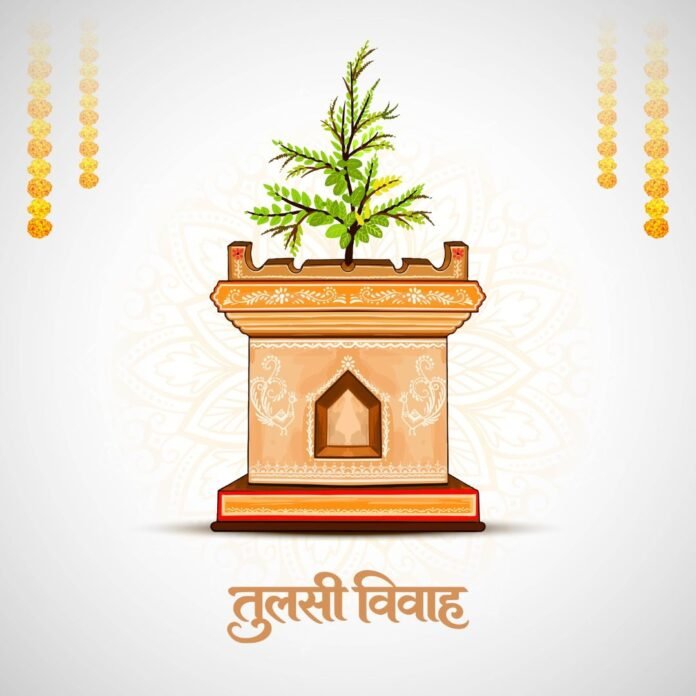
Tulsi Vivah, also known as Tulasi Kalyanam, is an important Hindu festival that celebrates the ceremonial marriage of the sacred Tulsi plant with Lord Vishnu, represented by the Shaligram Shila or an idol of Lord Krishna. Observed with devotion and traditional festivities, the occasion symbolises the divine union, purity, marital harmony and prosperity. In 2026, the main observance falls on Saturday, November 21, on Kartik Shukla Dwadashi, a day after Dev Uthani Ekadashi. The festival also marks the beginning of the auspicious Hindu wedding season following the four-month period of Chaturmas.
Tulsi holds a special place in Hindu religious and cultural traditions. Commonly known as holy basil, the plant is considered sacred and is worshipped in millions of Hindu households. It is traditionally associated with Goddess Lakshmi and is regarded as a symbol of devotion, purity and good fortune. Many families maintain a Tulsi plant in their courtyards, offering prayers and lighting a diya near it every morning and evening. The plant is also valued in traditional Indian medicine and Ayurveda for its various medicinal properties.
Religious Significance of Tulsi Vivah
Tulsi Vivah is celebrated after Dev Uthani Ekadashi, which marks the awakening of Lord Vishnu from his four-month-long Yoga Nidra. According to Hindu beliefs, auspicious ceremonies such as weddings, engagements and housewarming functions resume after this occasion. The ceremonial marriage of Tulsi and Lord Vishnu is therefore considered symbolic of the beginning of the Hindu wedding season.
The festival is associated with happiness, prosperity, marital bliss and harmony in family life. Devotees believe that performing Tulsi Vivah with devotion brings the blessings of Lord Vishnu and Goddess Lakshmi into the household. In several traditions, the ceremony is also performed by families who wish to seek blessings for a happy married life and the well-being of their children.
The Story Behind Tulsi Vivah
One of the most popular legends associated with Tulsi Vivah revolves around Vrinda, a devoted woman and the wife of the demon king Jalandhar. According to Hindu mythology, Vrinda was an ardent devotee of Lord Vishnu, and her unwavering devotion and chastity protected her husband, making him extremely powerful.
As Jalandhar’s tyranny increased, the gods approached Lord Vishnu for help. To defeat Jalandhar, Lord Vishnu assumed his appearance and approached Vrinda, disrupting her devotion and the spiritual protection surrounding her husband. When Vrinda discovered the truth, she was deeply distressed and cursed Lord Vishnu to turn into a stone. This is believed to be associated with the origin of the Shaligram Shila, a sacred representation of Lord Vishnu.
Overcome with grief, Vrinda gave up her earthly life. Lord Vishnu, recognising her devotion, blessed her to be reborn as the sacred Tulsi plant. He also promised to marry her in this form. The divine union of Tulsi and Lord Vishnu is celebrated every year as Tulsi Vivah. Different regional and religious traditions narrate variations of this legend, but the central theme remains the triumph of devotion and the divine recognition of faith.
Rituals and Traditions of Tulsi Vivah
The celebrations begin with cleaning and decorating the area surrounding the Tulsi plant, usually located in the courtyard or a designated space in the house. A small mandap is prepared using sugarcane stalks, flowers and traditional decorations. The Tulsi plant is adorned like a bride with a red or colourful chunri, ornaments, flowers, turmeric and kumkum. A Shaligram stone or an idol of Lord Vishnu or Krishna is placed beside it as the groom.
The ceremony is performed much like a traditional Hindu wedding. Devotees offer flowers, fruits, sweets, turmeric, kumkum and other puja items to the deities. Seasonal offerings such as sugarcane, amla, berries and water chestnuts are also commonly included. Family members gather to perform prayers, sing devotional songs and recite the Tulsi Vivah Katha. The wedding rituals may include kanyadaan, the exchange of garlands and seven ceremonial rounds around the Tulsi plant. The ceremony concludes with aarti and the distribution of prasad among family members and guests.
In many regions, the festival is celebrated with great enthusiasm through colourful rangolis, lighting of traditional lamps and community gatherings. Women often participate in the rituals, praying for the happiness and prosperity of their families. While the main observance in 2026 is November 21, some communities perform the ceremony on Dev Uthani Ekadashi itself or according to their regional customs up to Kartik Purnima.
A Celebration of Faith and Indian Traditions
Beyond its religious significance, Tulsi Vivah reflects the close relationship between nature, spirituality and everyday life in Indian culture. The worship of the Tulsi plant highlights the traditional respect for nature and the belief that plants and natural elements are integral to human well-being. The festival also brings families and communities together through rituals that have been passed down through generations.
Tulsi Vivah is not simply a symbolic wedding ceremony but a celebration of devotion, commitment, purity and the preservation of cultural traditions. As households decorate their courtyards and offer prayers to Tulsi and Lord Vishnu, the festival marks a renewed beginning filled with hope, happiness and auspiciousness.