

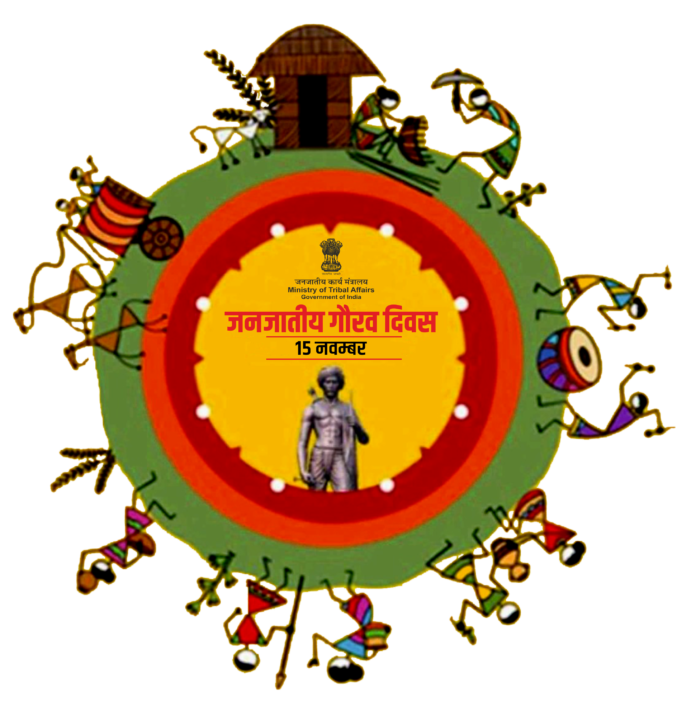
India’s history is shaped not only by its rulers, reformers and mainstream freedom movements but also by the courage, sacrifices and contributions of its tribal communities. From resisting colonial rule to preserving ancient traditions, languages, art forms and ecological knowledge, India’s Janjatis have played an important role in shaping the country’s cultural and historical identity. Recognising this invaluable legacy, Janjatiya Gaurav Divas is celebrated every year on November 15 to honour tribal freedom fighters and acknowledge the rich heritage, identity and contributions of India’s tribal communities.
The date holds special significance as it marks the birth anniversary of Bhagwan Birsa Munda, one of India’s most celebrated tribal freedom fighters. In 2026, the country observes his 151st birth anniversary. The Government of India officially declared November 15 as Janjatiya Gaurav Divas in 2021, as part of the Azadi Ka Amrit Mahotsav celebrations marking 75 years of India’s Independence. The observance aims to bring greater recognition to tribal heroes whose struggles and sacrifices form an important part of India’s freedom movement but have often received limited attention in mainstream historical narratives.
Born on November 15, 1875, in Ulihatu village of present-day Jharkhand, Birsa Munda emerged as a powerful leader of the Munda tribal community during British rule. He challenged colonial exploitation, oppressive land arrangements and the interference of outsiders in tribal life. The loss of traditional land rights, forced labour and exploitation had created widespread discontent among tribal communities in the Chotanagpur region.
Birsa Munda mobilised people against these injustices and led the Ulgulan, meaning the ‘Great Rebellion’, which became a significant chapter in the history of tribal resistance. His call for Abua Dishum, Abua Raj (our land, our rule) reflected the aspirations of tribal communities to protect their land, identity and self-governance. He also encouraged social and religious reforms within his community. Although he died in British custody on June 9, 1900, at the age of 25, his legacy continues to inspire generations. Remembered as Dharti Aaba, meaning ‘Father of the Earth’, Birsa Munda remains a symbol of courage, dignity and the struggle for tribal rights.
India is home to one of the world’s most diverse tribal populations. According to the 2011 Census, Scheduled Tribes account for approximately 8.6 per cent of the country’s population, comprising more than 10.45 crore people. More than 700 tribal communities are officially recognised as Scheduled Tribes under Article 342 of the Constitution. They inhabit different geographical regions, including the forests and hills of central India, northeastern states, the Himalayan belt, western India and the Andaman and Nicobar Islands.
Communities such as the Bhils, Gonds, Santhals, Mundas, Oraons, Todas, Khasis, Garos and Nagas have distinct languages, customs, traditional knowledge systems and social practices. Their cultural traditions are reflected in folk music, dance, handicrafts, paintings, festivals and oral storytelling. Art forms such as Gond painting and Warli art are important expressions of India’s tribal cultural heritage. Many communities also possess generations of knowledge about forests, medicinal plants, biodiversity, agriculture and sustainable ways of living with nature. Their traditional practices reflect a deep understanding of local ecosystems and the importance of conserving natural resources. Each tribal community has its own distinct identity, history and relationship with its environment, making India’s cultural diversity even richer.
The history of India’s freedom struggle also includes several tribal uprisings against British colonial rule, exploitation, displacement and restrictions on traditional rights. Long before Independence in 1947, tribal communities across the country organised resistance to protect their land, forests, livelihoods and cultural identities. Among the prominent leaders were Tilka Manjhi, who resisted British authority in the eighteenth century; Sidhu and Kanhu Murmu, who led the Santhal rebellion of 1855–56; Rani Gaidinliu, who became a symbol of resistance in the Northeast; and Alluri Sitarama Raju, who led the Rampa Rebellion of 1922–24. Veer Narayan Singh of Chhattisgarh also holds an important place in the history of resistance against British rule. Their struggles reflected the determination of tribal communities to defend their rights and way of life. Janjatiya Gaurav Divas provides an opportunity to remember these lesser-known chapters of Indian history and give tribal freedom fighters their rightful place in the country’s collective memory.
The significance of the day extends beyond remembering historical figures. It also highlights the need for education, healthcare, livelihood opportunities, infrastructure, social inclusion and the protection of tribal rights. The Constitution provides several safeguards for Scheduled Tribes, while the Forest Rights Act, 2006, recognises the rights of forest-dwelling tribal communities and other traditional forest dwellers. Several government initiatives focus on tribal welfare and development. The Pradhan Mantri Janjati Adivasi Nyaya Maha Abhiyan (PM-JANMAN) aims to improve basic facilities and living conditions among Particularly Vulnerable Tribal Groups (PVTGs). The Dharti Aaba Janjatiya Gram Utkarsh Abhiyan focuses on bridging infrastructure and service-delivery gaps in tribal-majority villages. Eklavya Model Residential Schools seek to provide quality education to tribal students, while scholarship programmes support their educational aspirations.
In 2026, the Ministry of Tribal Affairs is observing Janjatiya Gaurav Pakhwada from November 1 to 15, culminating in Janjatiya Gaurav Divas. The nationwide observance focuses on celebrating tribal heritage, recognising the contributions of tribal freedom fighters and strengthening awareness of welfare initiatives. Activities include cultural programmes, exhibitions, tribal art and craft fairs, health camps and educational events. Special efforts are also being made to improve the delivery of government welfare schemes to tribal communities at the grassroots level.
Janjatiya Gaurav Divas is a reminder that India’s identity is incomplete without acknowledging the contributions and experiences of its tribal communities. Their role in the freedom struggle, rich cultural traditions, traditional knowledge and enduring connection with nature form an integral part of the country’s heritage. The occasion is not merely about remembering the heroes of the past but also about recognising the voices, aspirations, rights and contributions of tribal communities in building a more inclusive and culturally vibrant India.