

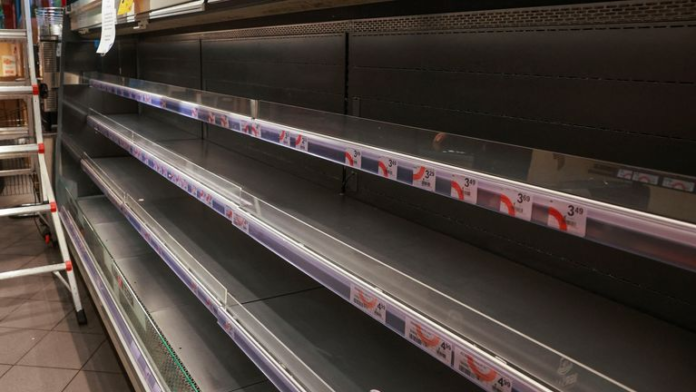
A wave of cyber-attacks targeting supermarket chains across at least 10 European countries on Monday has prompted European Union officials to warn of a deliberate attempt to disrupt the food supply chain. Supermarkets in Belgium, Estonia, Finland, Ireland, Italy, Luxembourg, the Netherlands, Portugal, Germany and Sweden reported problems. A significant rise in refrigerator and freezer temperatures forced retailers to discard food worth substantial amounts. Temperatures inside refrigeration units at some supermarket chains reportedly soared to as high as 50 degree celsius (122F).
No one has so far claimed responsibility for the cyber-attacks. The European Union has expressed serious concern over the incidents, which come just three weeks after a cyber-attack disrupted operations at as many as 700 grocery stores in France, resulting in food losses estimated at tens of millions of euros.
The vulnerability of refrigeration systems and other devices that can be monitored remotely has raised concerns about potential government-backed hybrid attacks. EU Commissioner for Agriculture and Food Christophe Hansen said the bloc was taking the incidents very seriously and warned of possible further disruptions.
European Commission spokesman Thomas Regnier refrained from attributing responsibility but said the incidents highlighted how cyber-attacks could disrupt essential services and affect people’s daily lives. “These are not isolated incidents and of course we have to be collectively resilient and prepared for such cyber incidents,” he said.
In Italy, Prime Minister Giorgia Meloni’s government convened a meeting with intelligence chiefs. However, it said the impact of the attacks was “currently very limited”, adding that most of the country’s food distribution network had updated security systems capable of defending against such threats. According to Italy’s national cybersecurity agency, at least four Co-op supermarkets in Sicily and one business in Tuscany were affected.
Meloni’s office said the affected businesses were largely operating with obsolete security systems, interfaces directly exposed to the internet and inadequate authentication mechanisms.
Belgium was among the worst-affected countries, with dozens of supermarket stores reporting refrigeration failures. Federal prosecutors have launched an investigation into the incidents.