

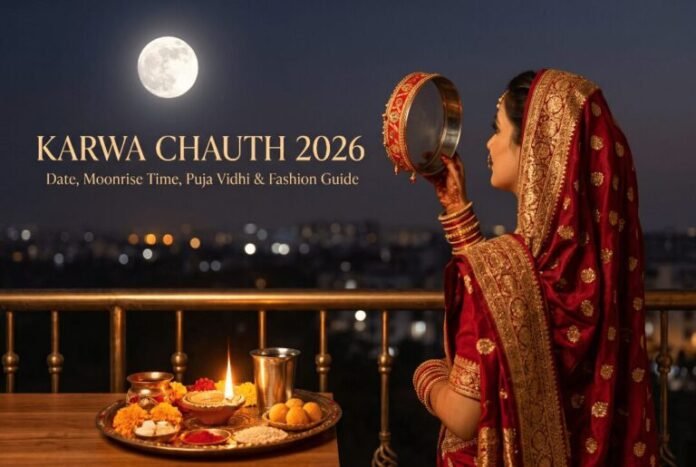
Karva Chauth is a traditional Hindu festival observed by married women across several parts of India, particularly in Rajasthan, Uttar Pradesh, Punjab, Haryana, Madhya Pradesh and Delhi. Celebrated on the fourth day after the full moon of the Hindu month of Kartik, according to the traditional calendar, the festival is associated with marital devotion, prayers for a husband’s long life and the enduring bond between spouses. In 2026, Karva Chauth falls on October 29.
The festival derives its name from two words: karva, meaning an earthen pot used in the rituals, and chauth, meaning the fourth day. Traditionally, women observe a fast from sunrise until moonrise, praying for the well-being, prosperity and longevity of their husbands. Over time, the festival has also come to represent love, companionship and the celebration of marital relationships.
The significance of Karva Chauth lies in its association with faith, commitment and family traditions. For many women, the fast is an expression of devotion and a way of participating in a cultural practice passed down through generations. While traditionally observed by married women, the festival’s contemporary celebrations increasingly emphasise mutual care and affection between partners.
One of the most widely known stories associated with Karva Chauth is the legend of Queen Veeravati. According to the popular tale, Veeravati, a devoted wife, observed a strict fast for her husband’s well-being. Unable to bear her hunger and thirst, she was deceived by her brothers, who created the appearance of a rising moon using a light and a mirror. Believing that the moon had appeared, she broke her fast. The story says that she subsequently learnt of her husband’s misfortune and prayed with deep devotion until divine intervention restored his life. The legend is often recounted to illustrate the importance of faith and the traditional significance of completing the fast after sighting the moon.
Another story associated with the festival is that of Karva, a devoted wife who used her courage and determination to protect her husband. Different regional traditions recount variations of these legends, reflecting the festival’s rich oral storytelling heritage.
Preparations for Karva Chauth often begin days in advance, with women purchasing traditional clothing, jewellery, bangles, henna and items required for the puja. Markets in many cities take on a festive atmosphere, with shops displaying colourful accessories, decorated karvas, puja thalis and sweets. Women may dress in red, maroon, pink or other festive colours, often choosing sarees or lehengas and wearing traditional ornaments.
The day typically begins before sunrise with sargi, a pre-dawn meal traditionally prepared or given by the mother-in-law. It may include fruits, sweets, dry fruits, savoury foods and other dishes intended to sustain women through the day. After sargi, women begin their fast, traditionally abstaining from both food and water until moonrise. Customs vary between families, and not every woman observes the fast in the same way.
During the afternoon or evening, women gather for the Karva Chauth puja. They arrange a decorated puja thali containing items such as a diya, flowers, vermilion, rice, sweets and a karva filled with water. The group may listen to or recite the Karva Chauth vrat katha, the traditional fasting story, while following local customs. In some communities, women exchange karvas or participate in rituals led by an elder woman.
The sighting of the moon is the most anticipated moment of the festival. After moonrise, women offer prayers, view the moon through a sieve and then look at their husbands through it. In many traditions, the husband offers his wife water and food, marking the end of the fast. The exact sequence of rituals differs across regions and households.
Although Karva Chauth is rooted in traditional beliefs, its observance continues to evolve. Some couples now celebrate together, with husbands fasting alongside their wives as a gesture of shared commitment. Others focus on the evening prayers, family gatherings and exchange of gifts. The festival has also become a prominent subject in Indian cinema and popular culture, further shaping its contemporary image.
Beyond its rituals and legends, Karva Chauth remains an occasion that brings families together and keeps cultural traditions alive. For those who observe it, the festival combines faith, storytelling and celebration, reflecting how customs inherited from earlier generations continue to find meaning in changing times.