

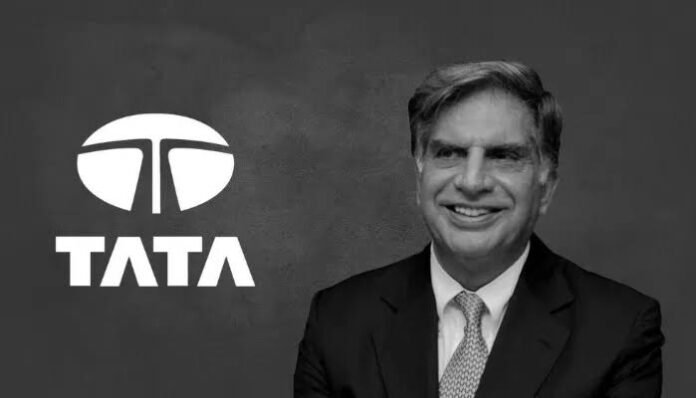
Every year, October 9 brings back memories of Ratan Naval Tata, one of India’s most respected industrialists, whose life was defined by business excellence, humility and an enduring commitment to society. He passed away on October 9, 2024, at the age of 86, leaving behind a legacy that extended far beyond the corporate world. Two years after his passing, his contributions continue to inspire entrepreneurs, professionals and young Indians who look up to him as an example of leadership guided by purpose.
Born on December 28, 1937, in Bombay, now Mumbai, Ratan Tata was the son of Naval Tata and Soonoo Tata. He was raised largely by his grandmother, Lady Navajbai Tata, alongside his younger brother, Jimmy. His early years instilled in him a sense of discipline, independence and responsibility. He went on to study architecture and structural engineering at Cornell University in the United States, graduating in 1962. Rather than immediately stepping into a senior corporate position, he returned to India and began his career on the shop floor of the Tata Group, gaining practical experience at Tata Steel and Tata Engineering and Locomotive Company, now Tata Motors.
Leading the Tata Group into a New Era
Ratan Tata joined the Tata Group in 1962 and gradually rose through its ranks. In 1991, he succeeded J.R.D. Tata as chairman of Tata Sons, taking charge at a time when India’s economic liberalisation was opening new opportunities for businesses. His leadership transformed the group from a largely India-focused conglomerate into a globally recognised business enterprise.
He worked to bring greater cohesion among the group’s companies, strengthen accountability and encourage innovation. Under his leadership, Tata companies expanded into international markets through several landmark acquisitions. Tata Tea acquired British tea company Tetley in 2000, Tata Steel acquired Corus in 2007, and Tata Motors purchased the Jaguar Land Rover businesses from Ford in 2008. These deals strengthened the group’s international presence and demonstrated that Indian companies could compete on a global stage.
During his tenure, the Tata Group also strengthened its presence in information technology, telecommunications, steel, automobiles and other industries. Tata Consultancy Services became a major global IT services company, while the group’s consolidated annual revenues grew to more than $100 billion by 2011–12. Ratan Tata stepped down as chairman in December 2012, leaving behind a significantly expanded business empire.
The Man Behind the Iconic Projects
Ratan Tata’s vision was not limited to acquisitions and international expansion. He also championed products designed around Indian consumers and their needs.
One of his most ambitious projects was the Tata Nano, introduced in 2008 and launched commercially in 2009. Conceived as an affordable car for Indian families who relied on two-wheelers for transportation, the Nano reflected his ambition to make personal mobility more accessible. Although the car faced commercial and marketing challenges, the project remains an important example of his willingness to pursue an unconventional idea.
Another landmark was the Tata Indica, launched in 1998 and widely regarded as India’s first indigenously designed passenger car. His interest in innovation also extended beyond automobiles. After retiring as chairman, he became an active investor in Indian start-ups, backing businesses in areas such as digital payments, mobility, consumer services and technology.
A Legacy Rooted in Philanthropy
Perhaps the most enduring aspect of Ratan Tata’s legacy was his belief that business success must serve a larger social purpose. The Tata Group’s philanthropic tradition predates his leadership, but he continued to strengthen its emphasis on education, healthcare, rural development, scientific research and social welfare.
Through the Tata Trusts, he supported initiatives aimed at improving access to healthcare, expanding educational opportunities, strengthening livelihoods and addressing community challenges. The trusts also backed cancer care facilities, research institutions and programmes designed to improve living conditions in underserved regions. He believed that technology and innovation could help address social problems when made accessible to the people who needed them most.
His compassion became particularly visible after the 2008 terrorist attacks in Mumbai. The Taj Mahal Palace Hotel, part of the Tata Group, was among the sites attacked. In the aftermath, the Tata organisation established support initiatives for victims and affected families. Ratan Tata’s response reflected his concern for employees and ordinary citizens whose lives had been disrupted by the tragedy.
He also had a well-known affection for animals, particularly dogs, and supported animal welfare initiatives. The establishment of a specialised small-animal hospital in Mumbai reflected his belief that compassion should extend to all living beings.
Awards, Humility and Lasting Influence
Ratan Tata received some of India’s highest civilian honours, including the Padma Bhushan in 2000 and the Padma Vibhushan in 2008. He also received international recognition and honorary degrees from several universities for his contributions to industry, education and society.
Yet, despite his achievements, he was widely admired for his reserved personality and relatively simple lifestyle. He rarely sought the public spotlight and was known for his measured manner, personal discipline and willingness to take risks without losing sight of ethical responsibilities. His career was not without corporate controversies or setbacks, but his public image remained closely associated with integrity, compassion and a commitment to long-term institution-building.
Remembering a Life of Purpose
Ratan Tata’s life offers a powerful reminder that leadership is measured not only by the size of a business or the value of its assets, but also by the opportunities it creates and the lives it touches.
From transforming the Tata Group into a global enterprise to supporting healthcare, education, innovation and social welfare, his work influenced millions of people in direct and indirect ways. His legacy lives on through the institutions he strengthened, the businesses he helped build and the philanthropic initiatives he supported.
On his death anniversary, remembering Ratan Tata means reflecting on a life in which ambition was accompanied by responsibility and success by service. He leaves behind a lasting example of how business leadership can contribute to national development while remaining grounded in humanity.
For generations to come, Ratan Tata will be remembered not merely as an industrialist who built a global business empire, but as a leader who believed that true success lies in making a meaningful difference to the world.