

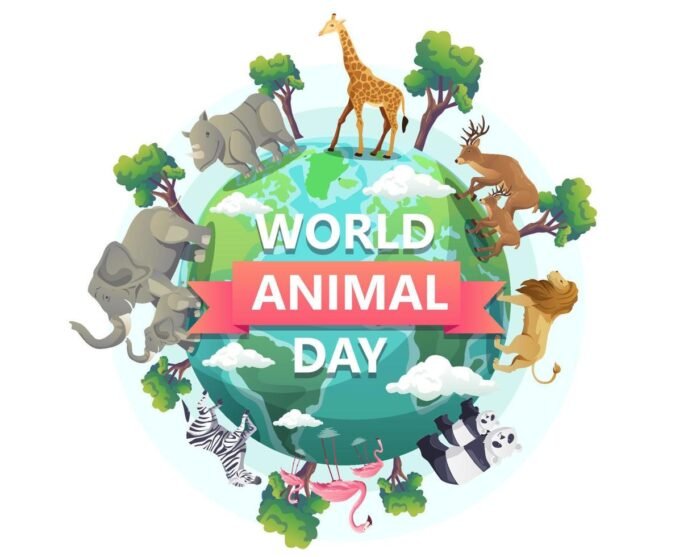
Every year, October 4 is observed as World Animal Day, drawing attention to animal welfare, conservation and the relationship humans share with other living beings. In a world where urbanisation, climate change and habitat loss are rapidly changing natural ecosystems, the day offers an opportunity to look beyond our fascination with animals and think about our responsibility towards them.
World Animal Day began in 1925 in Berlin, initiated by German writer and animal welfare advocate Heinrich Zimmermann. October 4 was chosen because it is the feast day of Saint Francis of Assisi, who is traditionally associated with animals and nature. Over time, the observance developed into a global movement focused on improving the lives of animals and encouraging greater awareness of their welfare.
Today, the conversation around animals extends far beyond pets.
India is home to an extraordinary range of wildlife, from the tiger and Asiatic lion to elephants, leopards, rhinos, birds and countless smaller species that contribute to the health of ecosystems. Yet many of these animals face growing pressure from shrinking habitats, pollution, climate change, illegal wildlife trade and increasing human-wildlife interactions.
For animals living around human settlements, the challenges can look very different. Stray dogs and cats are often exposed to traffic, disease, hunger and abandonment. Birds can be affected by pollution and shrinking green spaces. During extreme summers, lack of water can become a serious problem for animals in cities as well as rural areas.
Animal welfare, however, is not limited to rescuing animals after they are hurt. It also involves preventing suffering and creating conditions in which animals can live safely.
Responsible pet ownership is one example. Bringing an animal home involves a long-term commitment to food, healthcare, vaccination, sterilisation where appropriate, exercise and care. Similarly, helping an injured or distressed animal should ideally involve trained rescuers, veterinarians or local animal welfare organisations rather than untrained intervention.
Wildlife requires a different kind of responsibility: distance.
Photographing a wild animal may take only a few seconds, but approaching it, feeding it or disturbing its natural behaviour can have serious consequences. Respecting wildlife means allowing animals to remain wild rather than turning every encounter into an interaction.
There is also a larger environmental connection. Animals are part of ecosystems that support human life. Bees and other pollinators contribute to food production. Birds and mammals disperse seeds. Predators help regulate populations within ecosystems. The disappearance or decline of one species can therefore affect many others.
Climate change makes this relationship even more visible. Changing temperatures, rainfall patterns, water availability and food sources are altering habitats and creating new pressures for wildlife. Protecting animals consequently requires protecting the environments in which they live.
World Animal Day is not simply about loving animals for a day. It is about recognising that compassion needs to be accompanied by responsibility and awareness.
A bowl of water kept outside during a hot day, adopting rather than abandoning a pet, supporting responsible animal welfare initiatives, avoiding wildlife exploitation and respecting an animal’s space may seem like small actions. Collectively, however, they reflect a larger understanding of coexistence.
Animals do not need humans to celebrate them once a year. They need us to make choices that allow them to exist with dignity throughout the year.
And perhaps that is the real message of World Animal Day: sharing the planet also means accepting our responsibility towards those who cannot speak for themselves.