

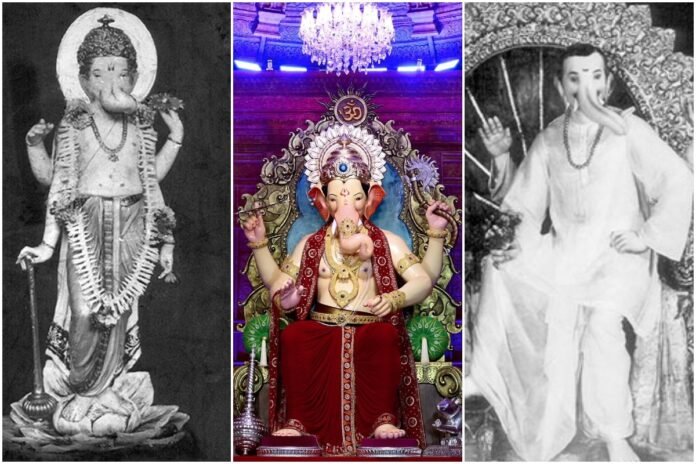
Every year, when Mumbai turns into a sea of colour, music and devotion for Ganesh Chaturthi, one name commands extraordinary attention, Lalbaugcha Raja. For millions of devotees, the iconic Ganpati idol in Lalbaug is not merely a festival installation. It is a symbol of faith, fulfilment and a nearly century-old community tradition.
Its story, however, did not begin with celebrity visits, elaborate decorations or enormous crowds. It began with a market, a livelihood crisis and a prayer.
From a Market to a Mandal
The story of Lalbaugcha Raja goes back to 1932, when an open-air market near Peru Chawl in Lalbaug was shut down. Local fishermen, vendors and traders, many belonging to the Koli community, depended upon the market for their livelihood. Its closure left them searching for a permanent place from which they could continue their trade.
The community turned to Lord Ganesha with a navas, or vow. They prayed for a permanent marketplace and promised to install a Ganesha idol if their wish was fulfilled. After sustained efforts, and with the support of local figures including landlord Rajabai Tayyabali, a plot was made available for a permanent market, which became Lalbaug Market.
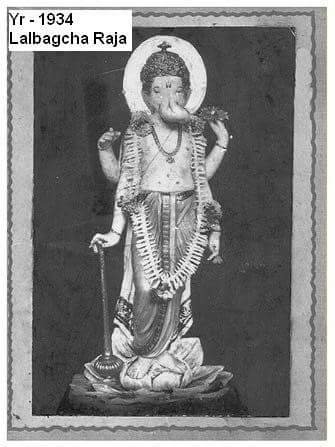
In gratitude, the community installed a public Ganesha idol in September 1934. The Lalbaugcha Raja Sarvajanik Ganeshotsav Mandal was established that year, giving institutional form to a tradition that would eventually become one of Mumbai’s most recognised Ganesh celebrations.
The origin of the idol explains its enduring identity as Navsacha Ganpati, the Ganesha associated with the fulfilment of devotees’ wishes. For generations, people have travelled to Lalbaug carrying their own hopes, vows and prayers.
The Kambli Family and the Iconic Raja
Another important chapter in the history of Lalbaugcha Raja belongs to the Kambli family.
The family began sculpting the idol in 1935, when Madhusudan Donduji Kambli took up the work. The tradition was subsequently carried forward through generations of the family. Over the decades, the Kambli artisans helped establish the distinctive appearance of Lalbaugcha Raja that devotees recognise today.
The idol is recreated every year according to the mandal’s artistic concept, while retaining the familiar identity of the Raja. The traditional design became so closely associated with Lalbaugcha Raja that Kambli Arts obtained intellectual-property protection for it in 2011, following the appearance of replicas elsewhere.
The annual unveiling of the idol has consequently become an event in itself, with devotees and media waiting to see how the Raja will be presented that year.
Why Is Lalbaugcha Raja So Famous?
The extraordinary popularity of Lalbaugcha Raja comes from several layers of history and culture coming together.
First is its origin. Unlike a celebration that began as a grand public spectacle, Lalbaugcha Raja grew from the aspirations of working people seeking economic security. That history continues to give the festival a strong community identity.
Second is faith. Devotees believe that the Raja fulfils wishes, and many return after making a navas to express gratitude or seek blessings. This belief has made Lalbaug a destination not only for Mumbaikars but also for devotees from different parts of India.
Then there is the scale. During Ganeshotsav, enormous queues form for Mukh Darshan and Charan Sparsh Darshan. The pandal has become one of the defining images of Mumbai’s Ganesh Chaturthi, attracting devotees from across the country.
The mandal also emphasises that its purpose extends beyond the annual celebration. According to its official website, it has undertaken social and educational activities since 1934 and works towards supporting underprivileged communities.
Where Celebrities and Common Devotees Meet
Lalbaugcha Raja’s popularity has also extended deeply into Mumbai’s celebrity culture. Bollywood personalities, sportspersons, business leaders and politicians regularly visit the pandal during Ganeshotsav.
Yet the presence of famous faces is only one part of its appeal. The sight of celebrities seeking darshan alongside an enormous public following has become part of Mumbai’s distinctive Ganesh Chaturthi culture.
The 2026 celebrations have again seen prominent visitors. Bollywood stars including Ranveer Singh and Salman Khan have visited the Raja this year, drawing significant public and media attention. Ranveer Singh’s visit was also accompanied by a pledge to support the education of 1,000 girls.
This combination of devotion and public visibility has helped make Lalbaugcha Raja one of India’s most recognisable Ganpati celebrations.
The Pandemic Year That Changed the Tradition
One of the most unusual chapters in the Raja’s history came in 2020. Amid the COVID-19 pandemic, the mandal cancelled its traditional public Ganeshotsav celebrations for the first time in decades. Instead, it used the period for social initiatives, including blood donation and awareness activities.
The decision demonstrated how the mandal’s role had expanded beyond the physical idol and annual darshan. The tradition could pause, but its community-oriented character continued.
Lalbaugcha Raja 2026: The 93rd Year
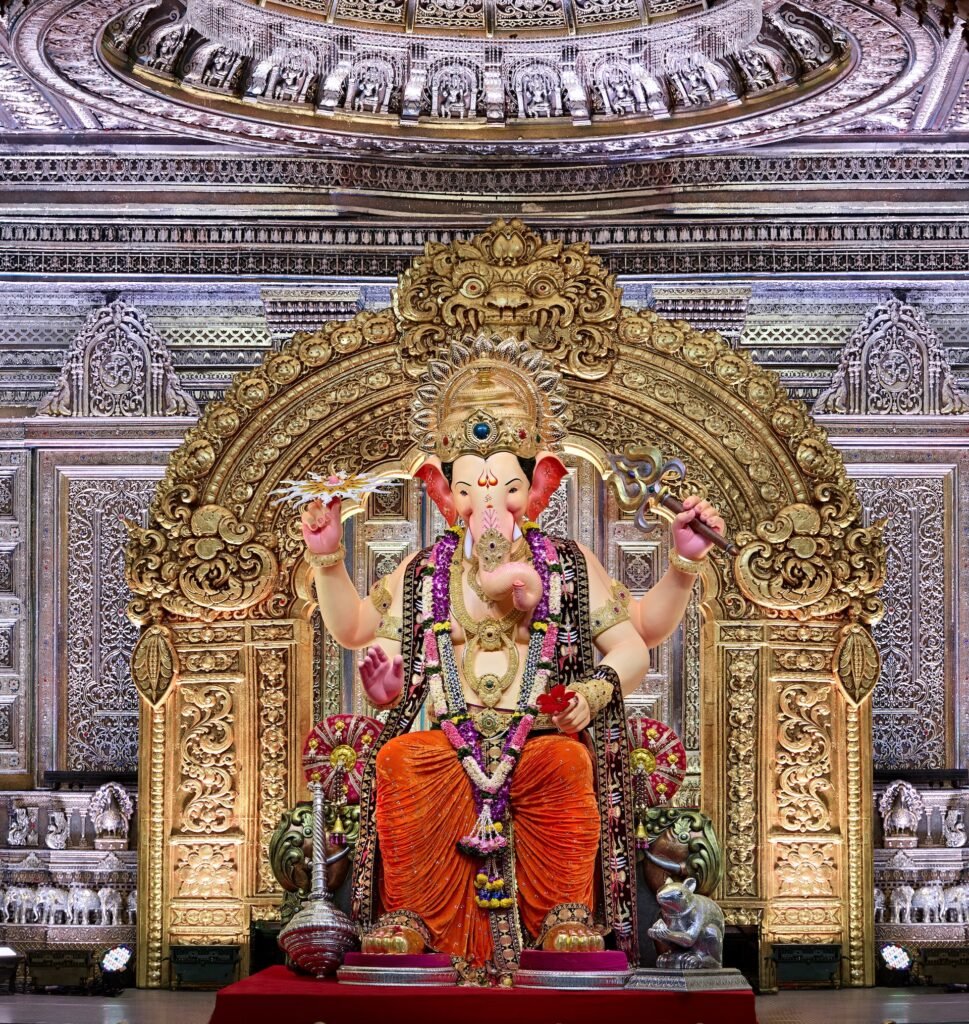
In 2026, Lalbaugcha Raja has entered its 93rd year, continuing its journey towards the centenary of the mandal.
The official first look of the 2026 Raja was unveiled on September 11 at 7 pm. The ceremonial installation took place on September 14 at 5 am, performed by mandal president Balasaheb Sudam Kamble. The queues for Charan Sparsh and Mukh Darshan opened after 6 am.
This year’s celebrations are being held from September 14 to September 25, concluding with the immersion procession on Anant Chaturdashi. Devotees who cannot travel to Mumbai can also access online darshan through the mandal’s official digital platforms, which remain available throughout the festival.
The 2026 presentation features a grand Shiva-temple-inspired setting, with the approximately 12-foot Raja positioned within an elaborate temple-style backdrop. The presentation once again demonstrates how the annual installation combines traditional devotion with large-scale artistic production.
The devotion surrounding the Raja is also reflected in the scale of offerings. During the first three days of the 2026 celebrations, reports put total donations at around ₹3.18 crore, including cash, gold and silver.
A Tradition Larger Than the Idol
Nearly nine decades after a group of fishermen and vendors sought a permanent marketplace, Lalbaugcha Raja has become a symbol recognised far beyond Lalbaug.
Its journey is remarkable because its roots remain remarkably simple: people faced uncertainty, turned towards their faith and made a promise. That promise became an annual tradition, and the tradition grew into a cultural phenomenon.
Today, millions wait for darshan, celebrities arrive to seek blessings, cameras capture the first glimpse of the Raja and Mumbai comes alive around the pandal. Yet at the centre remains the same idea that shaped its beginning, faith in Lord Ganesha and gratitude for wishes fulfilled.
From a community’s navas in 1934 to the 93rd Ganeshotsav in 2026, Lalbaugcha Raja’s story is ultimately the story of how a local act of devotion became an enduring part of Mumbai’s cultural identity.