

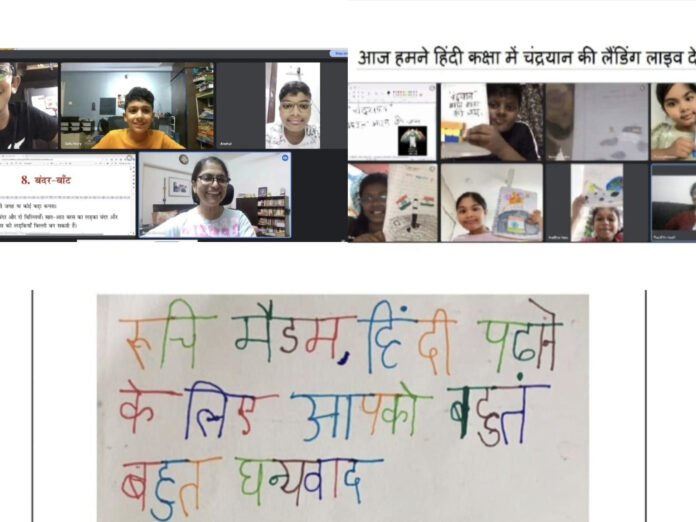
For many Indian-origin children growing up in the UK, Hindi may begin as a language their parents want them to learn. But with time, it can become something far more personal: a way to speak with grandparents, understand family conversations and feel connected to a country they may otherwise know through occasional visits, stories and memories.
Mrs. Ruchi Shrimali, a Hindi educator who lived in the UK for several years and now teaches Hindi online from India, has witnessed this journey closely. Most of her students are children between six and twelve years old, while some older students choose to learn Hindi out of their own interest.
For younger children, parents are often the starting point. They want their children to communicate with grandparents and relatives in India, understand their mother tongue and remain connected with their cultural roots. For older students, the motivation is often more personal. Learning Hindi can also become part of their wider skill development and activities such as the Duke of Edinburgh’s Award.
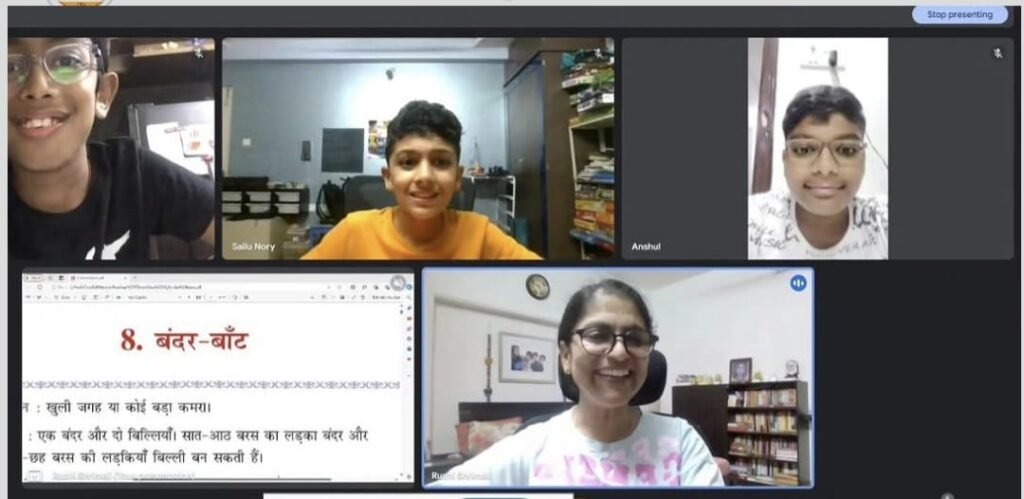
Yet learning Hindi can initially be challenging for children accustomed to English. Shrimali often begins by explaining concepts in English before introducing Hindi vocabulary, Devanagari script, pronunciation and grammar.
One of the biggest challenges is grammatical gender. Unlike English, Hindi assigns grammatical gender to nouns, requiring learners to understand whether a word is masculine or feminine and use related words accordingly.
“For children, it can be confusing to understand why one object is treated as masculine and another as feminine, especially when there is no such distinction in English. But with regular practice and consistency, they gradually begin to understand the patterns,” Shrimali explains.
The initial hesitation, she says, eventually turns into curiosity and excitement.
“Learning a language is like learning a completely new skill. It opens up your mind and gives you a different way of looking at the world.”
~ Ruchi Shrimali
For Shrimali, the real reward comes when Hindi moves beyond the virtual classroom and becomes part of a child’s everyday life.
Some of her students have returned from trips to India with stories of speaking Hindi with their grandparents, understanding conversations or even reading signs and directions. Those seemingly small moments become significant milestones.
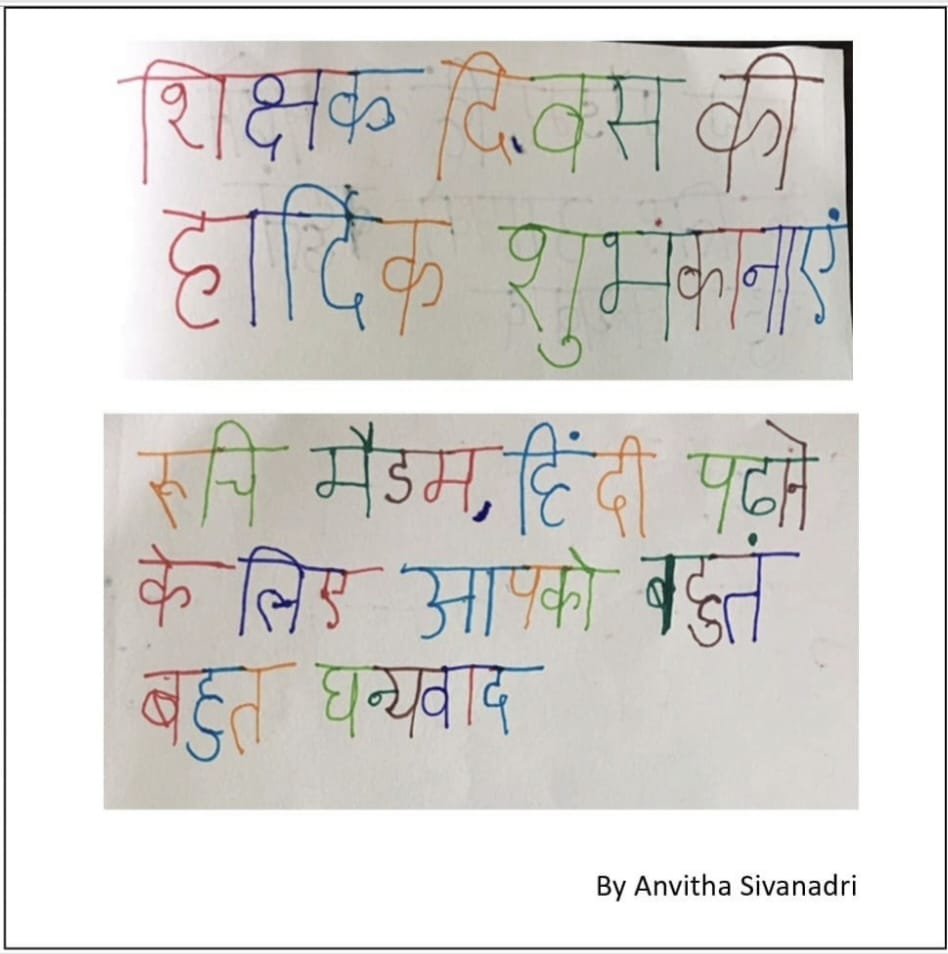
“When children come back and tell me that they spoke to their grandparents in Hindi or could read the boards in India, I feel a deep sense of satisfaction. It tells me that what I have taught them has become meaningful in their lives.”
For children growing up thousands of kilometres away from India, language can offer a connection that geography cannot. A few Hindi words can make a conversation with a grandparent more natural. Understanding a family phrase can make a cultural tradition feel more familiar. Reading a sign during a visit to India can turn an unfamiliar environment into something recognisable.
What begins as a parent’s wish to preserve a mother tongue can therefore gradually become a child’s own relationship with the language.
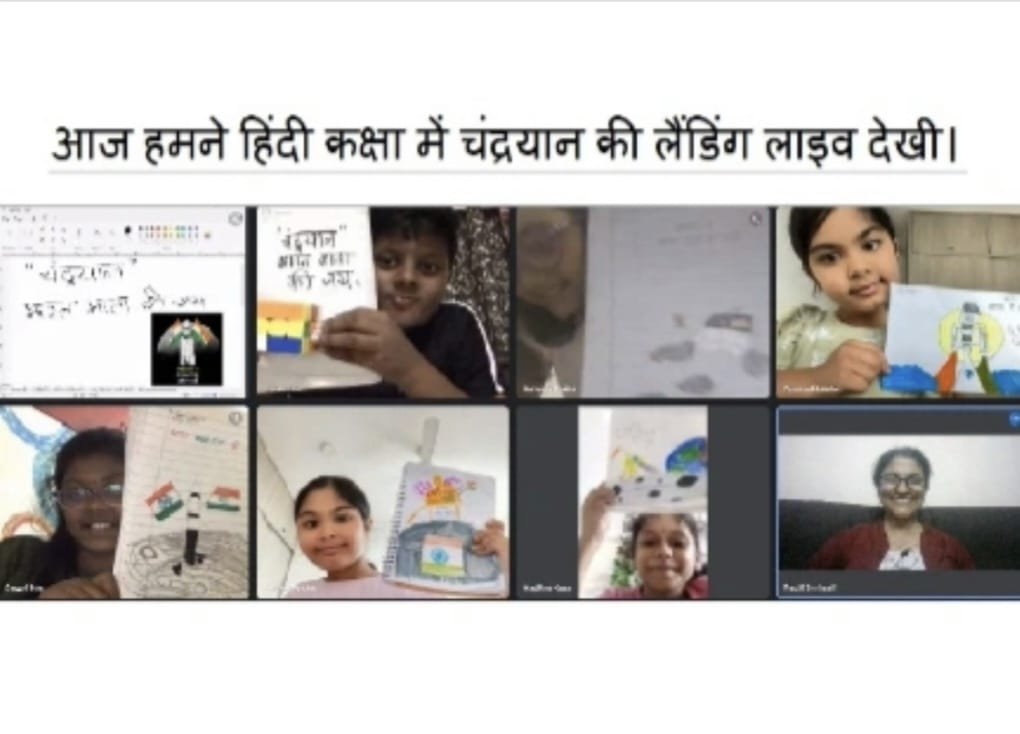
For Shrimali, that is the deeper purpose of teaching Hindi. It is not simply about vocabulary, grammar or learning to read another script. It is about giving children a way to access a part of their heritage and making that connection meaningful in their own lives.
In the end, Hindi becomes more than a language learned in an online classroom. It becomes a bridge between generations, between two countries and between where a child grows up and where a part of their family’s story began.
And sometimes, that bridge begins with something as simple as saying more than just “Namaste.”