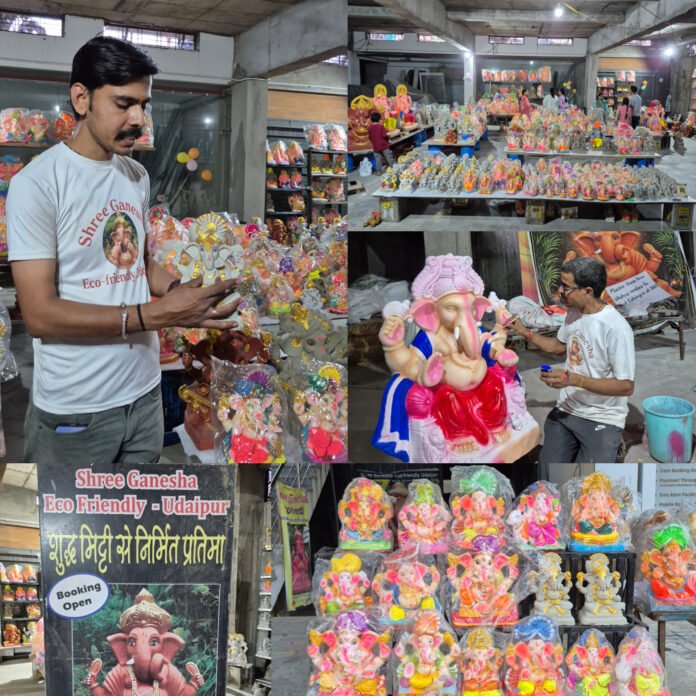
For most people, Ganesh Chaturthi begins when Ganeshji arrives home. In Molela, Rajasthan, however, the festival begins months earlier, when artisans first place their hands on the clay that will eventually take the form of Lord Ganesha.
In Molela village of Rajsamand district, terracotta is more than a traditional craft. It is a way of life passed down through generations. Among the families keeping this heritage alive is the Kumhar family, which has been creating terracotta products and eco-friendly Ganesh idols for generations.
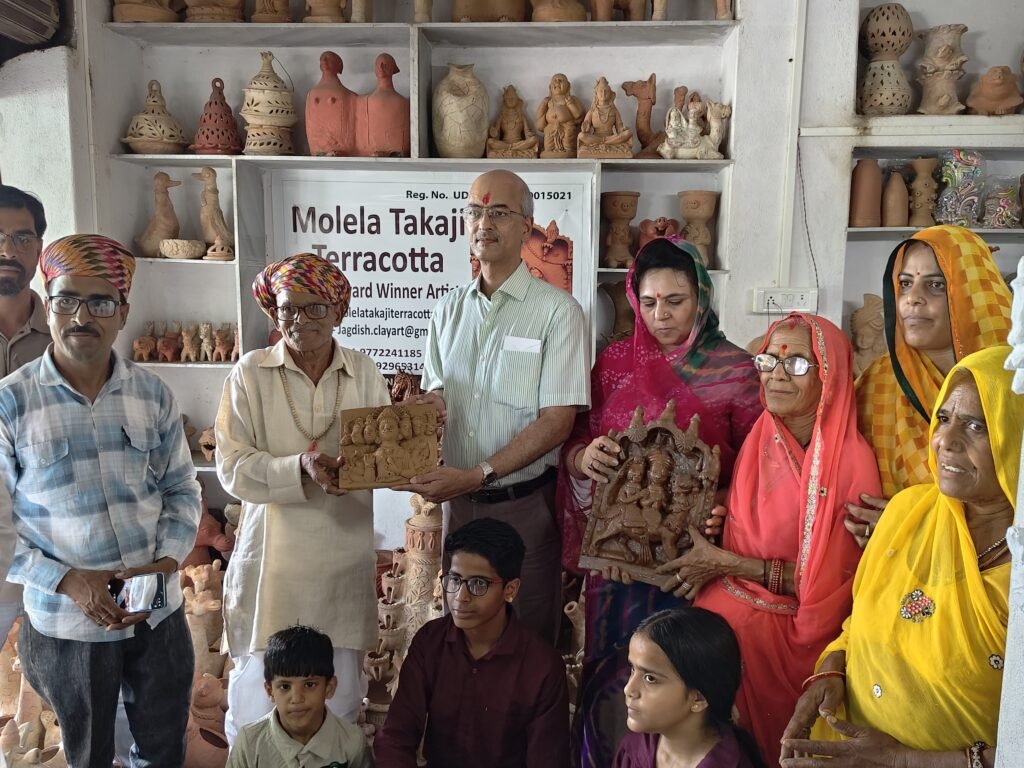
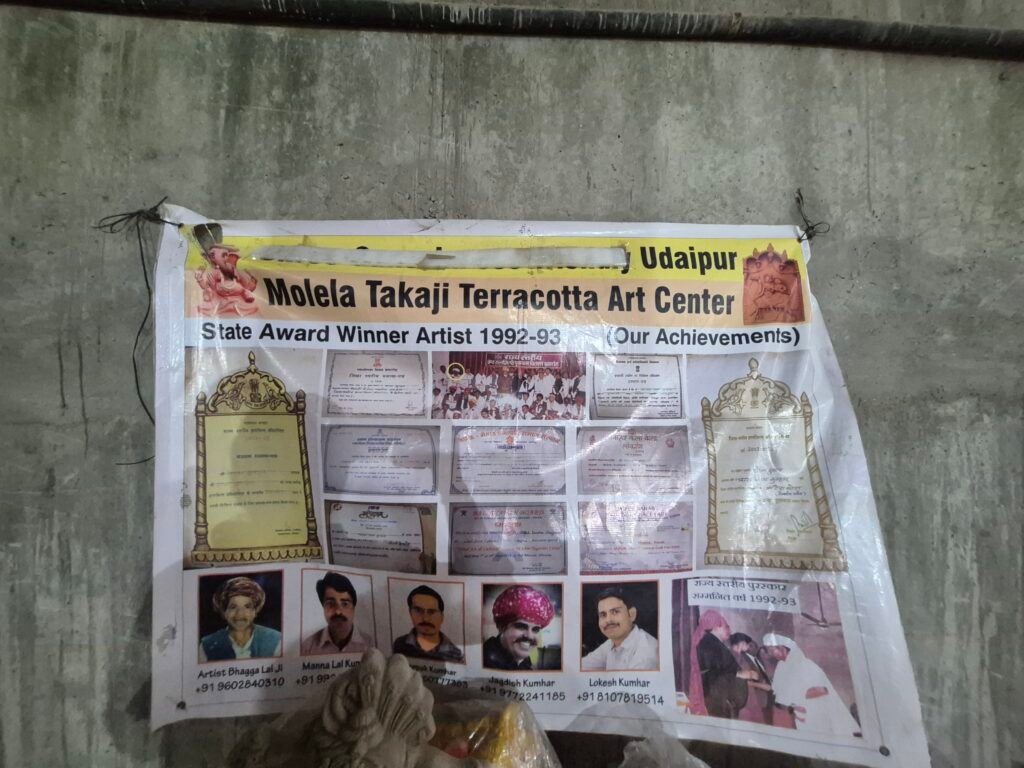
Speaking about the tradition, artisan Lokesh Kumhar shared how his family begins preparing for Ganesh Chaturthi nearly five to six months in advance. He works alongside his father, Bhaggalal ji, a National Award-winning artist, and his three brothers, Jagdish, Mannalal and Deepak, along with their wives. Together, they work under the name Molela Takaji Terracotta Art Center.
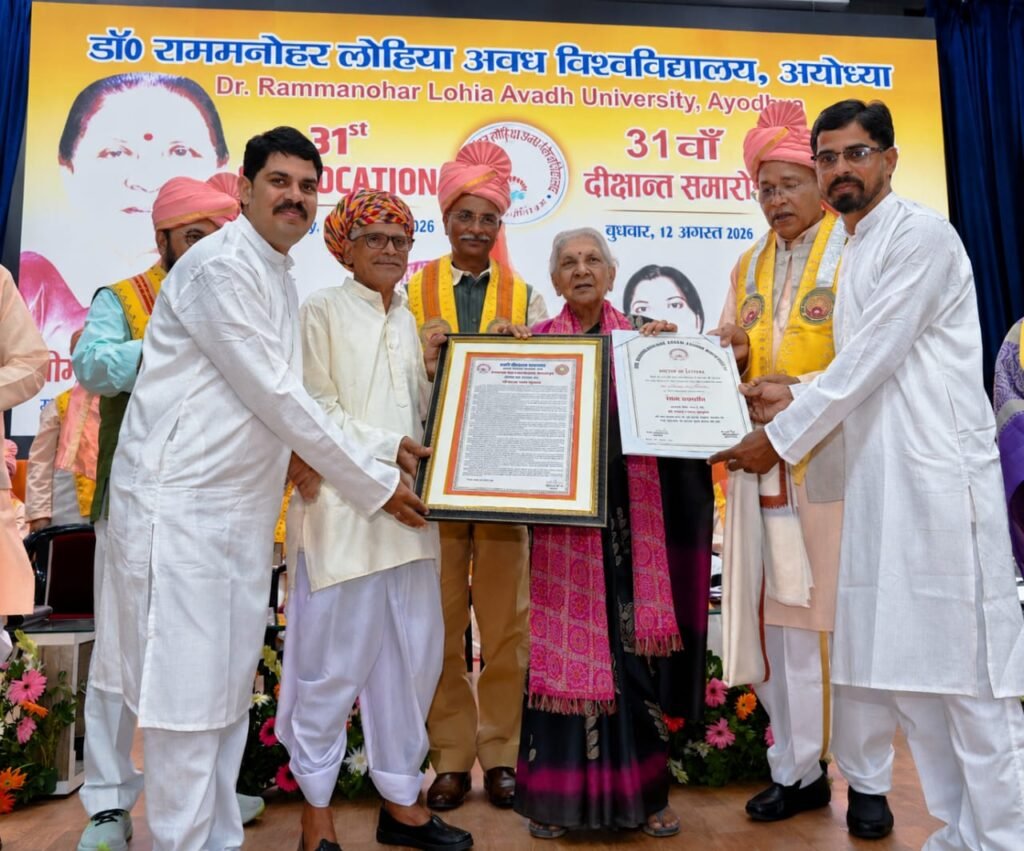
For the family, making Ganesh idols is not a seasonal activity alone. It is part of a larger artistic tradition that has shaped their family and the identity of Molela itself.
It begins with clay
The journey of every idol begins with soil.
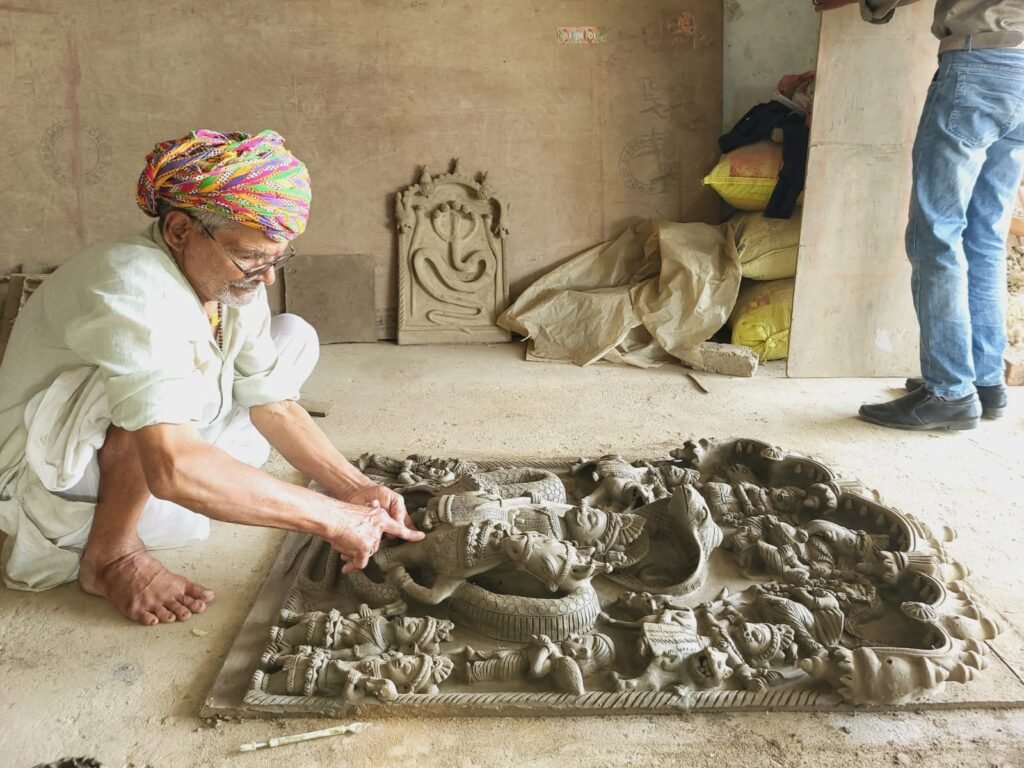
The clay is carefully prepared and kneaded before the actual sculpting begins. The artisans then gradually give it form, shaping the body, face, trunk, hands and other features of Ganeshji.
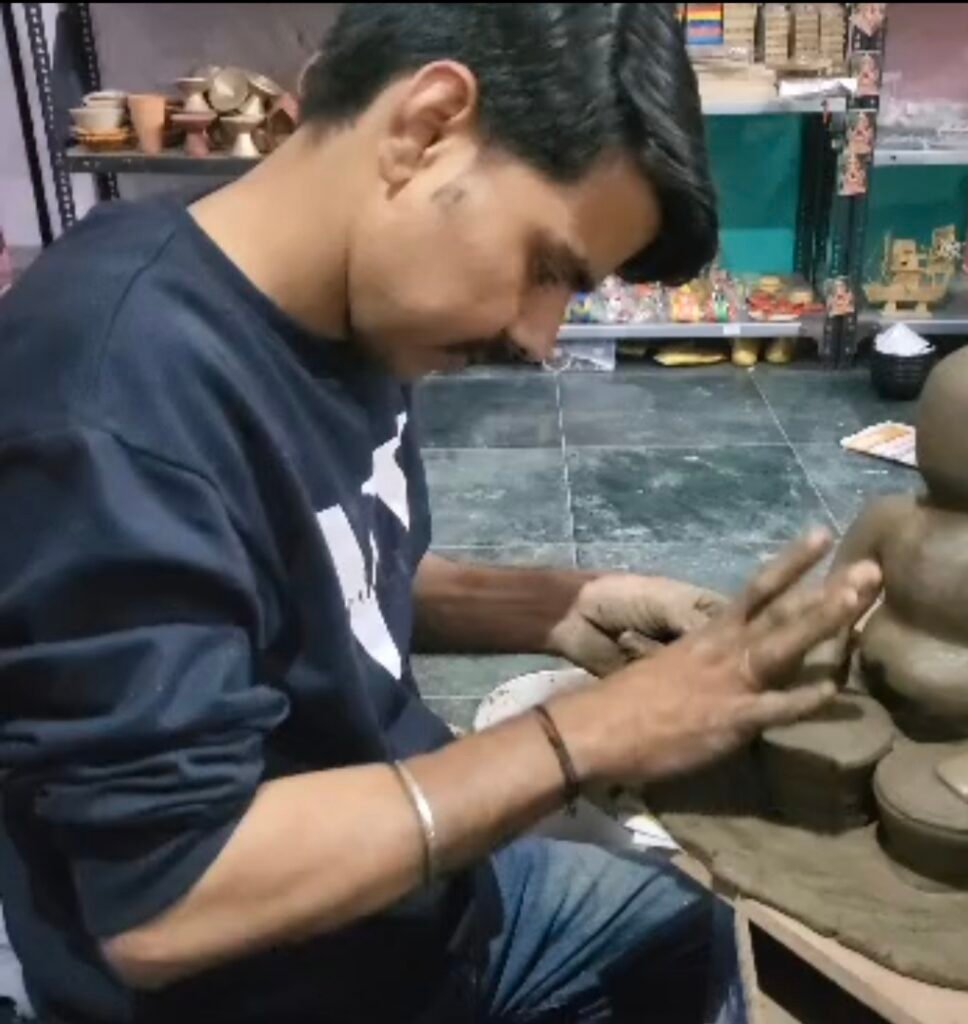
There is no industrial production line behind the process. The idols are shaped through the experience and skill of the artisans, making their hands an essential part of the craft.
Lokesh explains that this understanding of clay is something the family has inherited through generations. The younger members are not simply learning a profession. They are learning an artistic language built over years of practice, observation and experience.
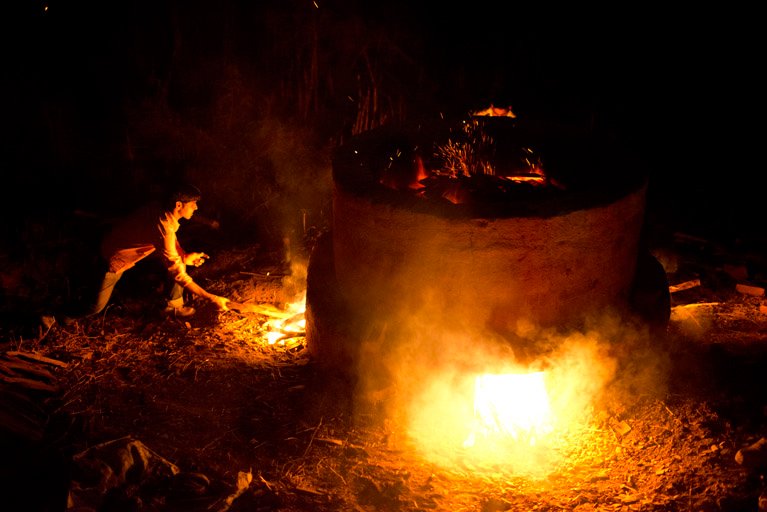
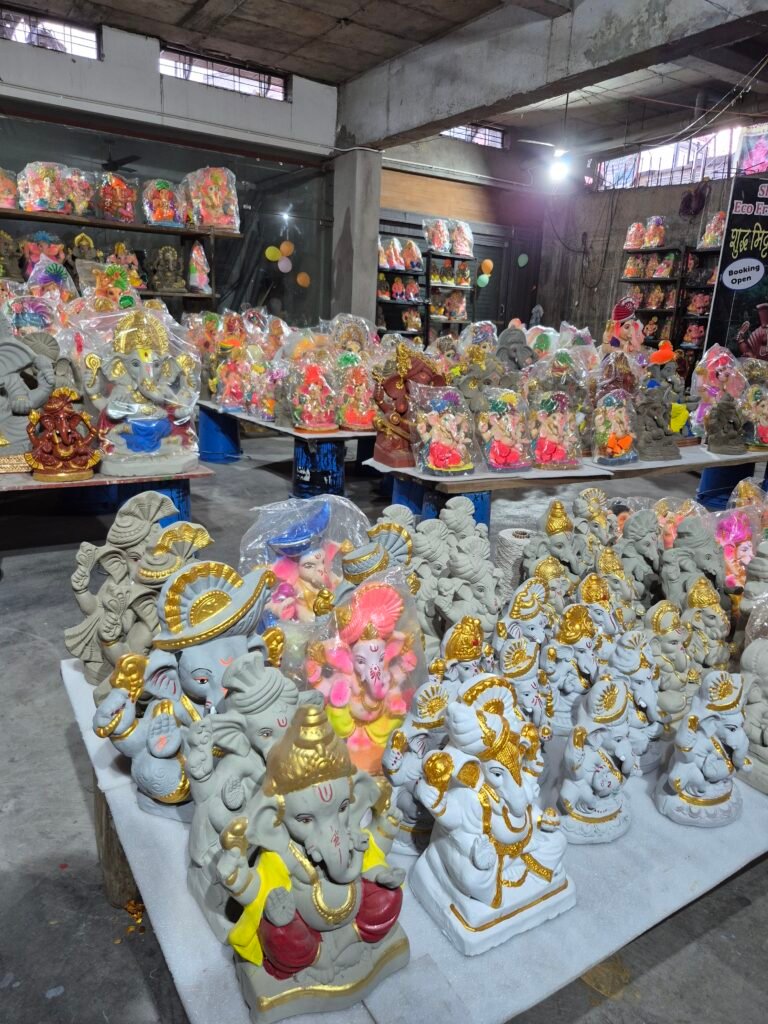
Once the idols are shaped, they are allowed to dry before being fired. The firing process hardens the clay and gives the idols their final strength. After this comes colouring, another important stage in bringing the figures to life.
The family uses natural and eco-friendly colours for its Ganesh idols, keeping sustainability at the heart of the process.
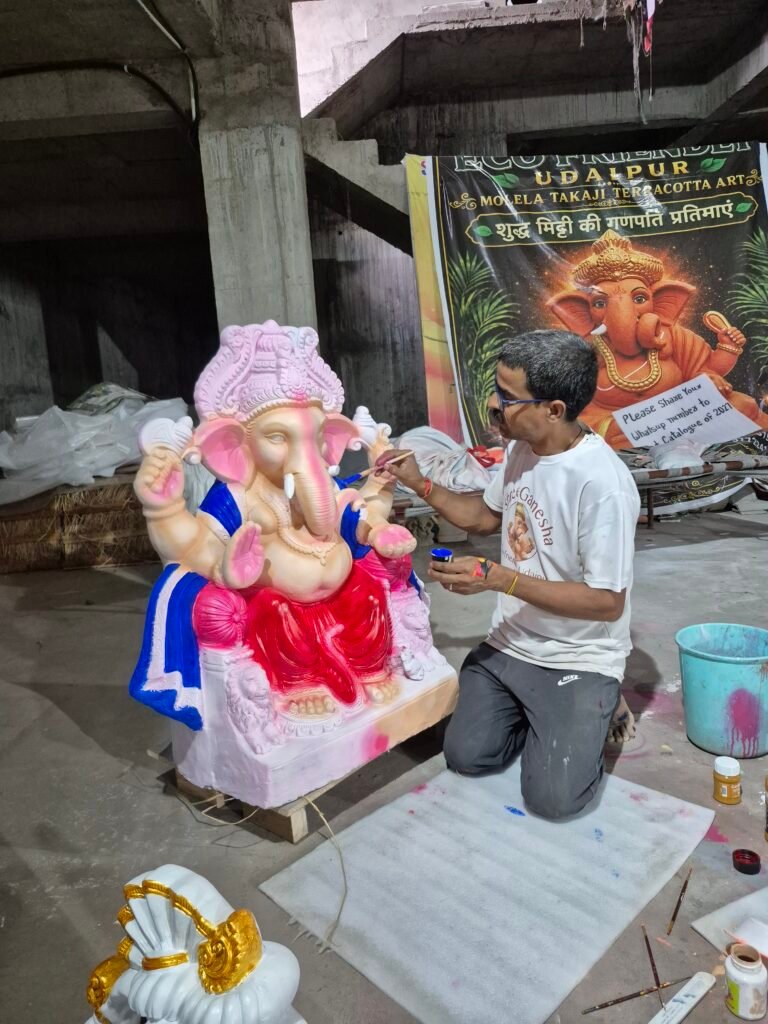
When tradition becomes a sustainable choice
The importance of eco-friendly Ganesh idols goes beyond the material used to make them.
Traditional clay idols offer a more environmentally conscious alternative to idols made from materials that can persist in water and contribute to pollution after immersion. When combined with natural colours and traditional methods, they make it possible to celebrate the festival while remaining mindful of nature.
For the Kumhar family, this approach does not represent a new trend.
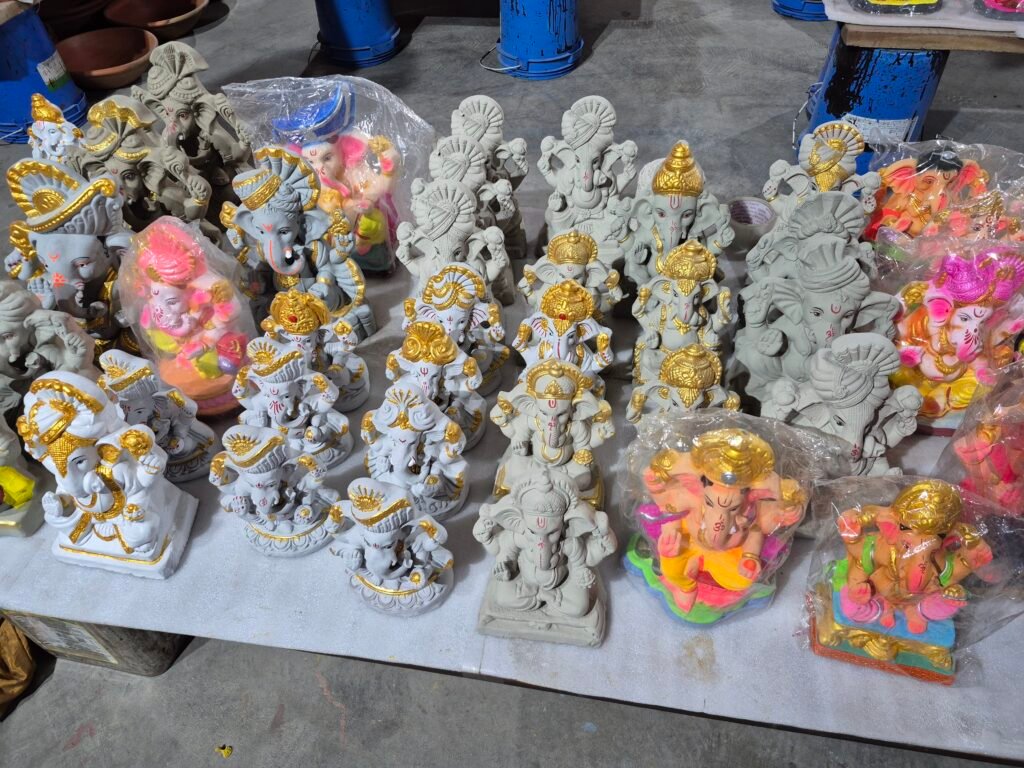
Their craft has always been deeply connected to natural materials, particularly clay. The same earth that has been shaped into terracotta art for generations is now being used to create Ganeshji in a form that is more compatible with the environment.
In this way, their work brings together two important values: preserving tradition and caring for nature.
1500 idols, months of work
Every year, the family creates more than 1,500 Ganesh idols.
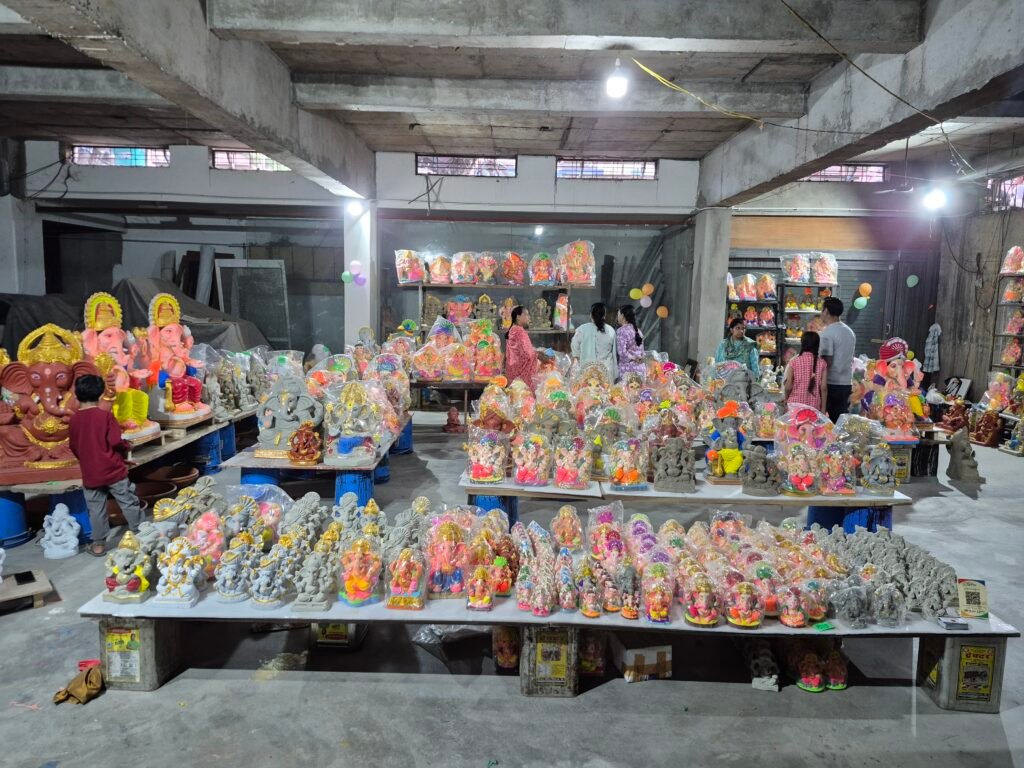
Behind every one of them are months of preparation and several stages of careful craftsmanship. From preparing the clay to sculpting, drying, firing and colouring, each idol passes through the hands of the family before it reaches a devotee.
The scale of their work also reflects the role that traditional artisans continue to play in keeping cultural practices alive.
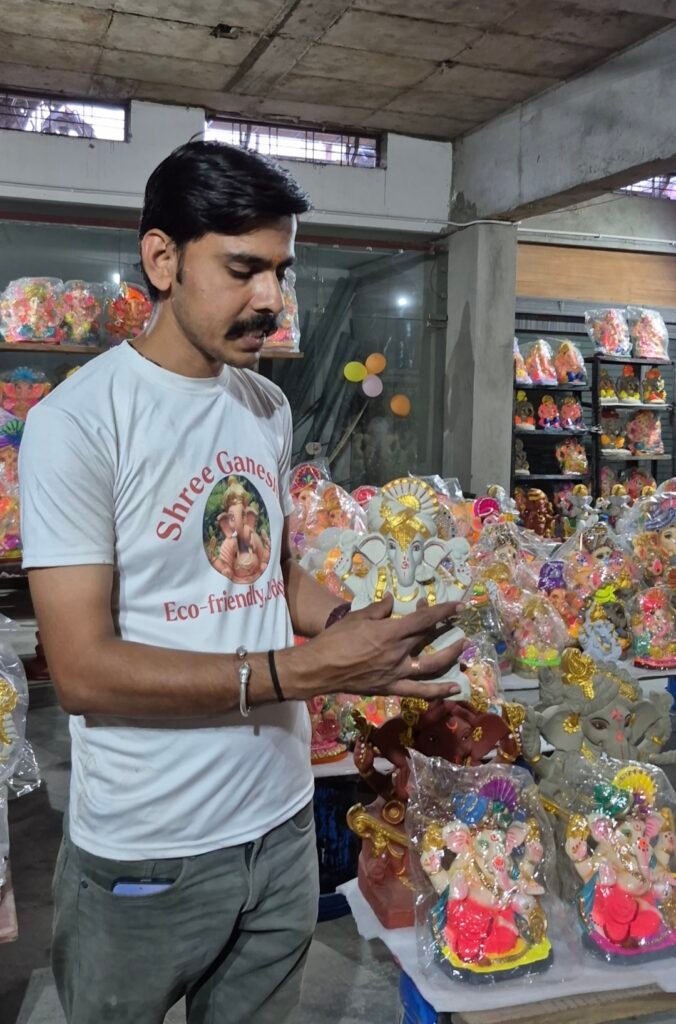
In an age of mass-produced festival products, families such as the Kumhars ensure that handmade traditions do not disappear. Their workshops become spaces where knowledge is transferred naturally from one generation to another.
Keeping Molela’s terracotta heritage alive
Molela’s terracotta tradition is itself a living example of how art survives through continuity. The Molela art is dated back to around 900 years. Religious figures, deities and other terracotta works have been created here for generations, with artisans preserving techniques while adapting their craft to changing times.
The Kumhar family is part of that continuity.
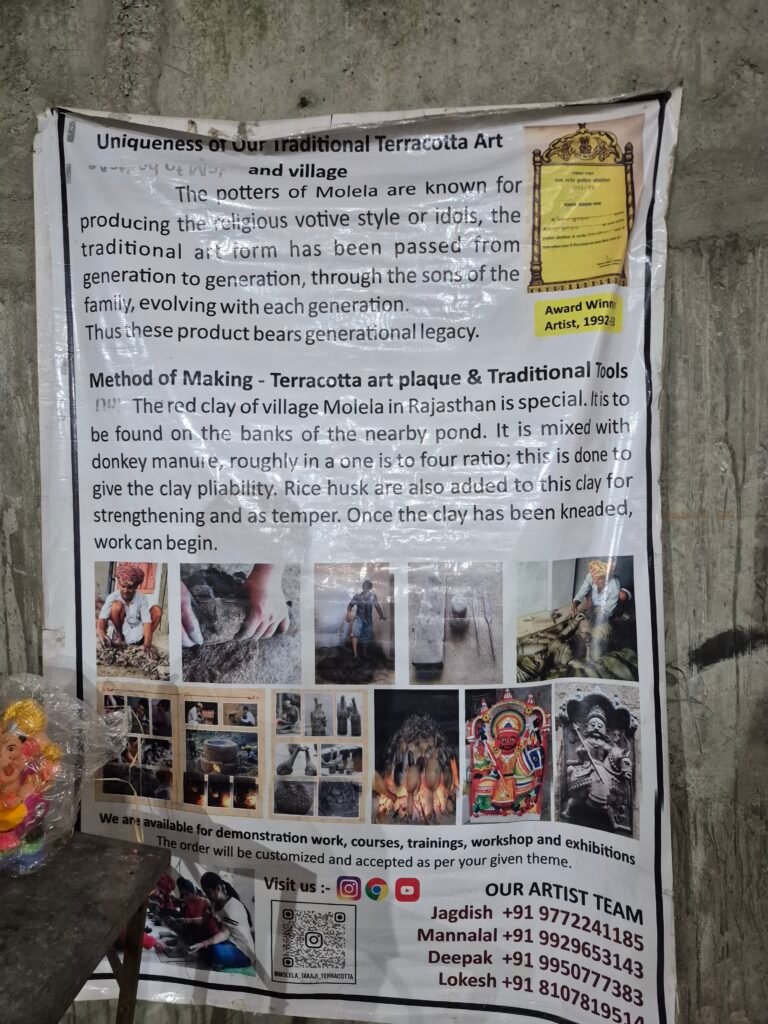
By creating traditional terracotta products and eco-friendly Ganesh idols, they are giving an inherited art form a place in contemporary life. Their work shows that preserving tradition does not necessarily mean keeping it frozen in the past. A tradition can evolve while remaining faithful to its roots.
The story of these Ganesh idols, therefore, is not only about clay becoming a deity.
It is about generations of hands keeping an art alive.
It is about a family turning inherited knowledge into livelihood, creativity and devotion.
And it is about finding a way to celebrate without forgetting the earth from which the celebration begins.
Every idol starts as soil. In the hands of the Kumhar family, that soil becomes Ganeshji through skill, patience and devotion. And after the festival, it can return to the earth from which it came.
Perhaps that is the most beautiful lesson of Molela’s eco-friendly Ganesh: when tradition remains connected to nature, devotion can become a celebration not only of faith, but also of the earth.