

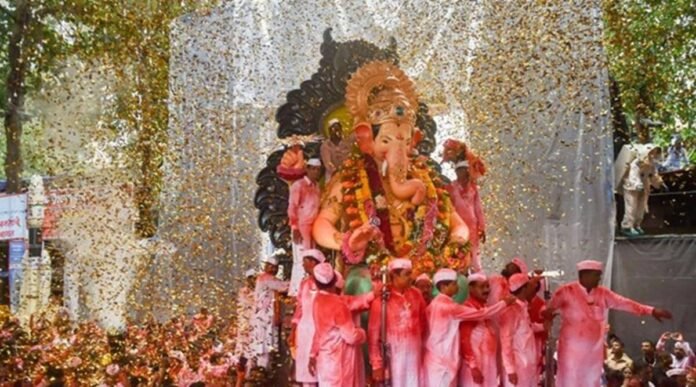
Every year, as the festive season begins to fill Indian homes and streets with colour, music and devotion, Ganesh Chaturthi brings with it a distinctive sense of joy and spiritual warmth. Dedicated to Lord Ganesha, the revered deity of wisdom, prosperity and auspicious beginnings, the festival is celebrated with great devotion across India. More than a religious celebration, Ganesh Chaturthi has become a cultural expression that brings families, communities and generations together.
The festival marks the birth of Lord Ganesha, who is worshipped as Vighnaharta, the remover of obstacles, and as the deity of wisdom and good fortune. Devotees believe that seeking his blessings before beginning an important task brings auspiciousness and success. His distinctive form, with an elephant’s head and human body, carries deep symbolic meaning. The large ears represent the importance of listening, while the trunk is often associated with adaptability and discrimination between what is important and what is not.
Ganesh Chaturthi is traditionally observed by bringing beautifully crafted idols of Lord Ganesha into homes, temples and public pandals. The installation of the idol is followed by prayers, offerings and aarti. Modaks, considered Lord Ganesha’s favourite sweet, are an important part of the celebrations. Families gather together to perform rituals, share meals and seek blessings for prosperity and well-being.
The festival has a particularly vibrant presence in Maharashtra, where elaborate public celebrations became an important part of community life. The tradition of large-scale public Ganesh celebrations is closely associated with freedom fighter and social reformer Bal Gangadhar Tilak, who transformed Ganesh worship into a public festival in the late 19th century. The celebration helped bring people together and created a shared cultural space during the freedom movement.
Over the years, Ganesh Chaturthi has travelled far beyond its traditional strongholds. From Mumbai and Pune to Rajasthan, Karnataka, Telangana, Tamil Nadu and several other parts of the country, communities celebrate the festival in their own distinctive ways. Homes and neighbourhoods are decorated, cultural programmes are organised and devotional music fills the atmosphere. In many places, the festival has also become an occasion for artistic expression, with artisans creating idols and pandals that reflect both traditional craftsmanship and contemporary themes.
At the same time, the festival has encouraged an important conversation about environmental responsibility. Traditionally, many Ganesha idols were made from natural clay and dissolved easily in water. With the increasing use of plaster of Paris, chemical paints and non-biodegradable decorations, concerns about water pollution grew. Today, many devotees are choosing eco-friendly idols made from natural clay and using natural colours and sustainable decorations.
Such initiatives demonstrate that devotion and environmental consciousness can go hand in hand.
The final day of the festival, marked by Ganesh Visarjan, carries a particularly emotional significance. Devotees bid farewell to Lord Ganesha with prayers, music and processions, accompanying the idol for immersion. The farewell symbolises the temporary nature of physical existence and the eternal nature of faith. The familiar belief, “Ganpati Bappa Morya,” expresses both devotion and the hope of welcoming Ganesha back again the following year.
Perhaps the deepest message of Ganesh Chaturthi lies in what Lord Ganesha represents. His presence reminds us to approach life with wisdom, humility and patience. His large head encourages knowledge, his calm expression suggests composure, and his association with removing obstacles reminds us that difficulties are a natural part of every journey.
Ganesh Chaturthi is therefore not simply a festival of celebration. It is a reminder of faith, community and renewal. As homes welcome Ganesha and communities come together in celebration, the festival inspires people to begin anew, overcome obstacles and move forward with wisdom and hope. In its prayers, music, artistry and traditions, Ganesh Chaturthi continues to reflect the enduring ability of Indian festivals to bring spirituality and everyday life together.