

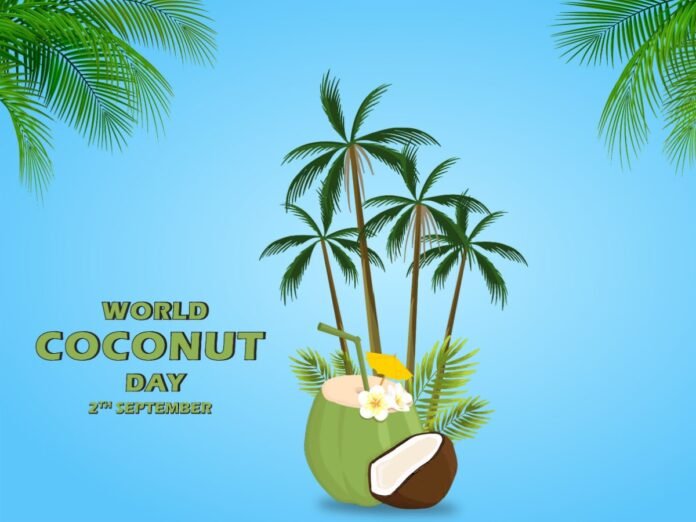
Every year on September 2, World Coconut Day celebrates one of the most versatile and valuable crops in the tropical world. More than a fruit, the coconut palm has supported communities for generations by providing food, drinking water, cooking oil, fibre, fuel, household products and livelihoods. The day highlights the economic, social, environmental and cultural importance of the coconut and draws attention to the millions of people whose lives and incomes are connected to its cultivation and processing.
World Coconut Day was established in 2009 by the Asian and Pacific Coconut Community, an intergovernmental organisation representing coconut-producing countries in the Asia-Pacific region. The observance aims to promote the development of the coconut sector, encourage sustainable cultivation, support farmers and increase awareness of the many uses and economic possibilities associated with the crop.
The theme for World Coconut Day 2026 is “Coconuts in times of uncertainty: Securing food, energy, and livelihoods.” The theme reflects the growing importance of resilient agricultural systems at a time when communities are facing climate change, changing food systems, economic uncertainties and pressure on natural resources. Coconut cultivation can provide both food and income, making it particularly important for farming communities in tropical and coastal regions.
The coconut is often called the “Tree of Life” because almost every part of the palm can be put to use. Coconut water is consumed as a refreshing beverage, while the flesh is used in cooking and processed into products such as coconut milk, cream and oil. Coconut oil has applications in food, cosmetics and other industries. The husk provides coir fibre, which is used to make ropes, mats, brushes, geotextiles and other products, while coconut shells can be converted into charcoal and other useful materials.
Its importance extends beyond household consumption. The coconut industry creates employment across a long value chain, including cultivation, harvesting, processing, transportation, manufacturing and trade. For small farmers in particular, coconut palms can provide a source of regular income over many years. Value-added products such as virgin coconut oil, coconut-based foods, beverages and coir products can further increase the economic value generated from the crop.
India is among the world’s major coconut-producing countries, alongside Indonesia and the Philippines. Coconut cultivation is especially important in several Indian states, including Kerala, Karnataka, Tamil Nadu and Andhra Pradesh. The crop is deeply connected with Indian food traditions and religious and cultural practices. Coconut is commonly used in temples and ceremonies, while coconut-based preparations form an important part of cuisines across different regions of the country.
The coconut also has an interesting botanical identity. Despite being commonly described as a nut, the coconut is botanically classified as a drupe, a type of fruit that develops from a single ovary and has an outer layer surrounding a hard inner structure and seed. Its familiar hard shell, fibrous husk and edible interior make it one of the most recognisable fruits in the world.
World Coconut Day also provides an opportunity to consider the challenges faced by coconut farmers. Climate change, extreme weather, pests, diseases, changing market prices and rising production costs can affect the livelihoods of farming communities. Sustainable cultivation practices, better technology, research, improved planting material and stronger market access are therefore essential for the long-term health of the coconut sector.
India’s coconut industry has also been expanding its presence in international markets. Rising demand for coconut products, including value-added products, presents opportunities for farmers, processors and exporters. Strengthening processing infrastructure and developing innovative products can help ensure that a greater share of the value generated by the coconut reaches producing communities.
The significance of coconut ultimately lies in its remarkable versatility. It can nourish people, provide drinking water, create employment, support traditional industries and contribute to rural economies. At the same time, its many uses demonstrate how agricultural resources can become part of a wider circular economy when different parts of a crop are utilised rather than discarded.
World Coconut Day is therefore more than a celebration of a tropical fruit. It is a reminder of the relationship between agriculture, livelihoods, culture and sustainability. As the world looks for ways to make food systems more resilient in uncertain times, the humble coconut continues to demonstrate why it has earned its enduring reputation as the Tree of Life.