

Uprooted by borders but unbroken in spirit, how Sindhi goldsmiths rebuilt their lives from scratch in Rajasthan
By Dr. Divyansh Saxena
AJMER: The Partition of 1947 wrote countless stories of loss. But beneath the grief lies another story, one of grit, resilience and an unyielding determination to begin again.
In Ajmer today, that story glitters in silver.
Conversations with community elders trace the journey of nearly 50 Sindhi Hindu Sunar, or goldsmith, families from Tando Hyder, near Hyderabad, and Sukkur in Sindh. Forced to flee amid the violence and upheaval of Partition, they boarded trains under terrifying circumstances, some of which, according to community accounts, were pelted with stones as they made their way towards India. They arrived in Rajasthan’s Marwar region with little more than what they could carry, but they brought with them something far more valuable: their skill, their determination and their dignity.
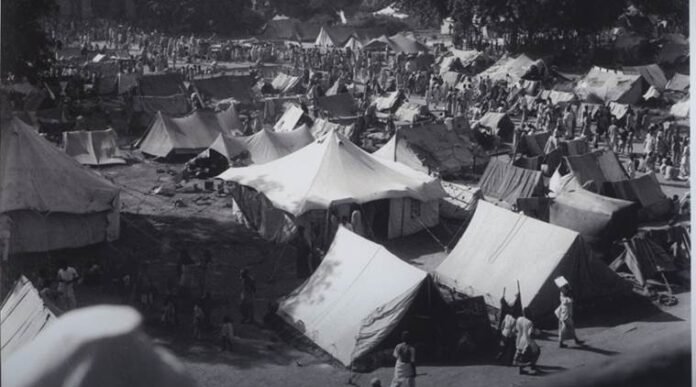
Their first halt was at a refugee camp near Merta. Food was scarce, the language unfamiliar and the future uncertain. From there, many moved to Jaipur’s refugee camp, where families lived in tents and cooked over open fires. Community elders still recall how cooking fires sometimes caused tents to catch fire. The memory of those early refugee settlements survives in the name “Sindhi Camp”, which today is synonymous with Jaipur’s central bus terminal and the surrounding area.
But stability remained elusive.
In Sambhar, some former traders took up the backbreaking work of carrying sacks of salt. In Amer, when communal tensions and riots forced small shops to shut, some families turned to selling firewood collected from the hills. In Ajmer, they took up whatever work was available, lifting steel boxes, selling kulfi and falooda on the streets and doing manual labour simply to keep their families going.
Yet, through all of this, they did not give up on their traditional craft.
When the families saw Ajmer’s established silver market, the elders realised that their future could perhaps be rebuilt through the very skill they had carried with them from Sindh. According to community recollections, mothers pushed their sons towards apprenticeships with local jewellers, where they earned as little as ₹45 a month. They reportedly turned down labour opportunities that offered around ₹60 because they believed learning the craft would eventually give their children greater independence.
The decision was not about immediate earnings.
It was about rebuilding a profession.
The young apprentices learnt to work with silver and eventually began making ghunghroos, the small anklet bells that would become an important part of their trade. Slowly, the skill that had once seemed like a distant memory of their homeland began providing a new livelihood in Rajasthan.
And through all those difficult years, one thing remained non-negotiable: dignity.
Community elders recall an incident from the refugee camp in Durgapura when Maharani Gayatri Devi visited. Despite having very little, the women reportedly bathed, dressed neatly and wore whatever little jewellery they had managed to bring with them from Sindh. An aide is remembered as telling her, “They are a trading community. Their clothes may be patched, but they will always be clean.”
Whether remembered in a single sentence or carried through generations, the story captures something central to the community’s experience: poverty could take away possessions, but it could not take away pride.
That pride often came at a heavy cost. Families survived on the bare minimum, with some recalling eating just one meal of red jowar a day to save money. Learning the local language also became an important part of rebuilding their lives. Hindi night classes associated with Wardha’s Rashtrabhasha Kovidhya Sansthan helped refugees navigate their new surroundings, while local Hindu traders offered employment, assistance and, in some cases, credit.
Slowly, the refugees who had arrived with almost nothing began putting down new roots.
Today, the descendants of those who left Tando Hyder and Sukkur are running thriving silver businesses in Ajmer. The hands that once carried salt sacks, lifted steel boxes and sold food on the streets eventually returned to what they knew best, shaping silver with patience and precision.
Their journey is more than a story of economic success.
It is a story of rebuilding.
Partition took away their homes, disrupted their lives and scattered families across an unfamiliar land. But it could not take away their skills, their pride or their willingness to start again.
From Sindh to Rajasthan, from refugee camps to workshops, and from carrying sacks of salt to shaping silver, their story is a reminder that displacement can break a home, but it does not necessarily break the human spirit.
Sometimes, all it takes to begin again is a skill in one’s hands, courage in one’s heart and the determination to build a new home from whatever remains.