

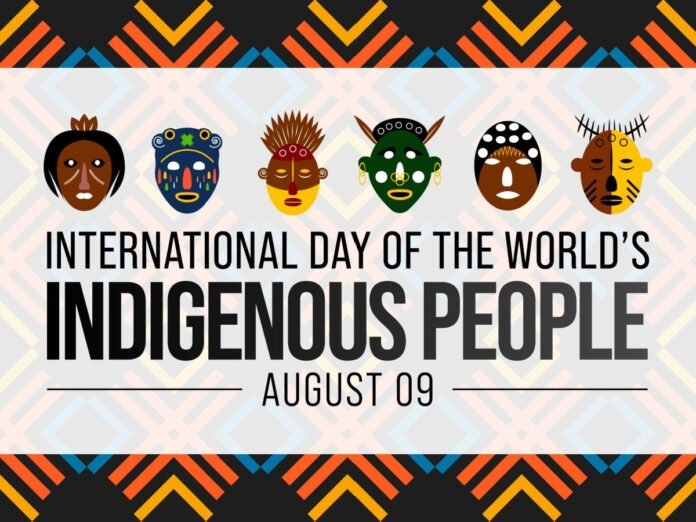
Every year on August 9, the world observes the International Day of the World’s Indigenous Peoples, recognising the rich cultures, traditions and contributions of Indigenous communities while drawing attention to the challenges they continue to face. The day is an opportunity to celebrate Indigenous identities and reaffirm the importance of protecting their rights, lands, languages and ways of life.
The observance was established by the United Nations General Assembly in December 1994 through Resolution 49/214. August 9 was chosen to commemorate the first meeting of the United Nations Working Group on Indigenous Populations, held in Geneva in 1982. Since then, the day has become an important global platform for raising awareness about Indigenous peoples and their rights.
According to the United Nations, there are an estimated 476 million Indigenous people living in more than 90 countries. They represent thousands of distinct cultures and communities, each with their own languages, traditions, knowledge systems and relationships with their ancestral lands. Despite their cultural richness, many Indigenous peoples continue to face poverty, discrimination, displacement and limited access to education, healthcare and economic opportunities.
One of the central purposes of the day is to highlight Indigenous rights. These include the right to self-determination, protection of traditional territories, preservation of cultural identity and participation in decisions that affect their communities. The UN Declaration on the Rights of Indigenous Peoples, adopted in 2007, remains an important international framework for protecting these rights.
Indigenous communities also play an important role in environmental conservation. Their traditional knowledge, developed through generations of close interaction with nature, provides valuable insights into biodiversity, forests, water management and climate adaptation. In many parts of the world, Indigenous territories contain some of the planet’s most biologically diverse ecosystems.
Language is another important part of Indigenous heritage. Thousands of Indigenous languages carry stories, traditional knowledge, histories and cultural practices that cannot always be translated into other languages. However, many are increasingly threatened by social, economic and cultural pressures.
Organisations such as UNESCO work with communities and governments to promote linguistic diversity and preserve Indigenous knowledge and heritage.
In India, the day also holds particular significance given the country’s diverse tribal communities, each with distinctive traditions, art forms, languages and ecological practices. From the Bhils and Gonds to the Santhals, Nagas and numerous communities of the Northeast, India’s tribal heritage forms an integral part of the nation’s cultural landscape.
The International Day of the World’s Indigenous Peoples is therefore more than a celebration. It is a reminder that cultural diversity is a shared human treasure and that development must respect the rights and dignity of Indigenous communities.
As the world observes the day, its message remains clear: protecting Indigenous peoples means protecting not only communities and cultures, but also the knowledge, languages and natural environments that enrich humanity as a whole.