

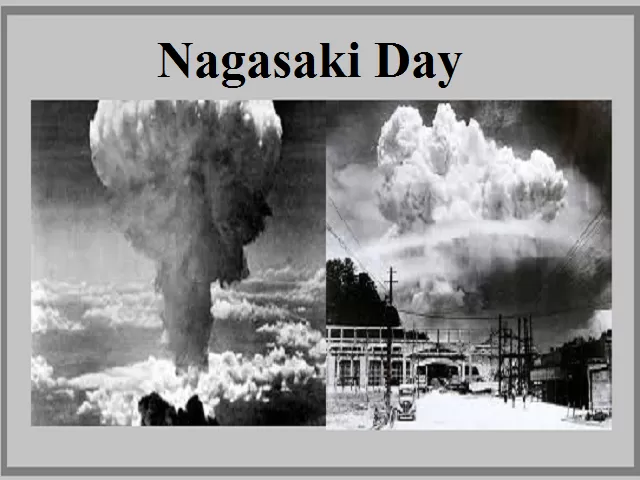
Every year on August 9, the world observes Nagasaki Day to remember the victims of the atomic bombing of Nagasaki in Japan in 1945 and to renew the global call for peace and nuclear disarmament. Coming just three days after Hiroshima Day, the occasion reminds humanity of the devastating consequences of nuclear weapons and the lasting human cost of war.
On August 9, 1945, during the final days of the Second World War, the United States dropped an atomic bomb, code-named “Fat Man,” on Nagasaki. The bomb was carried by the B-29 bomber Bockscar and detonated at approximately 11:02 a.m. over the city.
The explosion caused enormous destruction, killing tens of thousands of people and reducing large parts of Nagasaki to ruins. Many more died in the following months and years from severe burns, injuries and illnesses associated with radiation exposure. The exact number of victims remains difficult to determine, but the bombing had a profound and lasting impact on the city’s population.
The Nagasaki bombing came three days after the atomic bombing of Hiroshima on August 6. Japan announced its acceptance of the Allied surrender terms on August 15, 1945, bringing the Second World War to an end.
The survivors of the bombings, known as Hibakusha, carried the physical and psychological consequences of radiation exposure for decades. Many developed serious illnesses, while others faced social stigma and discrimination. Their testimonies have become an important part of efforts to educate future generations about the humanitarian consequences of nuclear weapons.
Today, Nagasaki has transformed its painful history into a message of peace. The Nagasaki Peace Park and the Nagasaki Atomic Bomb Museum preserve memories of the bombing and educate visitors about its consequences. Every year, a peace ceremony is held in the city, where a moment of silence is observed at 11:02 a.m., the exact time the bomb exploded.
Nagasaki Day carries particular significance in a world where nuclear weapons continue to exist. Although nuclear deterrence remains a subject of international debate, the humanitarian consequences demonstrated by Hiroshima and Nagasaki remain undeniable. The destruction of two cities showed that the effects of nuclear warfare extend far beyond the battlefield, affecting civilians and generations yet to come.
The day therefore encourages countries to pursue dialogue, diplomacy, arms control and nuclear disarmament. It also reminds individuals that remembering history is essential to preventing its darkest chapters from being repeated.
Nearly eight decades later, Nagasaki stands not only as a symbol of destruction but also of resilience and hope. Its message is simple yet enduring: peace must be protected, and the horrors of nuclear war must never be allowed to happen again.