Every conflict has two maps. One shows the battlefield, and the other shows the economy that quietly bled through it. The latter is not talked about enough… Let’s voice it now!
Every war begins with a headline and ends with a bill. We often measure wars by the cities they destroy and the lives they claim. Rarely do we ever measure them by the countries they quietly burden and the nations that never fired a shot, yet paid through higher prices, disrupted trade, and economies pushed to the edge.
Ordinary people like you and me remember wars differently. We don’t measure who won or who lost, not necessarily. We measure wars by the fuel we can no longer comfortably afford, the groceries kept back on the shelf due to a tight budget, and the silent compromises made around the dinner table… all because of a war thousands of miles away.
Perhaps Mahatma Gandhi warned us best: “An eye for an eye will only make the whole world blind.” In today’s world, that blindness extends wars beyond the nations at war.
Silent Victims of a Distant War
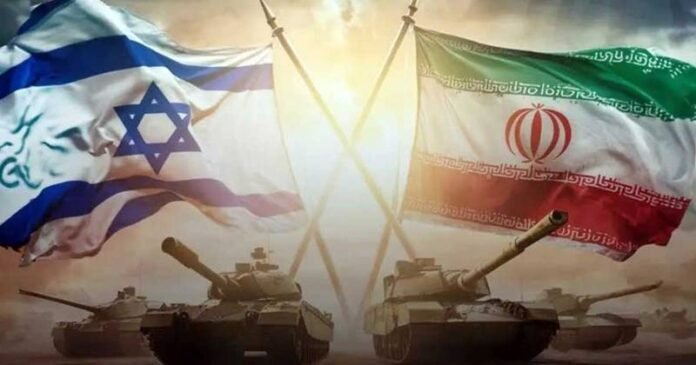
The economic consequences of the Iran-Israel conflict were not confined to the nations directly involved. As the situation escalated and the United States entered the conflict, global markets reacted instantly. Oil prices became volatile, investors grew increasingly cautious, and shipping routes faced uncertainty.
For India, the impact was huge and immediate. As a country that imports 85% of its crude oil, India remains highly dependent on stability in the Middle East. Even the possibility of disruptions in the Strait of Hormuz raised tensions in the nation. Nearly one-fifth of the world’s oil passes through the Strait of Hormuz, making it one of the world’s most critical maritime chokepoints.
With a population so vast, we cannot afford prolonged instability like this. We never fired missiles, so why are we paying such a hefty price for this war? Why am I burdened for something I was never a part of?
India is not alone. From Bangladesh to Sri Lanka, and from Europe to Africa, every citizen paid for something that was never on their account. Is this how conflicts are benefitting humanity? And if the answer is yes, then I would like to ask, who are they benefitting?
Perhaps the greatest tragedy is not that history repeats itself, but that humanity remembers the dates of the World Wars more faithfully than the lessons they left behind.
Protecting your own nation is not wrong, but sacrificing millions of lives for the sake of it is never how it should be. The pursuit of national interest is neither wrong nor avoidable. It is the very duty of a sovereign state. But history teaches us that when national interest outgrows humanity, wars become inevitable and innocent lives become collateral.
Perhaps the path forward lies in embracing the timeless Indian ideal of Vasudhaiva Kutumbakam, “The world is one family.” Let nations stand firmly for their people, but never at the cost of humanity.
“Wars create battlefields. Globalization creates bystanders who still quietly pay the price.”
(The writer of this article is Anushka Dave, a student of Kanodia college)