

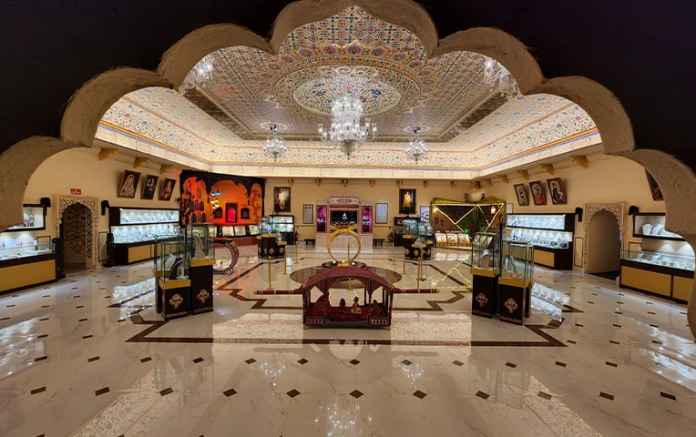
Jaipur is a city where history lives in magnificent forts, grand palaces and ancient streets. But recently, I discovered a different side of the Pink City, a world where history is hidden not only in buildings, but also inside stones, crystals, fossils and gemstones.
This hidden world is Khazana Mahal.
A few days ago, I got the opportunity to visit Khazana Mahal with my friends and my journalist mentor, Archama Ma’am, through a visit organised by Saksham Sanchar Foundation. Our journey began from school on a warm yet pleasant morning. As we travelled towards Khazana Mahal, our excitement and curiosity kept growing.
We had heard the name before, but none of us knew just how fascinating the place would be.
The moment we entered inside the museum, the displays immediately caught our attention. One of the first things that left us amazed was a beautiful peacock created using numerous gemstones. The tiny stones came together to create intricate patterns and a dazzling appearance. It was difficult to imagine that pieces of natural stone could be transformed into such detailed artwork. But the peacock was only the beginning.
As we moved further inside, we entered a world of raw and polished stones. Some specimens were displayed in their natural, uneven forms, showing the textures and patterns they had developed inside the Earth. Others had been carefully cut and polished, revealing colours and surfaces that were almost completely different from their original appearance.
I particularly noticed the variety of colours in the collection. There were deep purple stones, translucent green specimens, orange and reddish pieces, pale crystals, golden-yellow formations and dark, rough rocks. Some looked smooth and polished, while others still appeared exactly like pieces of rock taken from the ground. That contrast was fascinating.
It made me realise that a gemstone does not simply appear beautiful on its own. Nature creates it over a long period of time, and human skill reveals the beauty hidden within it.
The museum also had displays containing different crystals, mineral specimens and fossils. Some of the fossils and stones had unusual shapes and textures. Looking at them closely felt almost like looking at pages from the Earth’s history.
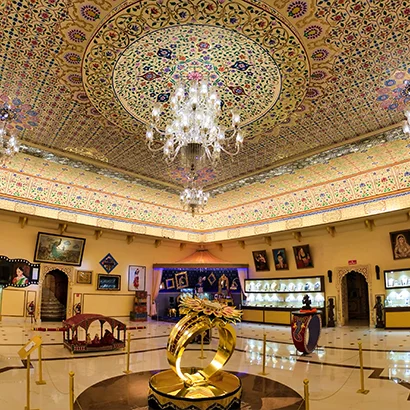
An official from museum explained the exhibits to us and helped us understand the difference between the natural specimens and the finished gemstones. We also learned how stones can be extracted from rocks and later shaped, cut and polished for different purposes.
One of the displays that caught my attention showed numerous smaller specimens arranged carefully in individual sections. Seeing so many different shapes, colours and textures together made the collection feel like a miniature treasure map of the Earth.
We also came across larger specimens that had been preserved in their natural form. We were surprised to see the story of the stone which had rough surfaces in the beginning but then are shaped and carved beautifully. The museum displayed the rough surfaces too while allowing visitors to appreciate the original beauty of the stone.
The experience became even more interesting because we were not simply looking at the exhibits but were asking questions.
The visit became especially memorable when we got the opportunity to interview Anoop Srivastava, the creator of Khazana Mahal. I had heard about him and his work before, but meeting him personally helped me understand the vision behind this unusual collection.
During our conversation, I asked him about his association with Dr. Rajnikant Shah and how the idea developed.
He explained how his journey introduced him to the fascinating world and culture of gemstones. He realised that the knowledge and heritage connected with these natural treasures deserved to reach a much wider audience. With the help of Dr. Rajnikant Shah, stones and gemstones were collected from different parts of India and from around the world, eventually becoming part of the collection at Khazana Mahal.
What surprised me most was how different each stone could look.
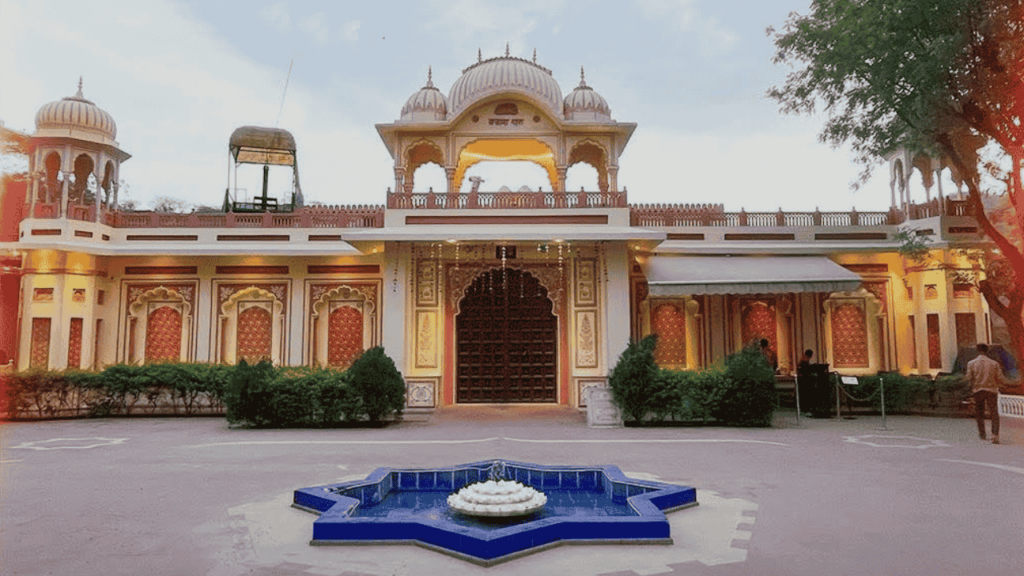
A rough stone might appear simple from a distance, but when placed under proper lighting, its natural patterns, layers, colours and crystalline structure became visible. A polished gemstone, on the other hand, reflected the light and revealed colours that were hidden inside the original material. Khazana Mahal also made me look at Jaipur differently. We usually associate the city with forts, palaces, jewellery and its famous pink architecture. But here, I discovered a Jaipur filled with geology, natural history, craftsmanship and scientific curiosity.
Before this visit, I had heard the name Khazana Mahal several times, but I had never imagined that such a unique collection existed right here in Jaipur. For me, it was much more than a school visit or a museum tour. It was a journey through millions of years of natural history, told through stones, fossils and crystals.
As we finally prepared to leave, I looked back at the glass displays one more time. The colourful gemstones, rough mineral specimens and ancient fossils seemed to tell different stories, but together, they told one much bigger story: the story of the Earth and the incredible treasures hidden beneath our feet.
Sometimes, the most fascinating discoveries are not found in the places everyone talks about. They are found in the hidden corners of a familiar city. Khazana Mahal is one such hidden treasure, a place that proves that even in a city we think we know, there is always something new waiting to surprise us. And perhaps, that is the real magic of Jaipur: The Pink City never stops revealing its treasures.
(The writer of this article is Ishita, a student of APS Jaipur)