

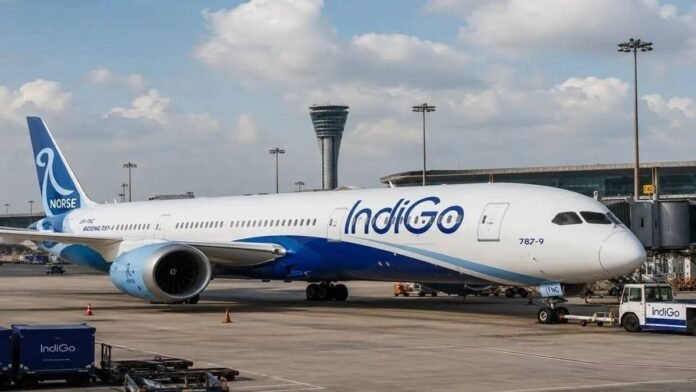
From operating its first flight with a single Airbus A320 in August 2006 to becoming India’s largest airline and one of the world’s fastest-growing carriers, IndiGo has completed an extraordinary 20-year journey. What began as an ambitious low-cost airline has evolved into a dominant force in Indian aviation, connecting millions of passengers across the country and beyond while redefining the way Indians travel by air.
Over the past two decades, IndiGo has fundamentally changed the aviation landscape. Built on the philosophy of offering affordable fares, on-time performance and a hassle-free travel experience, the airline made flying accessible to a much larger segment of the population. For countless first-time flyers, IndiGo became the preferred gateway to air travel, helping transform aviation from a luxury into an everyday mode of transport.
Today, IndiGo commands the largest share of India’s domestic aviation market and operates an extensive network spanning numerous domestic and international destinations. Its rapidly expanding fleet, comprising Airbus A320, A321, A321XLR and ATR aircraft, along with the upcoming Airbus A350 wide-body jets, reflects the airline’s ambitions to strengthen regional connectivity while expanding its long-haul international presence.
The airline’s success has been driven by a disciplined business model. Unlike many carriers that struggled with high operating costs and inconsistent service, IndiGo focused on fleet commonality, quick aircraft turnaround times, operational efficiency and cost control. These strategies enabled it to maintain profitability for several years while consistently delivering one of the highest on-time performance records in the country.
Beyond commercial success, IndiGo has played a crucial role in supporting India’s economic growth. By expanding connectivity to Tier-II and Tier-III cities, it has boosted tourism, trade, business travel and regional development. The airline has also generated thousands of direct and indirect employment opportunities across operations, engineering, airport services and hospitality.
As IndiGo celebrates its 20th anniversary, the airline has launched a commemorative campaign titled “Giving Wings to the Nation”, highlighting its contribution to India’s aviation story. The campaign pays tribute to employees, passengers and partners who have been part of the airline’s remarkable journey over the past two decades.
However, the next chapter presents a different set of challenges. The aviation industry is evolving rapidly, with rising fuel costs, supply-chain disruptions, aircraft delivery delays and increasing competition from both domestic and international carriers. Customer expectations are also changing, with greater emphasis on premium services, digital innovation and sustainability.
IndiGo is responding by diversifying beyond its traditional low-cost model. The airline is expanding its international footprint, investing in long-haul operations, introducing premium travel offerings and strengthening its cargo business. Sustainability has also become a strategic priority, with investments in newer, fuel-efficient aircraft aimed at reducing emissions and improving operational efficiency.
The question many industry observers now ask is not whether IndiGo has succeeded over the last 20 years, it clearly has, but whether it can sustain its leadership over the next two decades. Its ability to balance affordability with premium services, maintain operational excellence while expanding globally, and navigate economic uncertainties will determine its future trajectory.
Few airlines anywhere in the world have achieved the scale and consistency that IndiGo has demonstrated in such a relatively short period. As India emerges as one of the world’s fastest-growing aviation markets, the airline is well positioned to play an even greater role in connecting people, businesses and opportunities.
Twenty years ago, IndiGo set out with a simple promise of making air travel affordable, reliable and accessible. Two decades later, it has become synonymous with Indian aviation itself. The journey ahead will undoubtedly bring new turbulence, but if the airline continues to innovate while staying true to its core principles of efficiency, reliability and customer focus, the next 20 years could prove just as transformative as the first.