

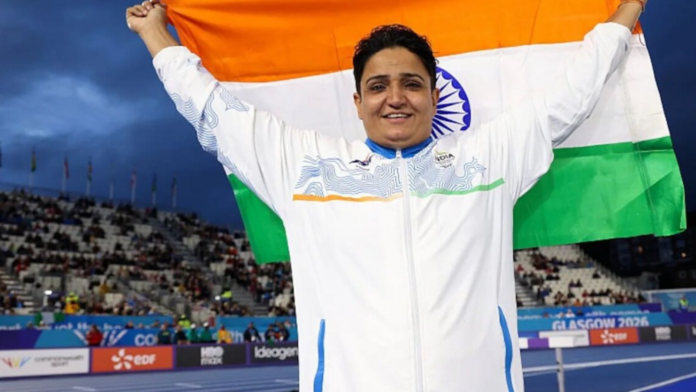
For Sharmila Dhankar, victory was never just about crossing a finish line or standing on a podium. It was about overcoming years of pain, discrimination, physical challenges, and personal hardship. At the 2026 Commonwealth Games in Glasgow, the 40-year-old para-athlete scripted history by becoming the first Indian to win a Commonwealth Games gold medal in para athletics, a landmark achievement that has inspired millions across the country.
Competing in the Women’s Shot Put F57 event, Sharmila produced a throw of 9.81 metres to clinch the gold medal. More than a sporting triumph, her victory symbolised the power of resilience and the human spirit.
Born in Haryana, Sharmila contracted polio as a child, leaving her with a permanent locomotor disability. Life presented challenges from an early age, but her greatest struggles were yet to come. Married at the age of 19, she endured years of domestic abuse and emotional trauma in an unhappy relationship.According to media reports, she eventually chose to walk away from that life, determined to rebuild her future despite the uncertainty that lay ahead.
Starting over was far from easy. Yet, instead of surrendering to circumstances, Sharmila found strength in sport. Para athletics became more than a competitive pursuit, it became a path to reclaim her confidence, independence, and identity. Through relentless training and unwavering determination, she transformed adversity into motivation.
Her journey to the top demanded years of discipline. Every training session tested not only her physical endurance but also her mental resilience. With limited resources and numerous obstacles, she continued to believe that perseverance could take her where circumstances never could.
That belief found its greatest reward in Glasgow.
When Sharmila stepped into the throwing circle at the Commonwealth Games, she carried with her far more than the hopes of a nation. She carried the story of every individual who has battled disability, social prejudice, or personal loss. Her gold medal became a historic milestone for Indian para sports and a testament to the growing strength of the country’s para-athletes on the global stage.
Her success also reflects the changing landscape of Indian sport, where para-athletes are increasingly receiving recognition for their extraordinary achievements. While medals celebrate athletic excellence, stories like Sharmila’s remind us that true champions are often forged long before they enter the arena.
Today, Sharmila Dhankar stands as a symbol of courage, perseverance, and hope. She proved that disability does not define potential, and that one’s past does not determine one’s future. Her remarkable journey, from battling polio and surviving an abusive marriage to making Commonwealth Games history, demonstrates that resilience can overcome even the toughest challenges.
As India celebrates its newest sporting hero, Sharmila’s golden throw will be remembered not only for the distance it travelled but for the powerful message it delivered: no obstacle is greater than the determination to rise. Her story is a reminder that some victories are measured not just in metres, but in the strength it takes to rewrite one’s destiny.