

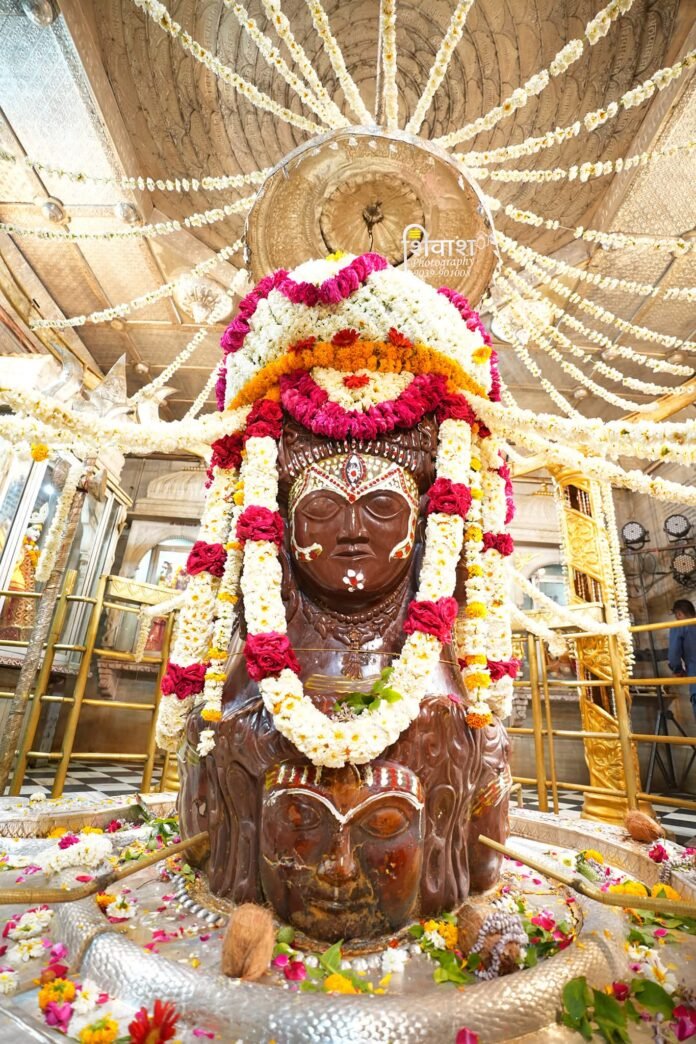
On the serene banks of the Shivna River in Mandsaur, Madhya Pradesh, stands one of India’s most extraordinary Shiva temples, Pashupatinath Temple, a sacred shrine that seamlessly blends history, faith, archaeology and legend. Revered by devotees across the country, the temple is best known for its magnificent Ashtamukhi (eight-faced) Shiva Linga, an exceptional masterpiece believed to date back nearly 1,500 years.
A Legacy Rooted in Ancient Dashapura
The town of Mandsaur was known in ancient times as Dashapura, a prosperous city mentioned in classical Sanskrit literature, including Kalidasa’s Meghaduta, the Mahabharata, and several Puranas. According to local tradition, the region also shares a connection with Mandodari, the wife of Ravana, from whom Mandsaur is believed to derive its name.
Archaeological studies suggest that the temple’s revered Shiva Linga belongs to the Gupta period (5th–6th century CE), an era celebrated as one of the golden ages of Indian art and architecture. The sculpture reflects the refined craftsmanship characteristic of Gupta artisans and remains one of the finest examples of Shaivite iconography.
The Rare Eight-Faced Shiva Linga
The temple’s greatest marvel is its 11.25-foot-high, eight-faced Shiva Linga, carved from a single block of dark stone and weighing nearly 4,600 kilograms.
Unlike conventional Shiva Lingas, this extraordinary sculpture features eight distinct faces arranged on two levels. These faces symbolically depict the different stages of Lord Shiva’s divine existence—from childhood and adolescence to youth and old age—while also representing his many cosmic forms and attributes.
Such an Ashtamukhi Shiva Linga is exceptionally rare. It is often compared only with the revered Pashupatinath Temple in Kathmandu, Nepal, making Mandsaur’s shrine one of the most unique Shiva temples in India.
The Remarkable Rediscovery
Although the Shiva Linga dates back over fifteen centuries, its modern history is equally fascinating.
According to local belief, the idol remained hidden beneath the bed of the Shivna River for centuries. In 1961, several villagers reportedly experienced recurring dreams directing them to a sacred idol buried beneath the riverbed. Acting on these visions, locals began excavating the area and unearthed the massive eight-faced Shiva Linga.
Attempts were made to transport the enormous sculpture elsewhere, but legend says that horses, oxen and even vehicles refused to move it. Interpreting this as Lord Shiva’s divine wish to remain at the discovery site, devotees decided to build the temple exactly where the Linga had emerged. Since then, the temple has become one of the most revered pilgrimage destinations in central India.
Nature’s Own Abhishek
One of the temple’s most remarkable phenomena occurs during the monsoon.
As the Shivna River swells with rainwater, its waters naturally rise to touch the feet of the Shiva Linga. Devotees regard this as nature itself performing Jal Abhishek, an eternal offering by the river to Lord Shiva. The sight attracts thousands of pilgrims, who consider it highly auspicious.
A Living Centre of Faith
Today, Pashupatinath Temple draws devotees throughout the year, with especially large gatherings during Mahashivratri and the holy month of Shravan. Daily rituals, Rudrabhishek ceremonies and devotional chanting create an atmosphere of deep spiritual devotion.
More than an archaeological treasure, the temple remains a living symbol of India’s enduring Shaivite tradition. Its ancient sculpture, legendary rediscovery and unique connection with the Shivna River continue to inspire awe among pilgrims, historians and travellers alike.
Standing gracefully beside the flowing river, the Pashupatinath Temple of Mandsaur is not merely a place of worship, it is a timeless testament to India’s spiritual heritage, where history, mythology and faith converge in one of Lord Shiva’s most extraordinary abodes.