

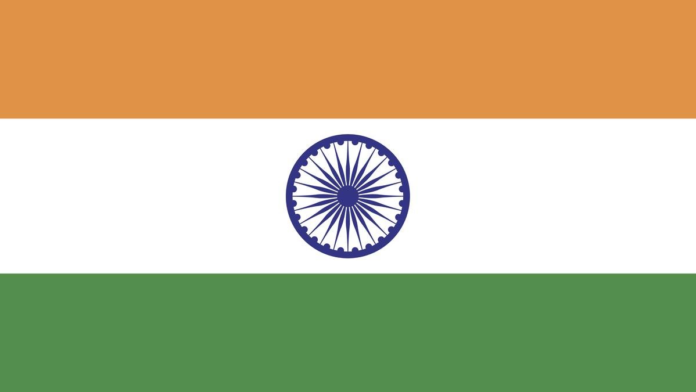
National Flag Day 2026 will be observed on 22 July 2026 to commemorate the adoption of the Indian National Flag (Tiranga) by the Constituent Assembly on 22 July 1947. The day recognizes the Tiranga as the symbol of India’s unity, sovereignty, democracy, and freedom. It also pays tribute to the countless freedom fighters who fought for India’s independence under the national flag.
National Flag Day 2026 Highlights
| Particular | Details |
|---|---|
| Event | National Flag Day 2026 |
| Date | 22 July 2026 |
| Significance | Adoption of the Indian National Flag by the Constituent Assembly |
| Adopted On | 22 July 1947 |
| First Official Hoisting | 15 August 1947 |
| Theme | National Unity, Patriotism & Democratic Values |
National Flag Day 2026
National Flag Day is celebrated every year on 22 July to mark the historic adoption of the Tiranga by the Constituent Assembly in 1947. The day highlights the importance of the National Flag as a symbol of India’s independence, constitutional values, national identity, and unity in diversity. It also serves as a reminder of the sacrifices made by India’s freedom fighters, who carried the Tricolour during protests, movements, and campaigns against British colonial rule.
Why is National Flag Day Celebrated?
National Flag Day is observed to commemorate the adoption of the Indian National Flag on 22 July 1947, just weeks before India’s Independence.
The day is celebrated to:
- Honour the adoption of the Tiranga as India’s National Flag.
- Remember the sacrifices of India’s freedom fighters.
- Promote patriotism and national pride.
- Strengthen respect for the National Flag and constitutional values.
- Inspire citizens to uphold India’s unity, integrity, and democratic ideals.
National Flag Day History
The history of National Flag Day reflects the evolution of India’s National Flag and its importance during the freedom struggle.
Evolution of the Indian National Flag
1904–1906
- Sister Nivedita designed one of the earliest nationalist flags featuring the Vajra and lotus.
1906
- The Calcutta Flag was hoisted at Parsee Bagan Square, introducing the tricolour concept.
1907
- Madam Bhikaji Cama unfurled an early Indian flag at Stuttgart, Germany, making it the first Indian flag hoisted on foreign soil.
1917
- Annie Besant and Bal Gangadhar Tilak introduced the Home Rule Movement Flag during the campaign for self-governance.
1921
- Pingali Venkayya designed a tricolour flag that was later modified by Mahatma Gandhi with the addition of a white band and the Charkha.
1931
- The Indian National Congress officially adopted the saffron, white, and green tricolour, forming the basis of today’s National Flag.
22 July 1947
- The Constituent Assembly adopted the present National Flag by replacing the Charkha with the Ashoka Chakra.
15 August 1947
- The Tiranga was officially hoisted as the National Flag of independent India.
Role of the National Flag in India’s Freedom Movement
The Indian National Flag emerged as one of the strongest symbols of India’s struggle against British rule. It inspired millions of Indians and united people across regions, religions, languages, and communities.
Symbol of National Unity
The Tiranga brought together Indians from diverse backgrounds under the common objective of achieving Swaraj (self-rule).
Inspired the Freedom Movement
The National Flag became a source of courage and hope during protests, marches, and civil disobedience campaigns.
Symbol of Resistance
Hoisting the National Flag during British rule was regarded as an act of defiance and often resulted in arrests and imprisonment.
Swadeshi Movement
The Tricolour inspired people to boycott foreign goods and promote indigenous products, strengthening the movement for economic self-reliance.
Dandi March (1930)
Thousands of volunteers carried the National Flag during Mahatma Gandhi’s Salt March, making it an enduring symbol of peaceful resistance.
Civil Disobedience Movement
The Tiranga was widely displayed during demonstrations demanding equal rights and complete independence.
Quit India Movement (1942)
The National Flag became the rallying symbol of the Quit India Movement, motivating millions to intensify the struggle against British rule.
Symbol of Sacrifice
Revolutionaries, students, women, and ordinary citizens risked imprisonment and even death while protecting and hoisting the National Flag.
National Identity
The Tiranga gave Indians a shared national identity beyond regional, linguistic, and religious differences.
International Recognition
Madam Bhikaji Cama’s hoisting of an early Indian flag in Germany drew international attention to India’s freedom struggle.
Adoption Before Independence
On 22 July 1947, the Constituent Assembly officially adopted the present Tiranga with the Ashoka Chakra, making it the National Flag of the soon-to-be independent nation.
First Hoisting After Independence
The National Flag was proudly hoisted across India on 15 August 1947, marking the birth of independent India.
National Flag Day 2026 Significance
National Flag Day celebrates the Tiranga as the symbol of India’s freedom, sovereignty, democracy, and national identity.
Its significance includes:
- Commemorates the adoption of the National Flag on 22 July 1947.
- Honours the sacrifices of India’s freedom fighters.
- Strengthens patriotism and national pride.
- Promotes constitutional values of justice, liberty, equality, and fraternity.
- Symbolizes India’s unity in diversity.
- Highlights the meaning of the three colours and the Ashoka Chakra.
- Encourages respect for the Flag Code of India.
- Educates young citizens about the history of the Tiranga.
- Reinforces civic responsibility and national integration.
- Preserves the legacy of India’s freedom movement for future generations.
Flag Code of India
The Flag Code of India prescribes the rules for displaying, hoisting, and handling the National Flag with dignity and respect.
Important Provisions
- The Flag Code came into force on 26 January 2002.
- It was amended in 2021 and 2022.
- The official ratio of the National Flag is 3:2.
- The flag consists of India Saffron, White, and India Green horizontal bands.
- A 24-spoke navy blue Ashoka Chakra appears at the centre.
- While hoisting, the saffron band must always remain at the top.
- During vertical display, the saffron band should be on the observer’s left.
- The National Flag must occupy the highest position of honour.
- As per the 2022 amendment, the flag may be displayed both day and night when properly illuminated.
- The flag may be manufactured using khadi, cotton, silk, wool, polyester, or machine-made fabric.
- It must never touch the ground, floor, or water.
- The National Flag cannot be used for commercial advertisements or promotional purposes.
- It should not be used as clothing below the waist, table coverings, cushions, uniforms, or decorative drapery.
National Flag Day 2026 FAQs
Q1. When is National Flag Day 2026 celebrated?
Answer: National Flag Day 2026 is celebrated on 22 July 2026.
Q2. Why is National Flag Day celebrated?
Answer: It commemorates the adoption of the Indian National Flag by the Constituent Assembly on 22 July 1947.
Q3. Who designed the Indian National Flag?
Answer: The original design of the Indian National Flag was created by Pingali Venkayya and later modified before its adoption in 1947.
Q4. What do the three colours of the National Flag represent?
Answer: Saffron represents courage and sacrifice, white stands for truth and peace, and green symbolizes faith, fertility, and prosperity.
Q5. What does the Ashoka Chakra symbolize?
Answer: The 24-spoke Ashoka Chakra represents righteousness, justice, progress, and the continuous movement of life.
Q6. When was the present National Flag officially adopted?
Answer: The Constituent Assembly adopted the present National Flag on 22 July 1947.
Q7. What is the official ratio of the Indian National Flag?
Answer: The official length-to-width ratio of the Indian National Flag is 3:2.