

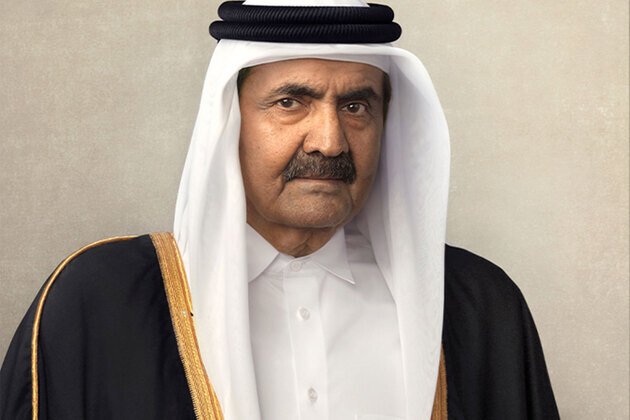
India will observe a one-day State Mourning on July 13, 2026, as a mark of respect for Sheikh Hamad bin Khalifa Al Thani, the Father Emir of Qatar, who passed away on July 12 at the age of 74. The Government of India announced that the National Flag will be flown at half-mast on all buildings where it is regularly displayed, and there will be no official entertainment throughout the day.
The decision reflects the close and longstanding relationship between India and Qatar, as well as the immense respect Sheikh Hamad commanded internationally for his transformative leadership.
The Visionary Behind Modern Qatar
Born on January 1, 1952, Sheikh Hamad bin Khalifa Al Thani belonged to Qatar’s ruling Al Thani family. He assumed power as the Emir of Qatar in 1995 and remained in office until 2013, when he voluntarily abdicated in favour of his son, the current Emir, Sheikh Tamim bin Hamad Al Thani. His decision to transfer power peacefully was regarded as a rare and significant step in the Gulf region.
During his nearly two decades as Emir, Sheikh Hamad oversaw one of the most remarkable transformations in the modern Middle East. Under his leadership, Qatar evolved from a relatively small Gulf state into one of the world’s wealthiest and most influential nations.
His government invested heavily in the country’s vast natural gas reserves, particularly the North Field, turning Qatar into one of the world’s leading exporters of liquefied natural gas (LNG). The resulting economic prosperity enabled large-scale investments in infrastructure, education, healthcare, technology, and public welfare.
A Global Diplomat and Moderniser
Beyond economic growth, Sheikh Hamad sought to position Qatar as a prominent player in international diplomacy. His reign witnessed the launch and expansion of Al Jazeera Media Network, which reshaped news broadcasting across the Arab world and gained global recognition.
He also established institutions such as Education City, bringing leading international universities to Qatar and transforming the country into a regional centre for higher education and research. His vision extended to sports as well, culminating in Qatar successfully securing the right to host the 2022 FIFA World Cup, the first ever held in the Middle East.
Known for his active diplomatic engagement, Sheikh Hamad often promoted dialogue and mediation in regional conflicts, enhancing Qatar’s role in international affairs.
Strong Ties with India
India and Qatar have enjoyed warm bilateral relations for decades, strengthened by trade, energy cooperation, and the presence of a large Indian community in Qatar. During Sheikh Hamad’s leadership, these ties expanded significantly, particularly in the energy sector, with Qatar emerging as one of India’s major suppliers of liquefied natural gas.
Expressing his condolences, Prime Minister Narendra Modi described Sheikh Hamad as a visionary statesman who led Qatar towards remarkable development and prosperity. The Prime Minister also recalled his contribution to strengthening India-Qatar relations.
The Ministry of External Affairs announced that Union Minister Kiren Rijiju is visiting Doha to convey condolences on behalf of the Government and the people of India.
A Lasting Legacy
Funeral prayers for Sheikh Hamad bin Khalifa Al Thani were held in Doha, where members of the royal family, government officials, foreign dignitaries, and citizens gathered to pay their final respects. Tributes from leaders across the world have recognised his pivotal role in transforming Qatar into a prosperous, globally connected nation while preserving its cultural identity.
His passing marks the end of an era in Qatar’s history. Remembered as the architect of modern Qatar, Sheikh Hamad’s legacy endures through the country’s economic strength, global influence, and commitment to education, innovation, and diplomacy. India’s decision to observe a day of national mourning underscores the depth of bilateral ties and honours a leader whose vision left a lasting impact not only on Qatar but on the wider world.