

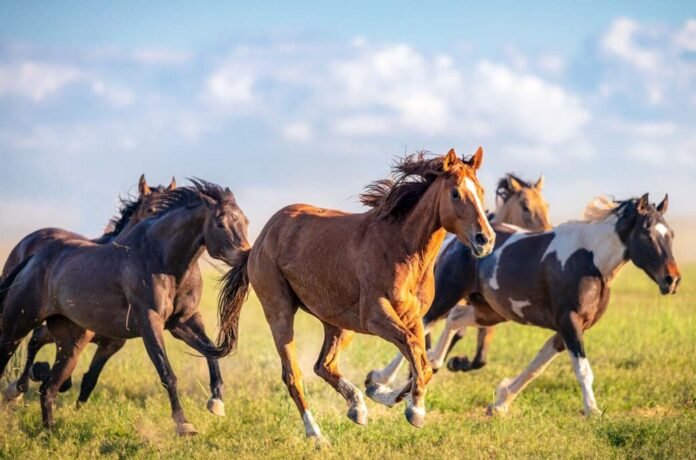
From carrying warriors into battle and connecting distant civilizations to assisting farmers and providing therapeutic support, horses have been faithful companions to humanity for thousands of years. Recognising their invaluable contribution to human civilisation, the world celebrates World Horse Day every year on July 11. The observance, established through a United Nations General Assembly resolution spearheaded by Mongolia, aims to honour horses while promoting their welfare, conservation, and sustainable management across the globe.
World Horse Day highlights the profound bond between humans and horses, a relationship that has shaped history, culture, transportation, agriculture, sports, and even healthcare. Across the world, equestrian organisations, conservation groups, and communities mark the occasion through horse shows, educational programmes, cultural festivals, and awareness campaigns that emphasise responsible horse care and the protection of equine heritage.
One of the largest celebrations takes place in Mongolia, where horses remain central to the country’s identity and nomadic way of life. The 2026 World Horse Day celebrations feature events such as the 10,000 Riders Carnival, the Genghis Khan World Derby, and the World Horse Forum in Ulaanbaatar, bringing together riders, researchers, conservationists, and horse enthusiasts from across the world.
The Horse in India’s History
Few animals have influenced India’s history as profoundly as the horse. For centuries, horses played a decisive role in shaping kingdoms, trade, warfare, and culture. From the Vedic period to the medieval era, they symbolised courage, strength, speed, and royal authority.
Indian history is filled with legendary horses that became inseparable from the heroes they carried. Perhaps the most celebrated is Chetak, the loyal horse of Maharana Pratap. During the Battle of Haldighati in 1576, Chetak displayed extraordinary bravery by carrying the wounded Maharana Pratap to safety despite suffering fatal injuries. Today, Chetak remains a timeless symbol of loyalty, sacrifice, and courage.
Similarly, Chhatrapati Shivaji Maharaj’s swift cavalry was instrumental in establishing the Maratha Empire. His horse-mounted warriors used speed, mobility, and strategic warfare to outmanoeuvre much larger armies, demonstrating how horses shaped military history.
Horses also occupied an important place in Indian mythology and religious traditions. Uchchaihshravas, the magnificent white horse that emerged during the Samudra Manthan (Churning of the Ocean), is regarded as the king of horses in Hindu mythology. The Ashvamedha Yajna, performed by ancient rulers, symbolised sovereignty and imperial authority, further reflecting the horse’s revered status in Indian civilisation.
India’s Indigenous Horse Breeds
India is home to several remarkable indigenous horse breeds, each adapted to different terrains and climates. The Marwari horse of Rajasthan is globally recognised for its distinctive inward-turning ears, endurance, and loyalty. Once the preferred mount of Rajput warriors, the breed is now regarded as one of India’s finest equine treasures.
Another notable breed is the Kathiawari horse from Gujarat, known for its resilience and agility. Other indigenous breeds, including the Manipuri, Spiti, and Zanskari horses, continue to support local livelihoods in the Himalayan and northeastern regions.
Why Horses Still Matter Today
Although modern transportation has reduced their traditional role, horses continue to make significant contributions to society. They serve in sports such as polo, show jumping, dressage, and endurance racing, while mounted police units, ceremonial regiments, and tourism industries across the world still rely on them.
Horses also play an increasingly important role in equine-assisted therapy, helping individuals with physical disabilities, autism, post-traumatic stress disorder (PTSD), and mental health challenges. Their calm nature and strong emotional connection with humans have made them valuable partners in rehabilitation and wellness programmes.
A Day to Celebrate and Protect
World Horse Day is more than a celebration of an extraordinary animal—it is a reminder of humanity’s responsibility to protect and care for horses. Ensuring proper nutrition, veterinary care, humane treatment, and the conservation of indigenous breeds is essential for preserving this centuries-old partnership.
As the world observes World Horse Day 2026, it also honours the countless ways horses have shaped human history. In India, where stories of Chetak, the Marwari horse, and the cavalry traditions of great kingdoms continue to inspire generations, the occasion serves as a tribute to an animal that has carried not only people but also the legacy of courage, culture, and civilisation.