

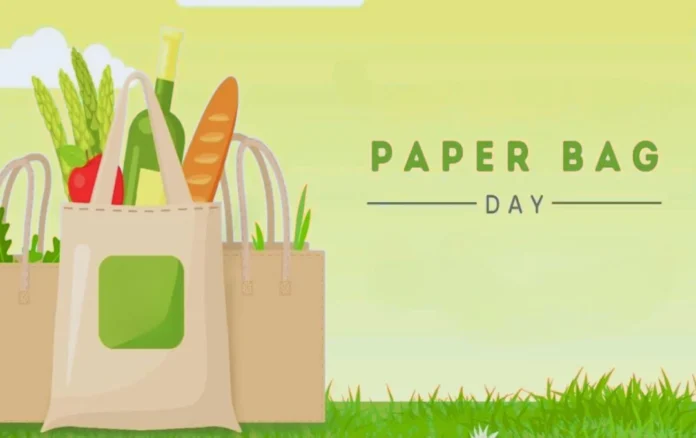
Every year on July 12, the world observes Paper Bag Day, a day dedicated to raising awareness about the importance of using paper bags as an environmentally friendly alternative to single-use plastic bags. While a paper bag may appear to be an ordinary everyday object, it represents a significant step towards reducing plastic pollution and promoting sustainable living.
Paper Bag Day also commemorates an important milestone in manufacturing history. On July 12, 1859, American inventor William Goodale received a patent for the first machine capable of mass-producing paper bags. His invention transformed paper bags from handmade products into widely available packaging, laying the foundation for their use across retail, food, and commercial industries.
Today, the significance of Paper Bag Day extends far beyond celebrating an invention. It serves as a reminder of the urgent need to adopt eco-friendly habits in the face of growing environmental challenges. Single-use plastic bags often take hundreds of years to decompose and frequently end up polluting rivers, oceans, forests, and landfills. They pose serious threats to wildlife, marine ecosystems, and even human health through the generation of microplastics.
Paper bags, on the other hand, are biodegradable, recyclable, renewable, and compostable. Made primarily from wood pulp, they break down naturally in the environment and can be recycled several times before being converted into other paper products. Although paper production also has environmental costs, responsible sourcing, recycling, and sustainable forestry practices make paper bags a more environmentally conscious choice for many everyday uses.
Across the world, governments, businesses, educational institutions, and environmental organisations use Paper Bag Day to encourage people to reduce their dependence on plastic packaging. Retail stores and cafés are increasingly switching to paper bags, while schools and community groups organise awareness campaigns, recycling drives, and workshops where participants learn to create reusable paper bags from old newspapers and discarded paper.
In India, where plastic pollution remains a significant environmental concern, many states have introduced restrictions on single-use plastics and actively promote sustainable alternatives. Paper bags, cloth bags, jute bags, and other reusable options are becoming increasingly common in shops, supermarkets, and local markets. However, environmental experts also stress that the most sustainable bag is one that is reused multiple times, regardless of the material. Reducing unnecessary consumption and reusing existing bags are equally important steps towards protecting the environment.
Individuals can contribute in simple yet meaningful ways. Carrying a reusable shopping bag, refusing unnecessary plastic packaging, recycling paper products, supporting businesses that use eco-friendly packaging, and spreading awareness among family and friends can collectively create a significant positive impact.
Paper Bag Day reminds us that environmental conservation often begins with small everyday choices. A simple decision to replace a plastic bag with a paper or reusable alternative may seem insignificant, but when adopted by millions of people, it can help reduce waste, conserve natural resources, and protect ecosystems for future generations.
As the world observes Paper Bag Day 2026, the occasion encourages everyone to rethink daily habits and embrace more sustainable lifestyles. After all, creating a cleaner and greener planet does not always require extraordinary actions—sometimes, it begins with something as simple as choosing the right bag.