

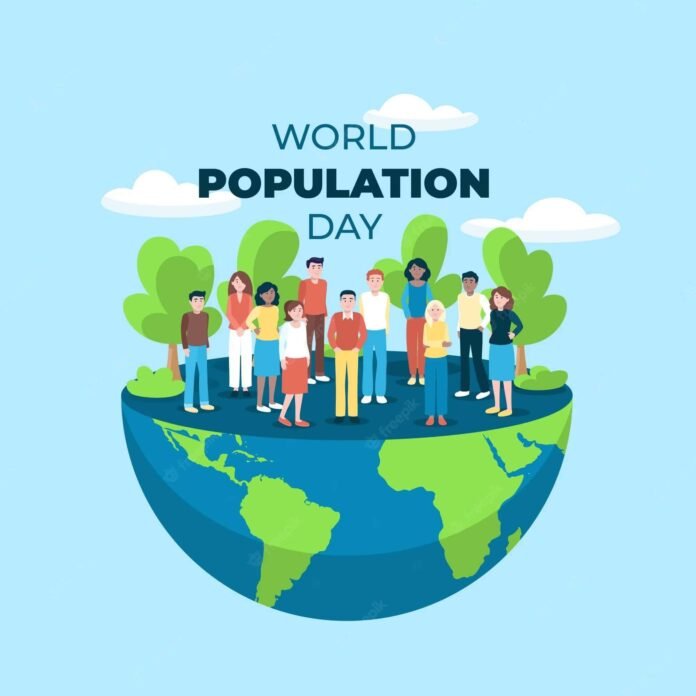
Every year on July 11, the world observes World Population Day to raise awareness about global population issues and their impact on sustainable development, health, education, gender equality, and the environment. Established by the United Nations Development Programme (UNDP) in 1989, the day was inspired by the milestone of “Five Billion Day” on July 11, 1987, when the world’s population was estimated to have reached five billion.
Today, with the global population having crossed 8 billion, World Population Day serves as a reminder that population is not merely about numbers, it is about ensuring that every individual has access to healthcare, education, opportunities, and the freedom to make informed choices about their future.
The Theme for 2026
The United Nations Population Fund (UNFPA) has announced the theme for World Population Day 2026 as:
“Empowering young people to create the families they want in a fair and hopeful world.”
The theme highlights the importance of enabling young people to make informed decisions about marriage, parenthood, education, and careers. It also calls for creating societies where economic opportunities, healthcare, reproductive rights, and gender equality allow individuals to plan their futures with dignity and confidence.
Why World Population Day Matters
Rapid population growth presents both opportunities and challenges. A growing population can contribute to economic development through a larger workforce and increased innovation. However, if growth outpaces available resources and infrastructure, it can place immense pressure on housing, healthcare, education, food security, employment, and natural resources.
Urbanisation, climate change, migration, ageing populations in some countries, and declining birth rates in others have made demographic trends increasingly complex. World Population Day encourages governments, policymakers, and communities to address these challenges through evidence-based policies and sustainable planning.
India and the Population Debate
India remains the world’s most populous country, making population-related policies particularly significant. While discussions often focus on population size, experts increasingly emphasise the importance of investing in human capital rather than viewing population solely as a challenge.
Improving access to quality education, expanding healthcare services, empowering women, creating employment opportunities, and ensuring reproductive healthcare are considered key to harnessing the country’s demographic potential. India’s large youth population can become a major driver of economic growth if supported with the right opportunities and skills.
The Role of Young People
Young people are central to this year’s observance. According to the UNFPA, millions of adolescents and young adults around the world continue to face barriers in accessing education, healthcare, and reproductive services. Many are unable to make independent choices regarding marriage and family planning due to economic, social, or cultural constraints.
Empowering youth through education, gender equality, employment opportunities, and access to accurate information enables them to make informed life choices and contribute meaningfully to society.
Towards a Sustainable Future
World Population Day also reminds us that sustainable development depends on balancing population growth with environmental conservation and social progress. Responsible consumption, climate action, inclusive development, and equitable access to resources are essential to ensuring a better future for present and future generations.
As the world marks World Population Day 2026, the message is clear: the goal is not simply to manage population numbers but to build societies where every person can live with dignity, opportunity, and hope. By investing in people, especially young people, the global community can create a future that is more inclusive, equitable, and sustainable for all.